

Care of the Venus flytrap (Dionaea muscipula)
The Venus flytrap (in Latin Dionaea muscipula) is arguably one of the most iconic carnivorous plants. It is a fascinating plant that has captured people's curiosity and admiration for many years. It was first discovered in the 1760s in the swampy areas of North and South Carolina in the USA by the botanist John Ellis. It took a few years before the plant was recognized and described scientifically. Later, it was named "Dionaea muscipula" by the Swedish botanist Carl Linnaeus in 1753. The name "Dionaea" stems from the Greek goddess of love and beauty, Dione, and refers to the plant's elegant traps, while "muscipula" means "mousetrap" in Latin and refers to its carnivorous nature.
The Venus flytrap is characterized by its leaf traps, which consist of two leaf lobes lined on the inside with 2-4 small hairs. These small hairs act as triggers for the trap. If a hair is touched twice (or two different hairs are touched in succession), the trap will snap shut around its prey. If the hairs are then touched again, the trap will close more tightly, enzymes will be slowly released, and the prey will be broken down. If the hairs are not touched again after the trap has initially closed, it will reopen. This is believed to be a safeguard against unnecessary closing and digestion in case rain or other irrelevant debris has stimulated the trap.
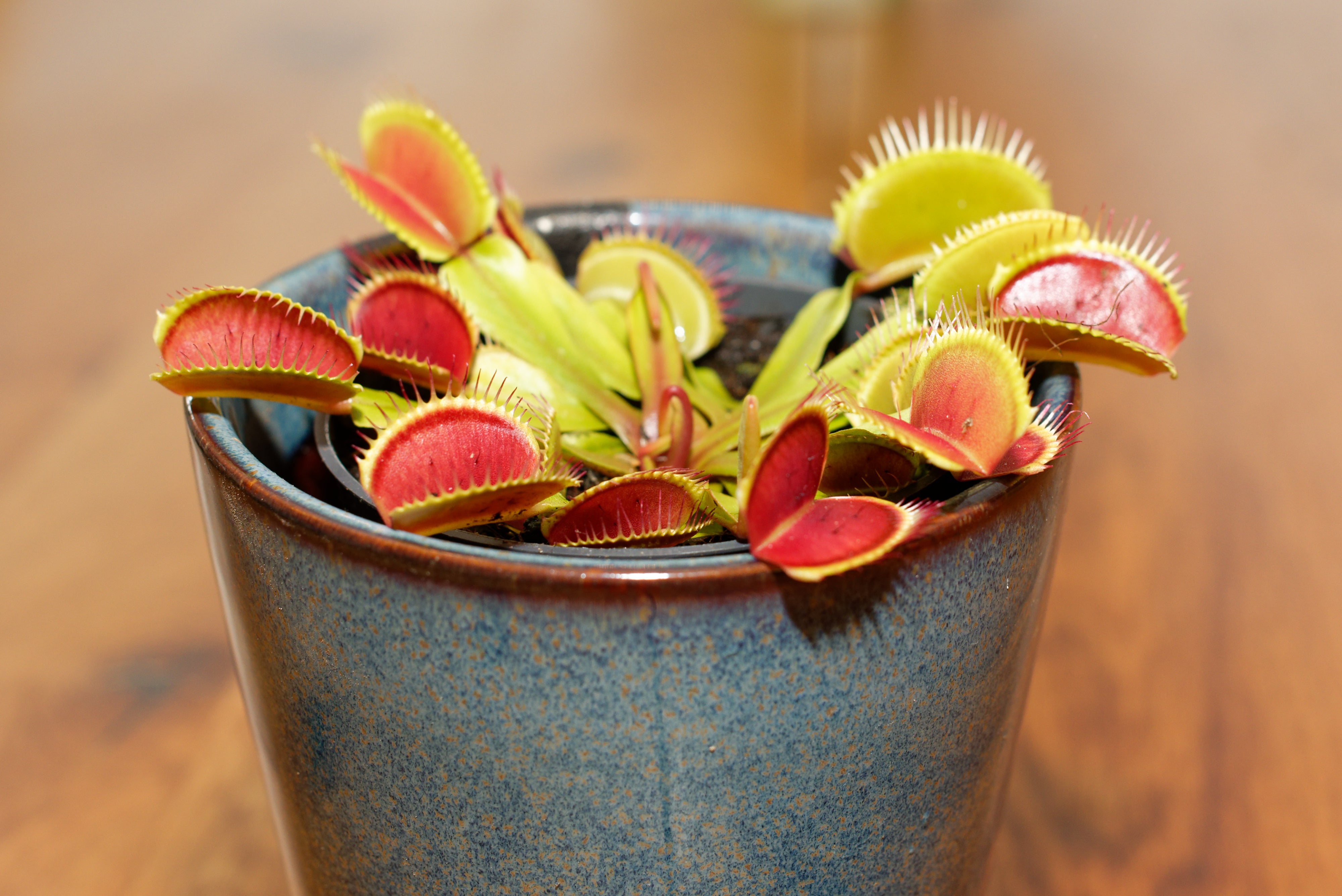
The Venus flytrap belongs to the Droseraceae family, which also includes other carnivorous plants such as sundew (Drosera) and pitcher plants (Sarracenia). However, the Venus flytrap is the only species in the Dionaea genus. Countless varieties have been bred with different colors, growth habits, trap types, and much more (e.g., "cup trap" and "sawtooth"). We currently sell the standard variety Dionaea muscipula "typical", and we also have seeds, which are a mix from many different varieties. We will continuously expand with new, exciting varieties.
Care of Venus flytrap (Dionaea muscipula)
-
Lighting
The Venus flytrap thrives best in direct sunlight. Place it in a spot where it gets at least 6 hours of full sun per day. Outdoors in full sun or a south-facing window is ideal. This ensures that the plant gets enough energy to maintain and use its traps.
-
Soil mixture
Use a soil mixture that is acidic and well-draining. A mixture of peat moss and sand in a 3:1 ratio works well. Or use our carnivorous plant soil, which is specialized soil for carnivorous plants. Avoid using regular potting soil, as it contains too many nutrients, which can harm the plant.
-
Water
Keep the soil constantly moist. This can be done by placing the pot in a deep saucer with water, but avoid letting the pot stand in water for too long at a time (let it dry out slightly between waterings). Use distilled water or rainwater to avoid the accumulation of minerals (lime) from tap water. It is important NOT to use regular tap water, as it contains too much lime.
-
Humidity
Only very small or newly repotted plants prefer slightly higher humidity. Otherwise, the plant does not require high humidity.
-
Feeding and traps
The Venus flytrap captures small insects as its primary source of nutrients using its characteristic traps. It is not necessary to "feed" your plant. It will manage to catch insects on its own. For entertainment, however, you can catch a fly or spider and put it into a trap. Just ensure that it is alive.
-
Winter dormancy
In the winter, the Venus flytrap goes dormant, and it needs this dormancy to thrive. Lower the temperature to around 5-10°C and reduce watering significantly. This mimics the plant's natural conditions. The plant can tolerate frost, and you can, for example, keep it outdoors or in a greenhouse. However, the frost will set it back, and it will usually die down completely only to sprout again in the spring.
-
Trimming
Carefully trim off dead or brown traps to maintain the plant's appearance and health.
-
Flowering
In the spring, the Venus flytrap produces long stalks with fine white flowers at the end. The flowers require a lot of energy, and it will usually kill the plant if it is allowed to bloom. If you wish to keep your plant for a long time, it is recommended to cut off the flower stalks as soon as they appear.
-
Growing from seeds:
Seeds should be sown shallowly on moist, sterile sphagnum moss and must not be covered with soil. They require high humidity and light to germinate and should be kept at 22–28 °C. Germination typically takes 4–8 weeks. The small plants are delicate at first but soon develop the characteristic traps, which gradually grow larger with each growing season.
Growing a Venus flytrap is fun, exciting, and educational. Once you have mastered the basic conditions, it is also an easy plant to keep and care for.
Enjoy your Venus flytrap!