Buy 4 packs of seeds (or more) and get a 10% discount


a Piece of Nature
Small knobwood (Zanthoxylum capense) | seeds, 10 pcs.
Small knobwood (Zanthoxylum capense) | seeds, 10 pcs.
Couldn't load pickup availability
- Latin name: Zanthoxylum capense
- Danish names: African pepper tree (unofficial)
- English names: African prickly ash, wild cardamom tree
Zanthoxylum capense is an aromatic small tree or large shrub from southern Africa, where it grows in forest margins, open woodlands, and mountainous regions in, among other places, South Africa, Zimbabwe, and Mozambique. The species belongs to the same genus as Sichuan pepper and Japanese pepper, but has its own distinct character with intensely fragrant leaves, prominent thorns, and a more robust, wild-growing nature.
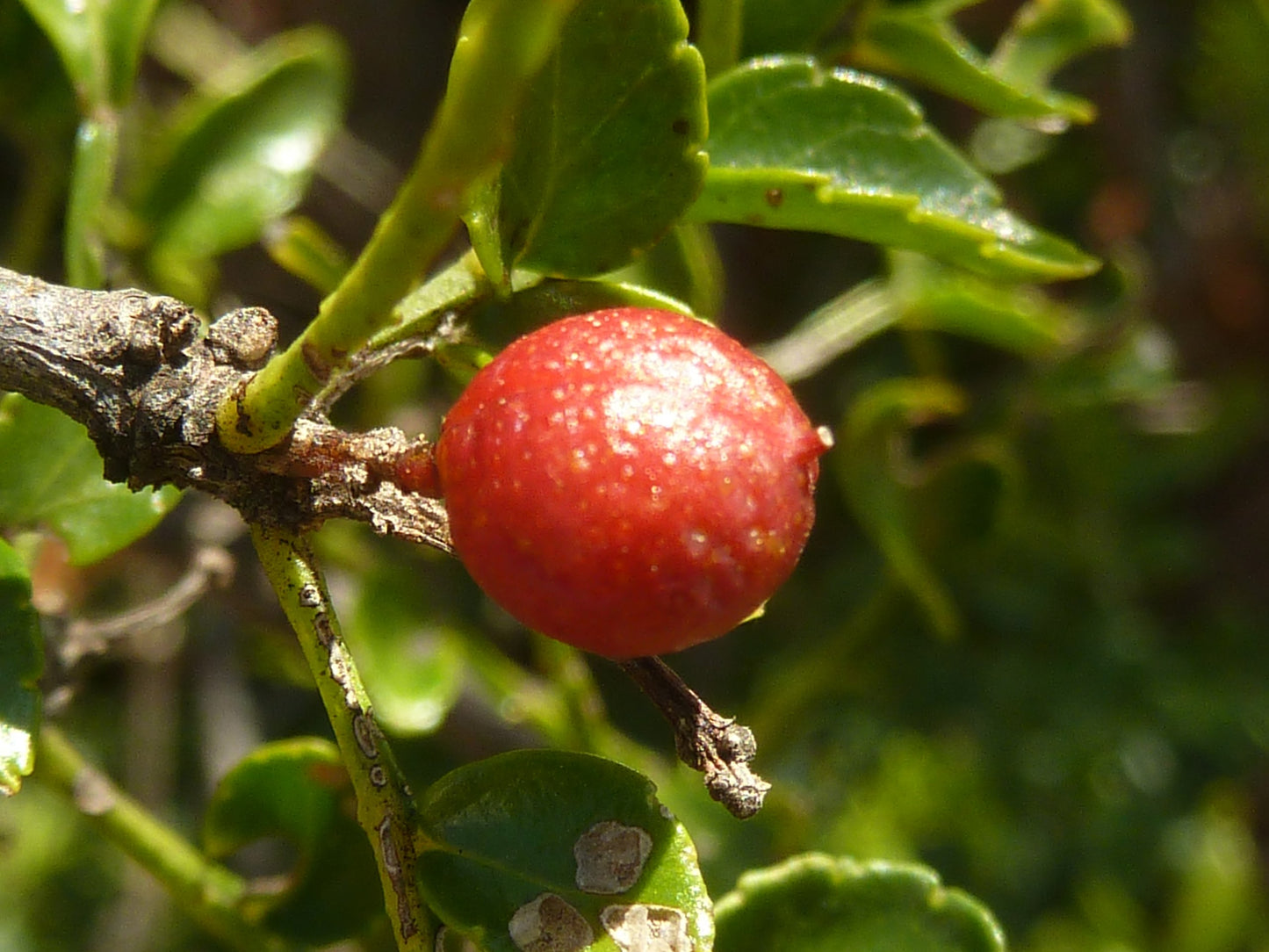
The leaves are pinnate and emit a distinct spicy and citrusy scent when rubbed or crushed. The branches are often equipped with thorns, which is typical for the genus. Small, inconspicuous flowers are followed by fruits that open upon maturity to reveal dark seeds. It is primarily the fruit husks, leaves, and bark that contain the aromatic compounds.
Cultivation and requirements:
Zanthoxylum capense thrives best in full sun to light partial shade and prefers a well-drained yet moisture-retentive soil. It is more heat-demanding than East Asian species like Z. piperitum and Z. armatum and is therefore best suited for container cultivation in Denmark.
The plant tolerates only light frost and should be overwintered frost-free, especially in the first years. During the summer half-year, it can be kept outdoors in a warm, sheltered spot, where heat and sun enhance the aroma of the leaves. It tolerates pruning and can be kept compact as a shrub or shaped into a small tree.
Cultivation from seeds:
The seeds should be sown in a well-drained soil mix and covered lightly. A short cold stratification can improve germination. Subsequently, the seeds germinate best at 20–25 °C, often over several weeks. The young plants grow steadily and develop both thorns and aromatic leaves early on.
Utility:
In its native range, Zanthoxylum capense has been used in traditional medicine, particularly the bark and roots, which have been used for toothaches, inflammation, and stomach problems. Furthermore, aromatic leaves and fruits have been used locally as a spice, related to other pepper trees in the genus.
As an ornamental plant, it is interesting for collectors who want an African counterpart to Sichuan pepper, with both decorative foliage, scent, and historical use.
Zanthoxylum capense is an exciting and different pepper tree that combines aromatic qualities with a more raw and natural look – an obvious choice for the adventurous plant enthusiast with a penchant for rare useful and ornamental plants.
Seed germination
Seed germination
Childcare
Childcare
Size
Size
Up to 7 meters high
Difficulty level
Difficulty level
Between
NB
NB
Most commonly used in traditional medicine