Buy 4 packs of seeds (or more) and get a 10% discount


a Piece of Nature
Dragon Blood Tree (Dracaena draco) | seeds, 10 pcs.
Dragon Blood Tree (Dracaena draco) | seeds, 10 pcs.
Couldn't load pickup availability
- Latin name: Dracaena draco
-
Danish names: Dragetræ, drageblodstræ, drageblodtræ
-
English names: Drago, Canary Islands dragon tree
Dracaena draco, also known as the dragon blood tree, is a distinctive and slow-growing tree native to the Canary Islands, Madeira, and Morocco. Today, the species is widely cultivated as an ornamental tree in warm regions across the world and is known for its impressive longevity – some records describe specimens up to 6,000 years old on Tenerife.
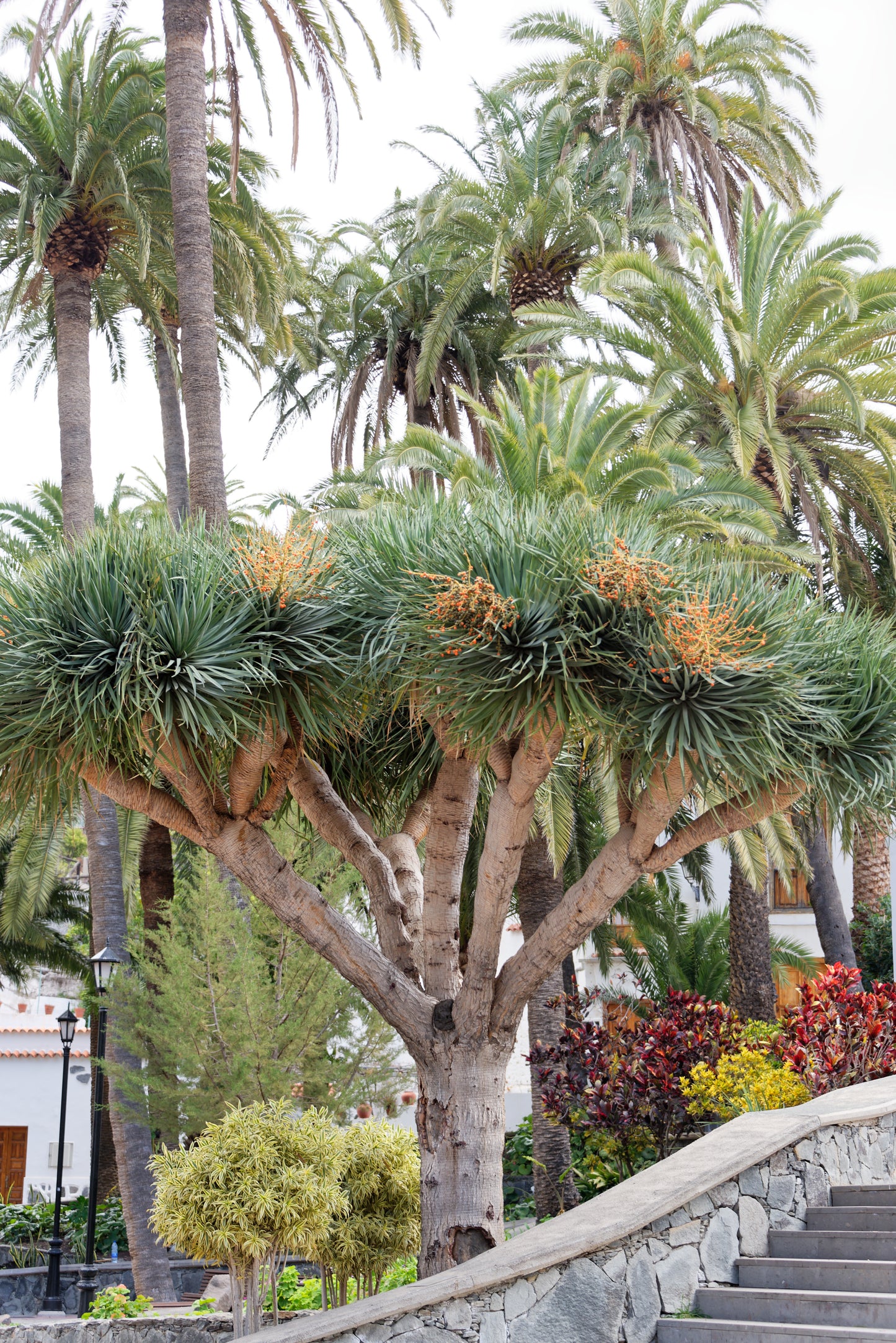
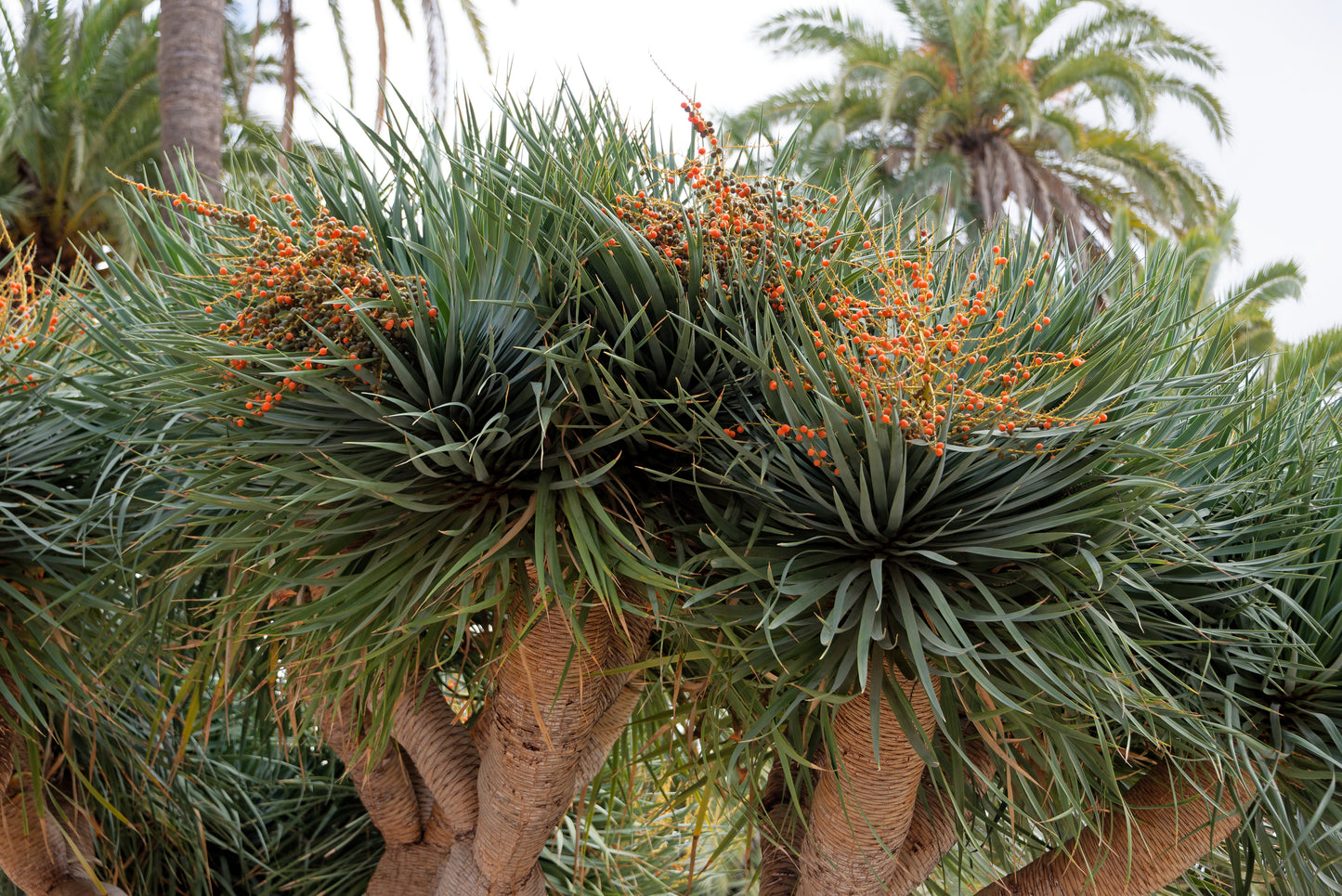
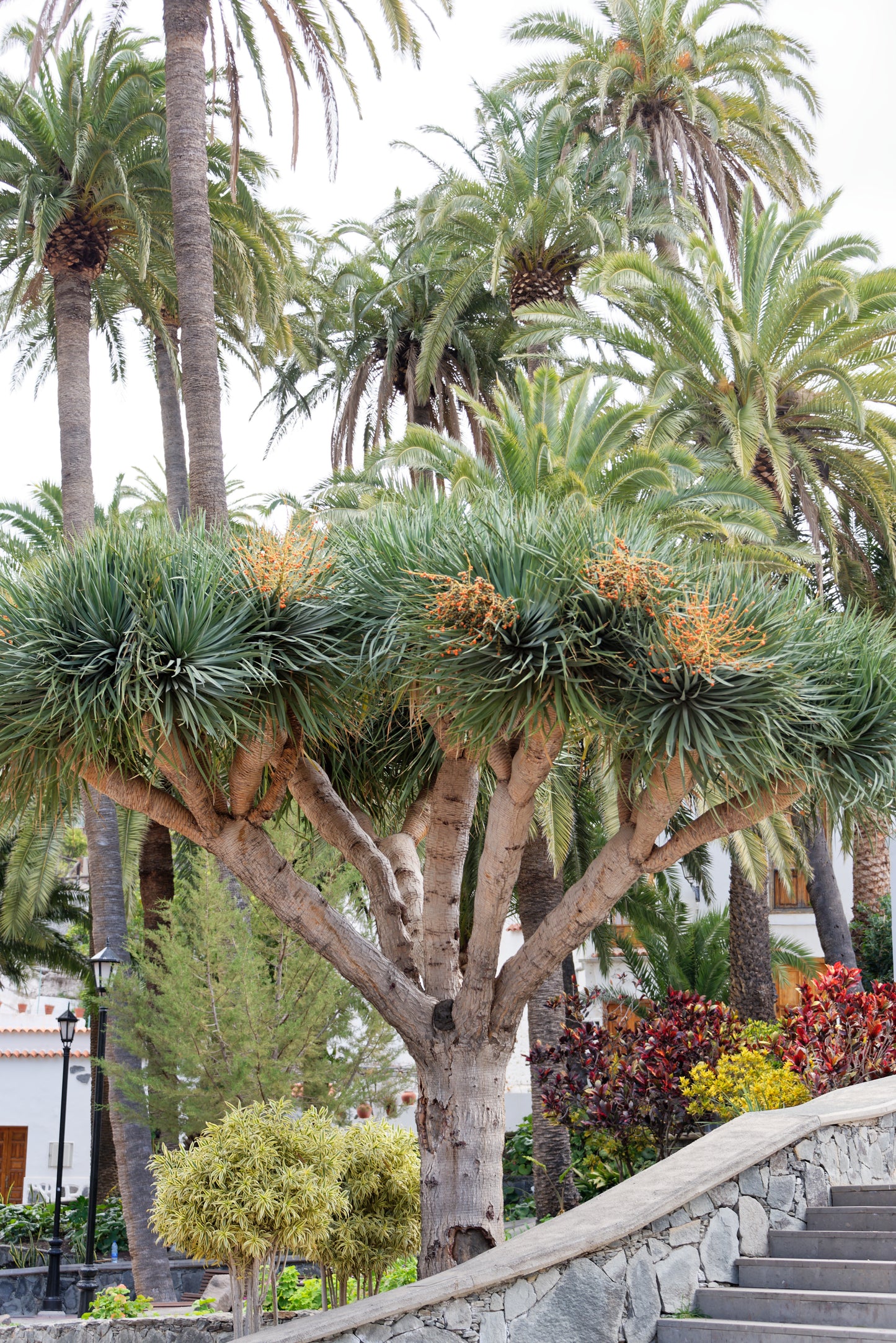
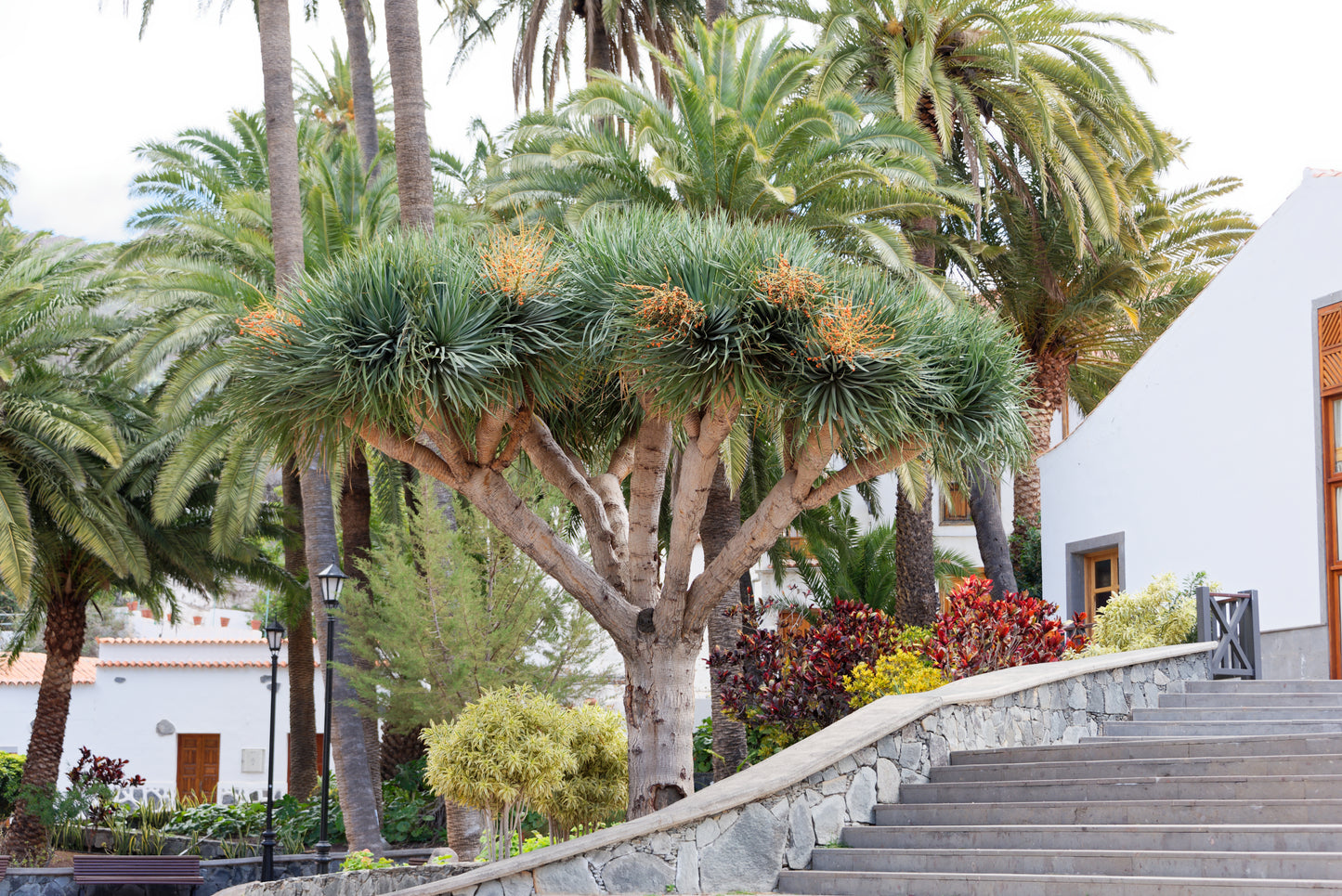
The tree has a raw and almost sculptural appearance, which can resemble large agaves. It is evergreen and develops a greyish, thick trunk and long, lanceolate green leaves that grow in dense rosettes at the ends of the branches. Over time, the tree can reach up to 15 meters in height and develop a characteristic, almost umbrella-shaped crown.
Growth is slow and distinctive: a single trunk typically grows for 10–15 years before branching for the first time. After each flowering, the plant branches further, which gives the tree its iconic structure. When the plant is old enough, it produces inflorescences with small, white flowers, which later develop into orange berries.
The name “dragon blood tree” stems from the red resin that the tree secretes when damaged. This so-called dragon’s blood has historically been used as a dye, varnish, and in traditional applications.
There are several geographical varieties of the species:
- Dracaena draco subsp. draco – from Madeira and the Canary Islands
- Dracaena draco subsp. ajgal – from Morocco
- Dracaena draco subsp. caboverdeana – from Cape Verde
A previously assumed subspecies from Gran Canaria is now described as an independent species, Dracaena tamaranae, which, with very few individuals left in the wild, is considered one of Europe's rarest plants.
If you are interested in related species with a more tropical and fast-growing appearance, you can also look at Dracaena aletriformis, which differs in its softer growth and less sculptural form.
Cultivation and requirements
Dracaena draco thrives best in full sun to very bright locations and prefers:
- very well-drained, preferably sandy or mineral-rich soil
- sparse watering
- dry and warm conditions
The plant is ideal in cactus and succulent soil, which ensures optimal drainage and reduces the risk of rot. During the growing season, a mild, organic cactus fertilizer can be applied to support healthy and stable development.
The plant is not fully hardy in Denmark, but can tolerate brief, light frost, especially if kept dry. It is best grown as a potted plant, where it can be kept outdoors in the summer months and overwintered in a bright, cool, and frost-free place.
As with many succulent-like plants, overwatering is a greater risk than drying out, especially during the winter period.
Cultivation from seeds
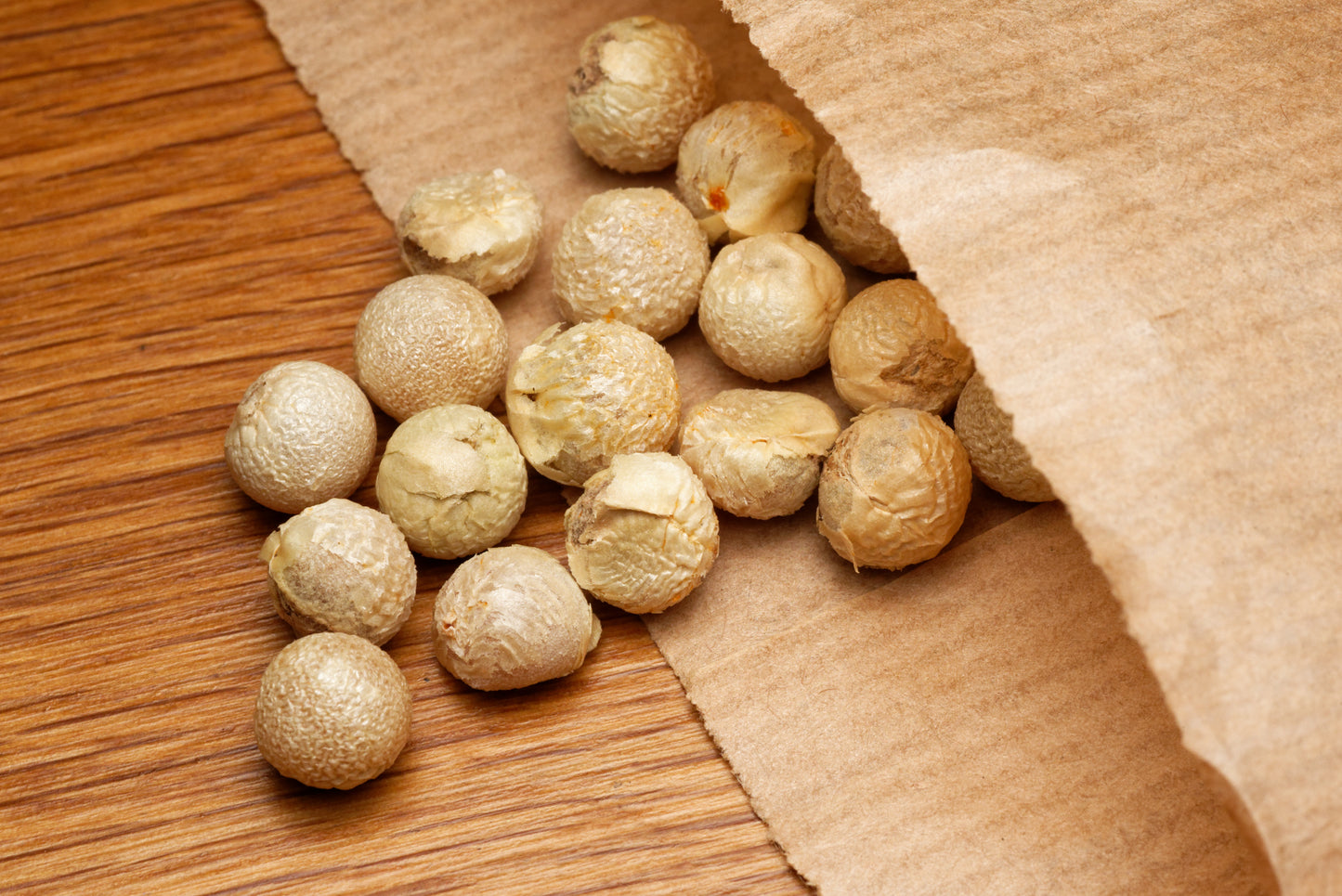
Seeds of Dracaena draco germinate best under warm and stable conditions. For best results, we recommend:
- soaking in lukewarm water for 12–24 hours
- sowing in a light, well-drained, and mineral soil mix
- temperature of 20–25 °C
- keeping the soil slightly moist, but not wet
Germination typically occurs within 2–6 weeks. The young plants grow slowly but develop their characteristic, stiff leaves early on.
Utility and collector value
Dracaena draco is primarily grown as an ornamental and collector plant. It is especially its unique growth habit, long lifespan, and historical significance that make the species so sought after.
As a seedling, it is a long-term project, but that is exactly what makes the plant extra interesting – you get the opportunity to follow the development of an iconic tree over many years.
Dracaena draco is an obvious choice for the plant enthusiast who wants to grow one of the world's most characterful and historical trees entirely from seed – a sculptural species with both botanical and cultural depth.
Seed germination
Seed germination
Childcare
Childcare
Size
Size
Up to 15 meters high
Difficulty level
Difficulty level
Between
NB
NB
The name comes from the red dye that the bark secretes.