Buy 4 packs of seeds (or more) and get a 10% discount

a Piece of Nature
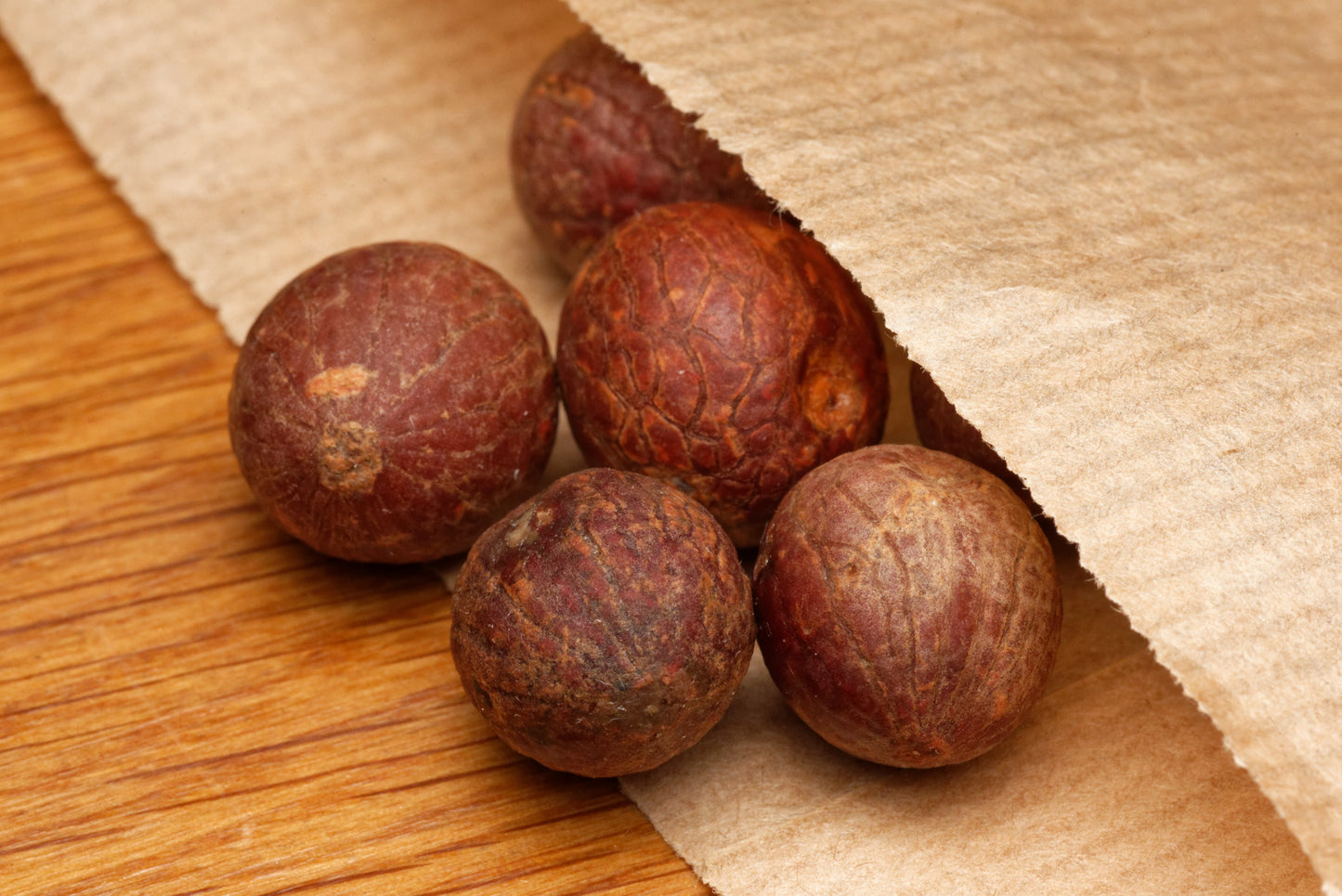
Triangle Palm (Dypsis decaryi) | seeds, 5 pcs.
Triangle Palm (Dypsis decaryi) | seeds, 5 pcs.
Couldn't load pickup availability
- Latin name: Dypsis decaryi
- Danish names: Trekantspalme, trekantpalme
- English names: Triangle palm, Three-sided palm
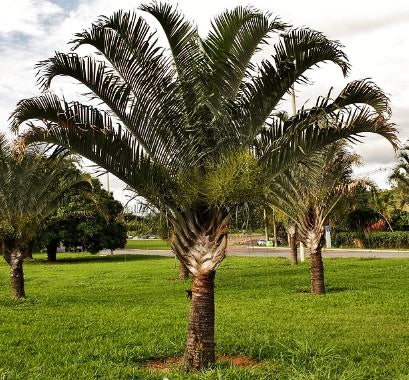
Dypsis decaryi is one of the most distinctive palms from Madagascar. The species gets its name, triangle palm, from the unusual way its leaves are arranged: the thick leaf bases are positioned in three distinct rows around the trunk, forming a near-perfect triangle when viewed from above. This gives the palm a striking geometric growth habit, making it easily recognizable even among other exotic palm species.
The species originates from southeastern Madagascar, where its natural distribution is very limited. It grows in a relatively dry area on stony and nutrient-poor sites, and wild populations are under pressure due to habitat loss and degradation, as well as past harvesting. Although the triangle palm is now grown as an ornamental plant in warm regions around the world, its natural occurrence is quite localized.
Dypsis decaryi develops a single trunk and can reach about 10-15 meters in height under good conditions. The long, feathery leaves grow upwards and outwards from the three rows of thick leaf bases. The leaves often have a gray-green to slightly bluish hue, which, combined with the symmetrical leaf arrangement, gives the plant an almost sculptural appearance.
The triangular shape is most apparent around the crown, where the leaf bases sit closely around the trunk. In younger plants, this structure is already visible early on, making the triangle palm decorative long before it develops a substantial trunk.
The species is adapted to significantly drier conditions than many other palms from Madagascar. Once established, it tolerates periods of drought and, above all, requires a well-drained growing site. The combination of drought tolerance, gray-green leaves, and the distinctive growth habit reflects its natural environment in southern Madagascar.
If you are fascinated by unusual palms, you can explore our entire selection of palm seeds, where you will find both tropical collector species and more cold-tolerant palms.
Cultivation and requirements
Dypsis decaryi thrives best in warm, bright, and well-drained conditions and tolerates drier environments than many tropical palms. It prefers:
- A very bright location, preferably full sun once it is a larger plant
- An airy and well-drained, preferably slightly mineral, soil
- Regular watering during the growing season with slight drying between waterings
- Warm conditions and good air circulation
- Bright, frost-free overwintering with reduced watering
Good drainage is especially important for the triangle palm. It should be watered regularly during active growth, but consistently wet soil should be avoided. Young plants can benefit from protection against intense sun, while larger, acclimated plants develop best with plenty of light.
The species can tolerate briefly cool temperatures but is not reliably frost-hardy. In Danish conditions, it is therefore best grown in a pot so it can be kept in a warm, sunny spot outdoors in the summer and moved to a bright, frost-free place for the winter.
Growing from seed
Seeds of Dypsis decaryi germinate best with stable warmth. It is beneficial to soak the seeds in lukewarm water for 24-48 hours before sowing.
- Sow in an airy and well-drained sowing medium (alternatively, the bag germination method can be used)
- Cover the seeds lightly with approximately 1 cm of sowing medium
- Maintain a temperature around 25-30 °C
- Keep the sowing medium lightly and evenly moist, but not wet
- The seeds do not require cold stratification
Germination can begin after a few weeks but may be irregular and extend over several months. Stable warmth and a good balance of moisture and air in the sowing medium provide the best conditions.
Young plants first develop simple leaves, after which the feathery leaves and the characteristic three-sided leaf arrangement gradually become more apparent. Our deep palm pots are well-suited for further cultivation, as they provide ample space for the palm's roots.
- You may also want to see our article on germinating palm seeds.
Ornamental and collector value
Dypsis decaryi is primarily grown as an ornamental and collector's palm. Its geometric growth habit makes it one of the most recognizable palms from Madagascar, and in tropical and subtropical regions, it is often used as a specimen plant where its symmetrical crown can be fully appreciated.
For the palm collector, the species is particularly interesting because its characteristic appearance does not only emerge after decades of trunk formation. Younger plants already begin to show the three-sided placement of the leaf bases, allowing one to observe the unique triangular structure develop as the plant grows.
The triangle palm is also an example of Madagascar's exceptionally rich and unique palm flora. The island's long geographical isolation has resulted in a large number of palm species found nowhere else in the world, and Dypsis decaryi is among the most characteristic of these.
Its limited natural distribution also makes the species interesting from a conservation perspective. Even though the triangle palm has become relatively widespread in cultivation, the situation for the original populations in Madagascar remains much more vulnerable.
Dypsis decaryi is therefore an obvious choice for anyone wishing to grow an unusual palm from seed, where leaf arrangement, color, and growth habit differ significantly from classic fan and date palms.
Seed germination
Seed germination
Childcare
Childcare
Size
Size
Up to 15 meters
Difficulty level
Difficulty level
Trained
NB
NB