Skip to product information
1 of 4

a Piece of Nature

Elephant foot yams (Amorphophallus paeoniifolius)

Elephant foot yams (Amorphophallus paeoniifolius)

Regular price €17,95 EUR
Regular price Sale price €17,95 EUR
Sale Sold out
Taxes included. Shipping calculated at checkout.
Size
Quantity

RARE

  • Latin name: Amorphophallus paeoniifolius
  • Danish names: Elephant yam
  • English names: Elephant foot yam, whitespot giant arum

We have finally succeeded in getting seeds of this rare Amorphophallus species to germinate – an exciting opportunity for collectors and enthusiasts!

Amorphophallus paeoniifolius, better known as elephant foot yam, is a widespread crop cultivated throughout large parts of Asia. It is grown especially for its large, round tubers, which are an important food source in many Asian cuisines. The tubers are often boiled, mashed, or deep-fried and are included in countless dishes in both Southeast Asia and India.

Due to its widespread use as a cultivated crop, it is not entirely certain where the species originally originates from, but new DNA studies suggest that the elephant foot yam originated from the southeastern islands of Asia, from where it has spread westward through human cultivation.

Appearance and growth

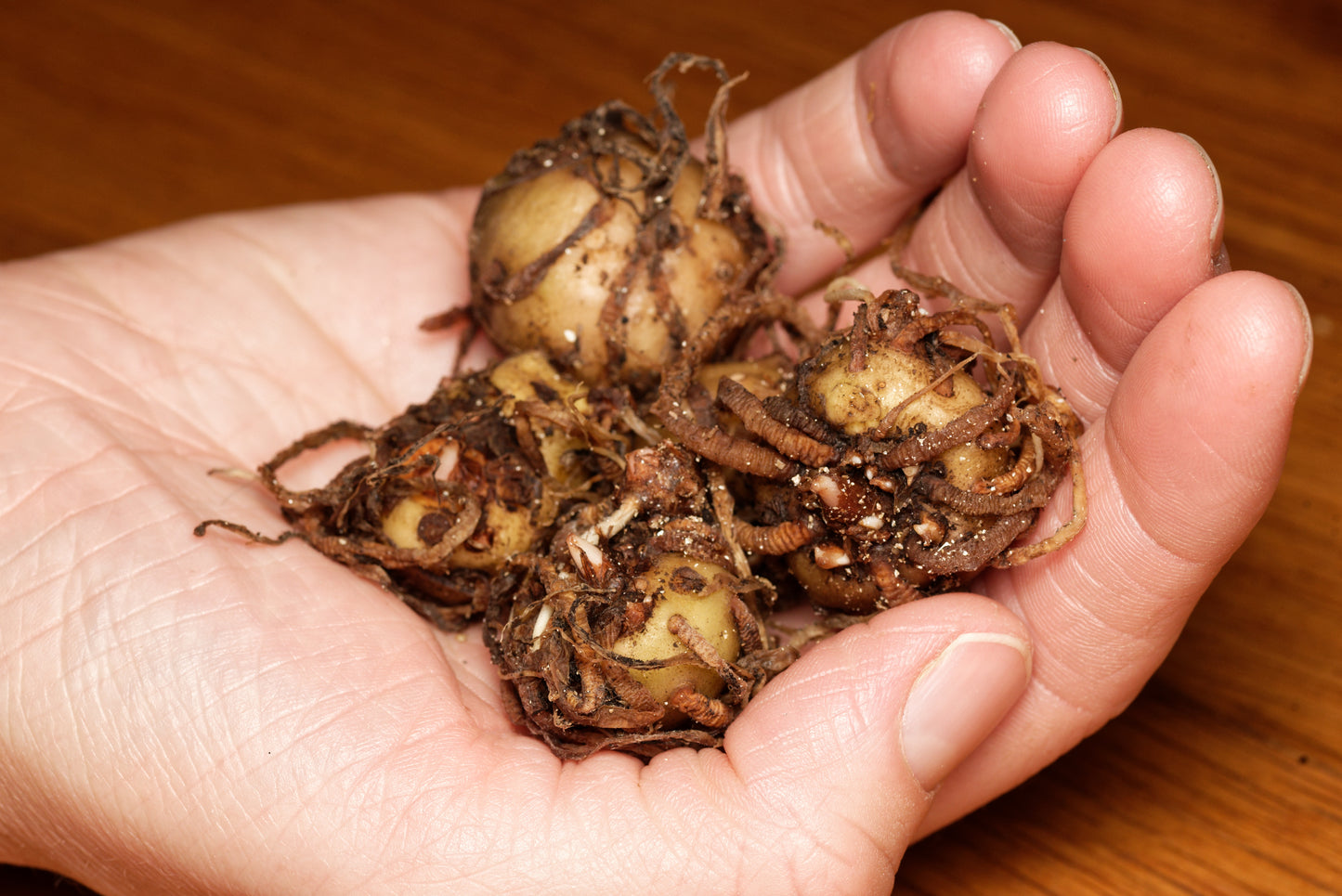
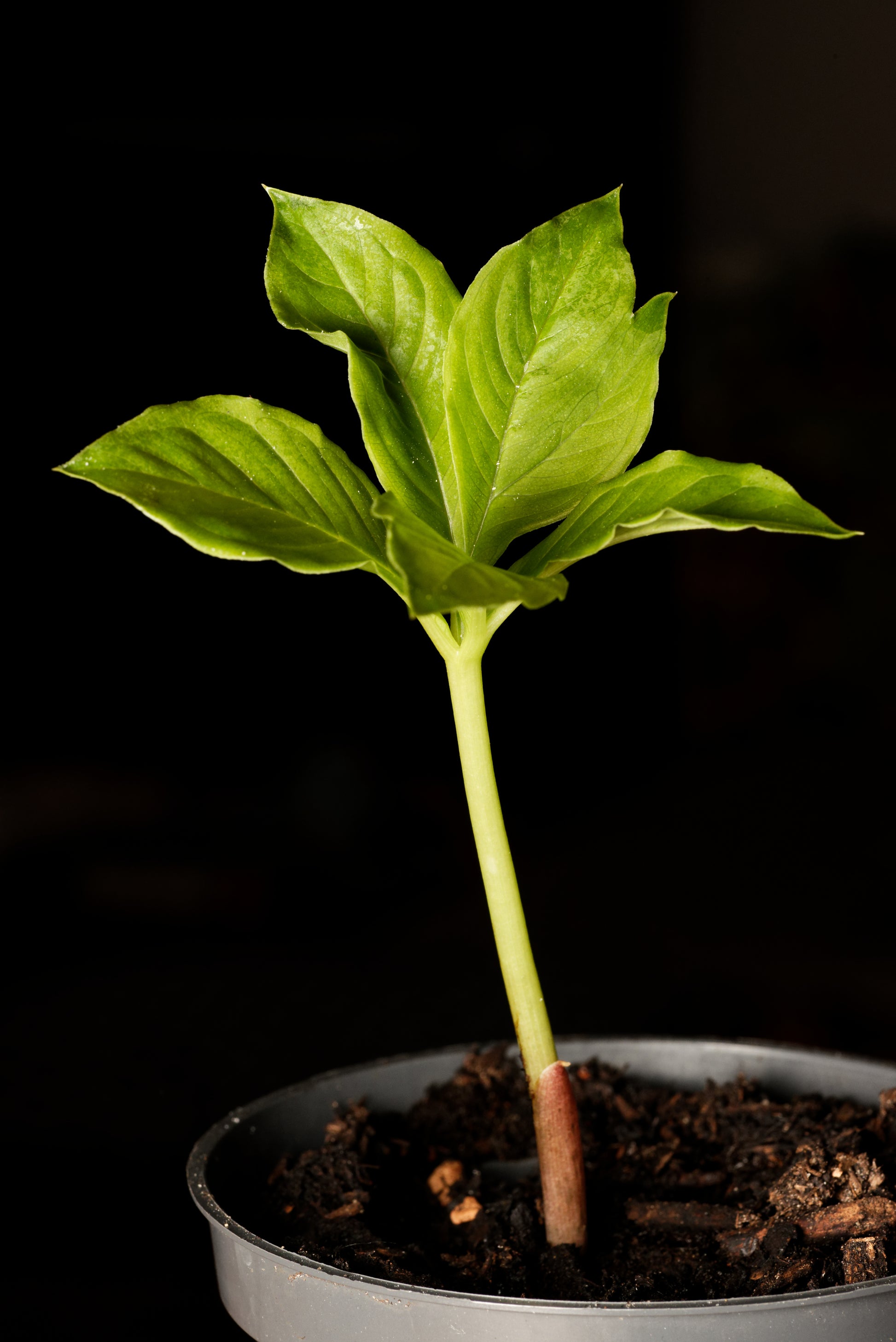
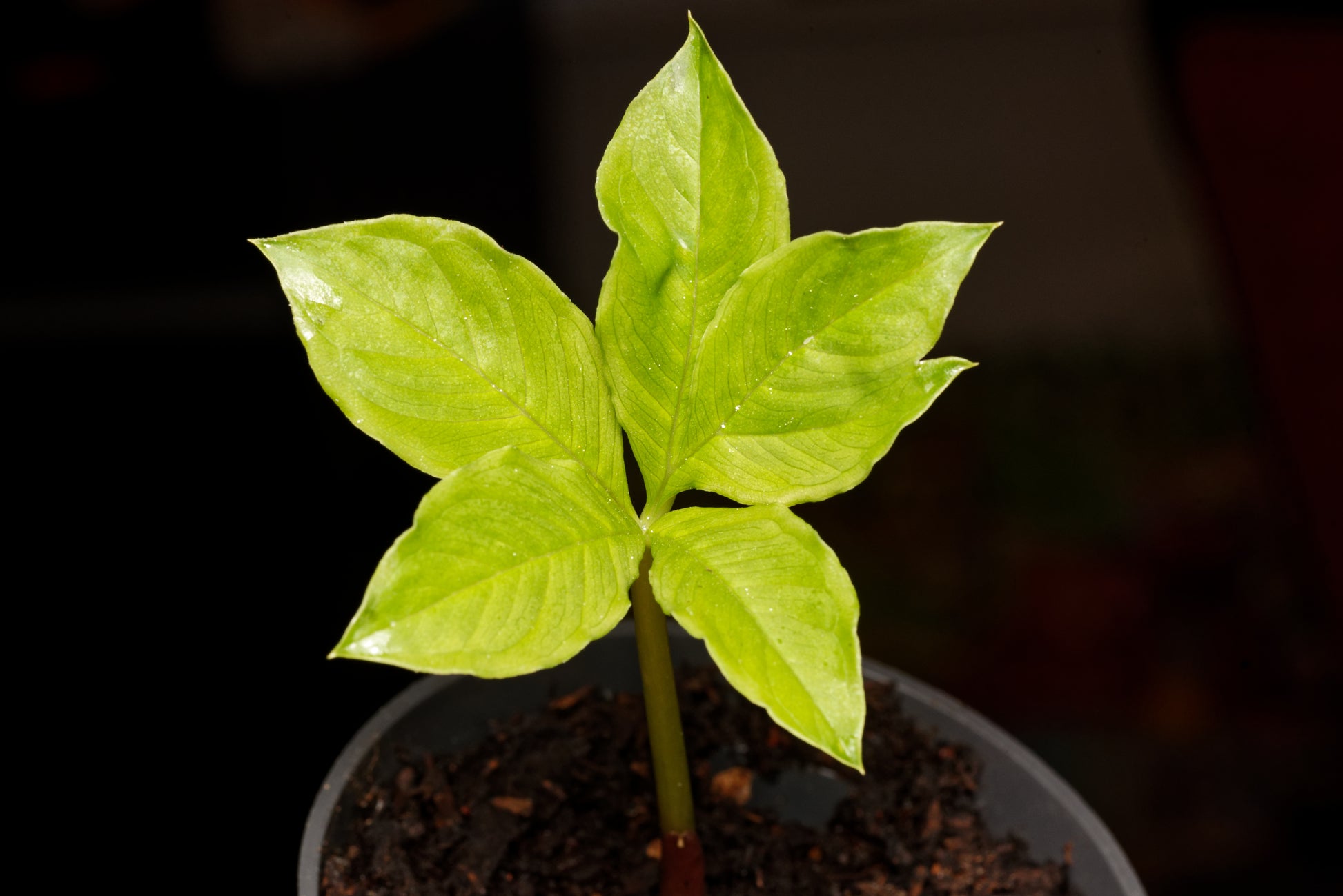
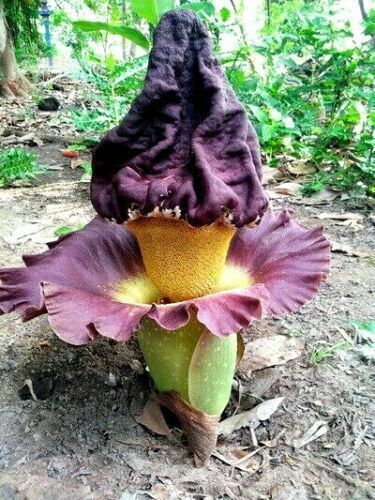
Amorphophallus paeoniifolius forms large, round tubers that can reach impressive sizes. From the tuber shoots a strong stalk with a large, umbrella-shaped leaf, which resembles a giant version of Amorphophallus konjac. When the plant is mature, it develops a peculiar, large, and purple inflorescence, which is a spectacular sight – and which emits a characteristic scent/odor to attract pollinators.

Usage

Elephant foot yam is primarily known as an important food plant, but it is also grown as an ornamental plant for its dramatic flowering and decorative growth. In Asia, it is considered a nutritious root vegetable and is used in both daily cooking and festive meals.

Cultivation and care

  • Light: Prefers partial shade to indirect sunlight.
  • Temperature: Thrives in warm, tropical temperatures (20–35 °C) and does not tolerate frost.
  • Soil: Well-drained, humus-rich aroid soil with good nutrients.
  • Watering: Keep the soil evenly moist during the growing season, but avoid waterlogging.
  • Fertilization: Since the plant is fast-growing and the tuber becomes large, it should be fertilized well throughout the growing season with a balanced, nutrient-rich fertilizer like our organic fertilizer.
  • Overwintering: When the leaf withers, the tuber can be dug up and stored dry and dark at approx. 10–15 °C. When the tuber again shows signs of life, it is replanted in new soil. Plant relatively deep.

Amorphophallus paeoniifolius is both a useful and spectacular species for collectors who want a rare and exciting Amorphophallus in their collection – and one that also holds a long tradition as an important crop in large parts of Asia.

Note: The pictures are meant as examples of the plant and do not necessarily represent the exact plant being purchased.

Size

up to 2.5 meters

Childcare

Can actually be planted outdoors in the spring and then dug up when the plant dies back.

- Place in a bright spot, preferably in some sun
- Good nutrient-rich and well-drained soil
- Water well during the growth period
- Fertilize during the growing season
- Requires a dry resting period when the plant dies back

Difficulty level

Between

NB

Yes, the flowers smell awful :)

View full details