a Piece of Nature
Fishbone cactus (Disocactus anguliger) | plant
Fishbone cactus (Disocactus anguliger) | plant
Couldn't load pickup availability
- Latin name: Disocactus anguliger (syn. Epiphyllum anguliger)
- Danish names: Fiskebenskaktus, zigzagkaktus
- English names: Fishbone cactus, zig-zag cactus, ric rac cactus
Disocactus anguliger, better known as the fishbone cactus, is a very special tropical cactus with long, flat, and deeply serrated stems that resemble a fishbone or a zigzag pattern. This characteristic appearance makes the plant decorative even without flowers and has made it a popular, though still unusual, houseplant.
The species originates from Mexico, where it grows in humid forest areas. Unlike classic cacti from arid desert regions, the fishbone cactus is an epiphytic forest cactus that naturally grows on trees and other surfaces, where it gains access to filtered light, higher humidity, and organic matter.
Appearance and growth
The fishbone cactus develops long, flat green stems with deep, regular indentations along the sides. The distinctive zigzag-shaped stems give the plant an almost graphic look, making it easily recognizable among other cacti.
The stems initially grow relatively upright, but gradually become longer and begin to hang down. For this reason, Disocactus anguliger is particularly well-suited as a hanging plant or placed high on a shelf, where the long fishbone-shaped stems can hang freely.
Older plants can develop into large and full specimens with numerous branched stems. The plant has no sharp spines and therefore has a softer look than many other cactus species.
Large and fragrant flowers
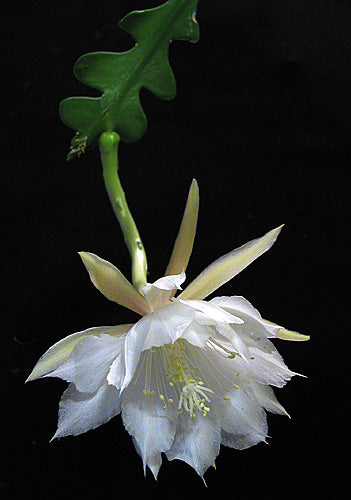
A well-established fishbone cactus can develop impressive flowers directly from the stems. The flowers are large, creamy white to pale yellow, and have long, narrow petals that give them an almost star-shaped appearance.
The flowers typically open in the evening or at night and can have a pleasant, sweet scent. An individual flower only lasts for a relatively short time, but the contrast between the distinctive green stems and the large, elegant flowers makes the blooming process something quite special.
A cactus from the forest – not the desert
Although the fishbone cactus is a true cactus, it should not be cultivated exactly like a classic desert cactus. In nature, it grows as an epiphyte in forest areas, where its roots are located in small collections of organic matter on trees and rocks.
This means that the plant prefers an airy and well-drained soil, but at the same time prefers a bit more moisture than many common cacti. It should therefore not be kept bone-dry throughout the growing season, but the roots must not stand in wet and compact soil either.
Cultivation and care
- Light: Thrives best in a bright location with indirect light or light sun. Intense midday sun through a window can scorch the stems.
- Temperature: Thrives well at normal room temperature, typically around 18–28 °C during the growing season. The plant should be protected from frost.
- Soil: Use an airy and well-drained mixture. Cactus soil can advantageously be mixed with, for example, bark, perlite, or other coarse material so that the roots get plenty of air.
- Watering: Water regularly during the growing season, but let the top layer of soil dry out slightly between waterings. Fishbone cacti generally prefer more water than traditional desert cacti.
- Humidity: As a tropical forest cactus, the plant appreciates moderate to high humidity, but generally manages well in normal indoor conditions.
- Fertilizer: Fertilize lightly and regularly through spring and summer with a mild organic fertilizer. Reduce or stop fertilizing during the winter period.
- Placement: The plant is particularly well-suited for a hanging pot or a high position where the long zigzag-shaped stems can hang freely.
- Overwintering: Keep the plant a little drier through the winter. A bright and slightly cooler winter period can help promote the formation of flower buds.
Easy to propagate from cuttings
Disocactus anguliger can be propagated relatively easily from cuttings. A piece of a healthy stem is cut off and left to dry slightly at the cut surface before it is planted in an airy and well-drained soil mixture. Keep the soil slightly moist until the cutting has formed roots.
Over time, even a small cutting can develop into a full plant with long, characteristic stems.
A different and decorative cactus
The fishbone cactus is an obvious choice for those who want to grow a cactus that stands out significantly from the classic spiny species. The characteristic fishbone-shaped stems make the plant decorative year-round, while the large, fragrant flowers provide an extra highlight on older plants.
Disocactus anguliger combines an unusual appearance with relatively simple care and is therefore an exciting plant for both the beginner and the collector of epiphytic cacti and other exotic plants.
Childcare
Childcare
Size
Size
Up to 60 cm long leaves
Difficulty level
Difficulty level
Easy
Note
Note
Formerly known as Epiphyllum anguliger



REMEMBER ALSO
Organic fertilizer (cactus)
Del