a Piece of Nature
Canary Island date palm (Phoenix canariensis) | plant
Canary Island date palm (Phoenix canariensis) | plant
Couldn't load pickup availability
FROST TOLERANT
- Latin name: Phoenix canariensis
- Danish names: Fønikspalme, kanarisk daddelpalme, kanariepalme
- English names: Canary Island date palm, Canary palm, pineapple palm
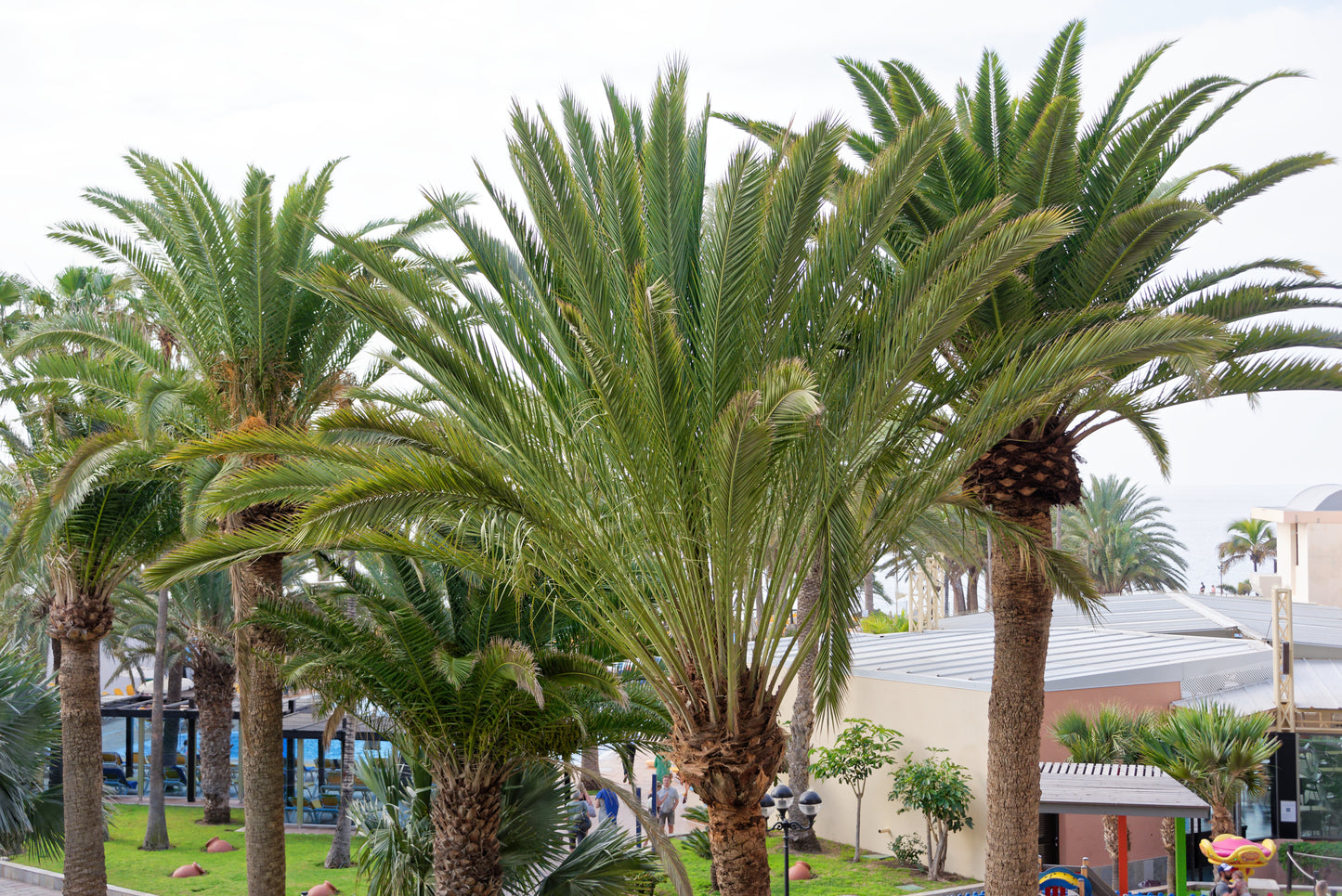
Phoenix canariensis, better known as the Canary Island date palm, is one of the most impressive and classic palms from Mediterranean gardens and parks. With its sturdy trunk and large, elegantly arching pinnate leaves, it creates an exotic look that brings to mind sunny boulevards and subtropical landscapes.
The species originates from the Canary Islands, where it grows naturally and is a characteristic part of the islands' vegetation. Today, Phoenix canariensis is grown as an ornamental palm in warm and subtropical areas across large parts of the world. Although it can develop into a massive palm in its natural environment, it is also well-suited as a container plant, where its growth can be kept more restricted.
Appearance and growth
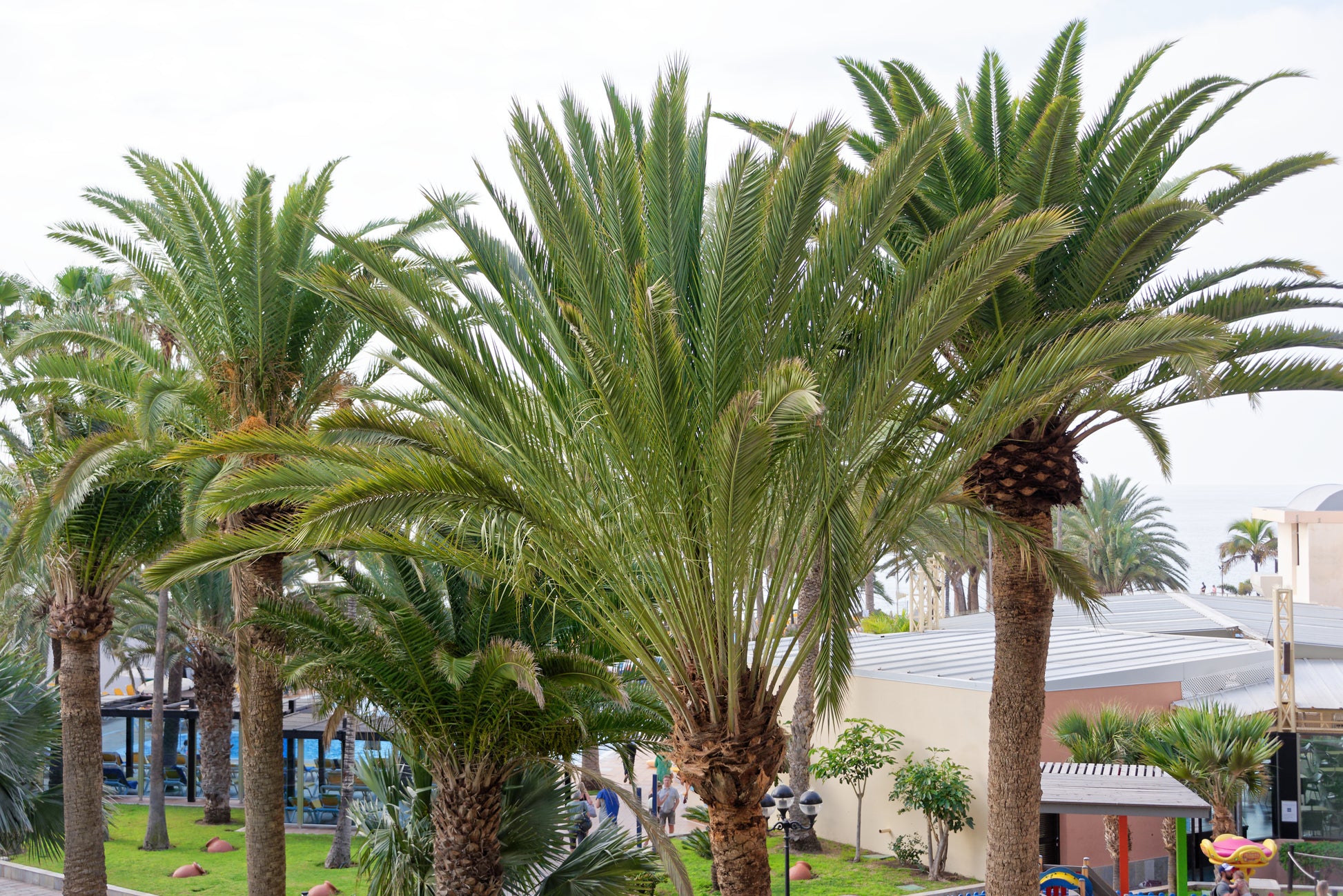
Phoenix canariensis is a sturdy, evergreen palm with a single trunk and a dense crown of long, feathery leaves. The leaves are deep green, stiff, and elegantly arched, and on older plants, they can become several meters long.
Under optimal conditions, the Canary Island date palm can develop a thick trunk and reach a height of 15–20 meters. The crown can become very wide and consists of a large number of leaves, which together give the palm its characteristic, almost spherical silhouette.
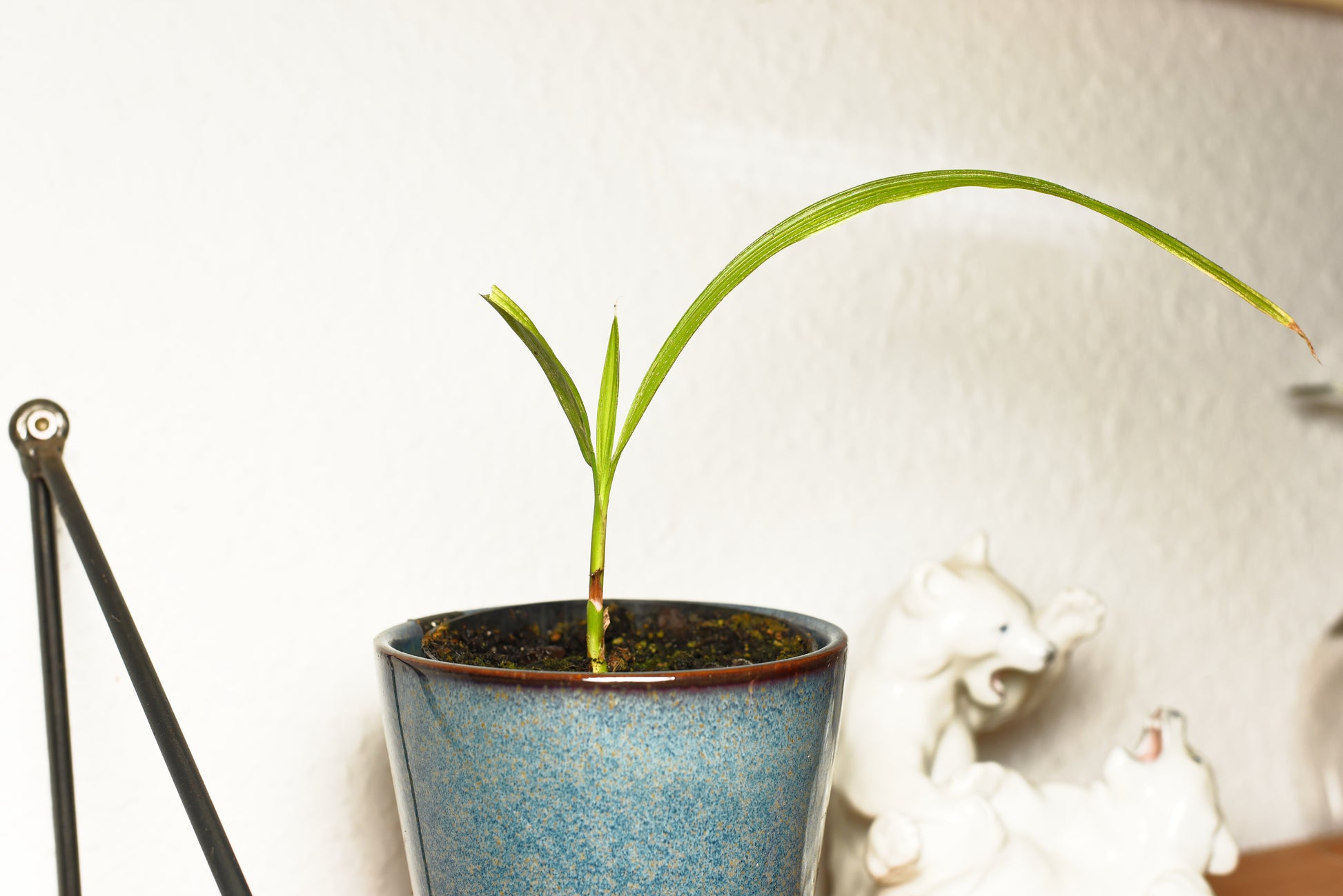
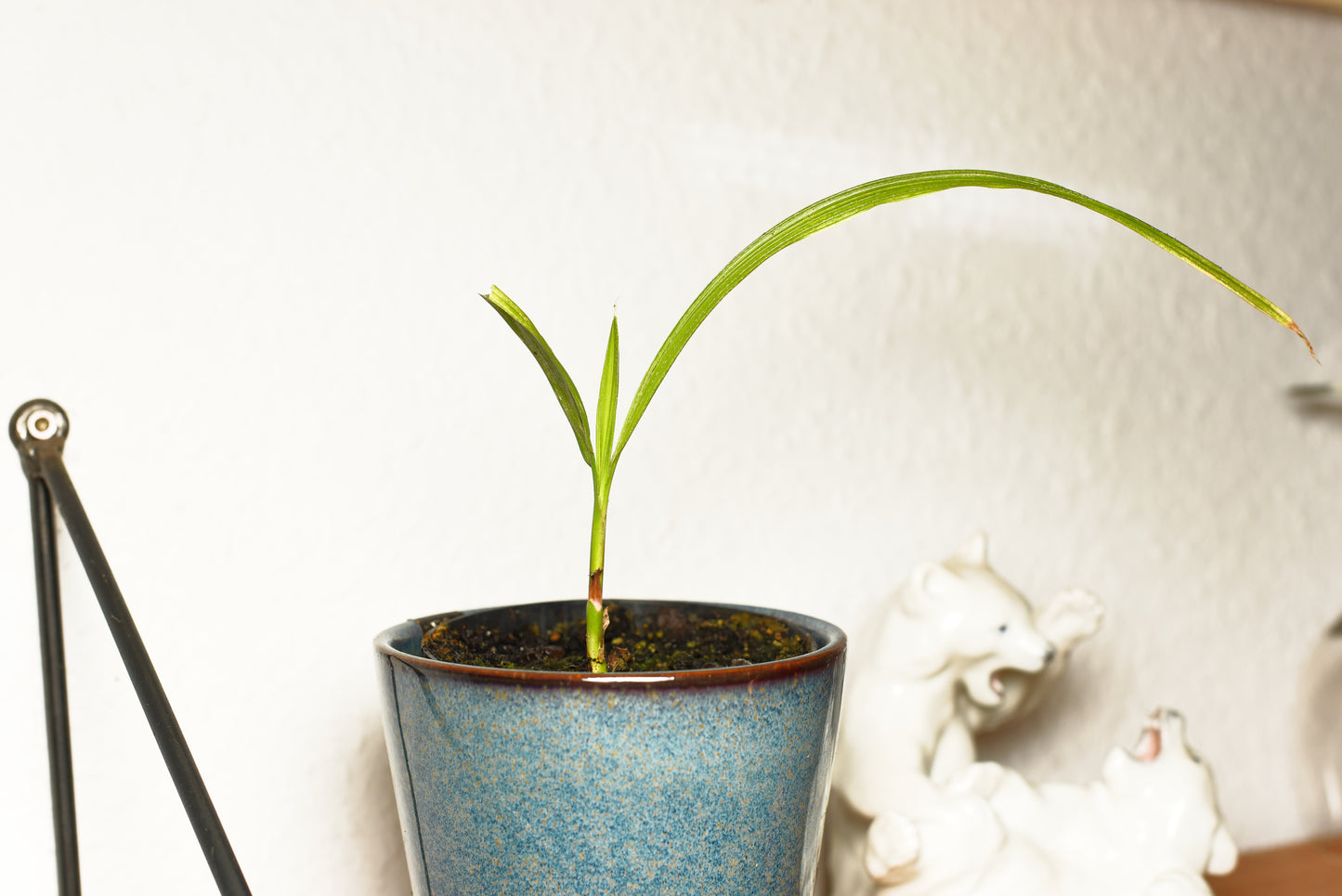
Young plants have not yet developed a visible trunk but instead form a dense rosette of leaves from the center of the plant. As the palm grows, the leaves become longer and more distinctly feathery, and the characteristic trunk slowly begins to take shape.
The leaf stalks are equipped with strong, sharp thorns near the base, which one should be aware of when handling and pruning.
Flowers and fruits
Older Canary Island date palms can develop large, branched inflorescences with numerous small, yellowish to cream-colored flowers. Phoenix canariensis is dioecious, meaning that male and female flowers are found on separate plants.
If a female plant is pollinated, it can develop large clusters of small, oval fruits that ripen into orange-yellow or brownish shades. The fruits resemble small dates but have only a thin layer of flesh and are usually not cultivated as edible fruit.
The Canary Island date palm is closely related to the true date palm, Phoenix dactylifera, which is cultivated commercially for its edible dates. Phoenix canariensis, on the other hand, is primarily grown for its impressive size and decorative growth.
An iconic palm from the Canary Islands
The Canary Island date palm is native to the Canary Islands, where it grows in valleys, canyons, and areas with access to underground moisture. Here, it can form characteristic palm groves and is an important part of the local landscape.
Although the species is now a familiar sight along roads and promenades in Southern Europe, its natural distribution is limited to the Canary Islands. It is therefore an exciting example of a plant that, through cultivation, has become far more widespread than in its original habitat.
Canary Island date palm as a container plant in Denmark
Phoenix canariensis is a popular palm for large pots on terraces, in courtyards, and in winter gardens. It tolerates sun and heat well and can therefore be kept outdoors during the summer, where it receives plenty of light and fresh air.
Although the Canary Island date palm is more cold-tolerant than many tropical palms, it is not reliably winter-hardy in Denmark. Established plants can handle short-term light frost, but prolonged frost periods and the combination of cold and winter moisture can cause serious damage.
It is therefore recommended to grow the palm in a large pot that can be moved to a bright and frost-free location during the winter period. With proper care, it can develop into an impressive and decorative palm over many years.
Cultivation and care
- Light: Thrives best in a very bright and sunny location. Plenty of direct sunlight promotes vigorous growth and the development of a dense crown. Young plants should be gradually accustomed to strong sun.
- Temperature: Prefers warm conditions during the growing season and thrives well at around 20–30 °C. Larger, established plants tolerate short-term light frost but should be protected against prolonged frost periods.
- Soil: Use nutrient-rich, airy, and well-drained soil. Good palm soil or standard quality potting soil mixed with mineral material such as perlite or coarse sand is suitable.
- Watering: Water regularly and thoroughly during the growing season, but let the top layer of soil dry out slightly between waterings. Avoid letting the roots stand in water constantly.
- Fertilizer: Fertilize regularly throughout the spring and summer with a suitable organic fertilizer. The Canary Island date palm has a relatively high nutrient requirement during active growth.
- Repotting: Young plants can be repotted as needed when the roots fill the pot. Older plants develop a strong root system and should be grown in large, stable pots with good drainage.
- Pruning: Only remove old leaves when they are completely withered. Avoid damaging the plant's central growth point, as the palm only has one active growth point.
- Outdoors in summer: The Canary Island date palm thrives exceptionally well on a warm, sunny terrace or in a sheltered courtyard. Gradually accustom the plant to direct sun after winter.
- Overwintering: Best overwintered in a bright, cool, and frost-free place, preferably around 5–10 °C. Reduce watering significantly during the winter, but do not let the root ball dry out completely.
An impressive palm for the terrace and winter garden
With its long, arched feathery leaves and vigorous growth, Phoenix canariensis is one of the palms that can truly create an exotic look. Even relatively young plants are decorative, and over time, the Canary Island date palm develops into a striking plant that can become a natural centerpiece on the terrace or in the winter garden.
The Canary Island date palm is also an exciting palm for those who wish to grow a species normally associated with warmer climates, but which can also thrive in Denmark with the right winter protection.
Explore more exciting palms
At a Piece of Nature, you will find a large selection of palms, from tropical species with large, elegant feathery leaves to more cold-tolerant fan palms that can be grown in pots or in sheltered locations.
If you are interested in palms, you can also explore our palm category, where you will find the beautiful blue fan palm (Chamaerops humilis var. cerifera) and many other exciting species. We are constantly expanding our range as we find new interesting palms for the collection.
- If you are feeling adventurous, you can get Canary Island date palm seeds (Phoenix canariensis).
Childcare
Childcare
Size
Size
Reaches up to 40 meters (though significantly less in this country)
Difficulty level
Difficulty level
Beginner
Note
Note
Exclusive pot

ALSO REMEMBER
Organic fertilizer (Tropical) | 500 ml
Del