Buy 4 packs of seeds (or more) and get a 10% discount


a Piece of Nature
Grandidier's baobab (Adansonia grandidieri) | seeds, 10 pcs.
Grandidier's baobab (Adansonia grandidieri) | seeds, 10 pcs.
Couldn't load pickup availability
RARE
- Latin name: Adansonia grandidieri
- Danish names: Grandidiers baobab, Madagaskar-baobab
- English names: Grandidier’s baobab
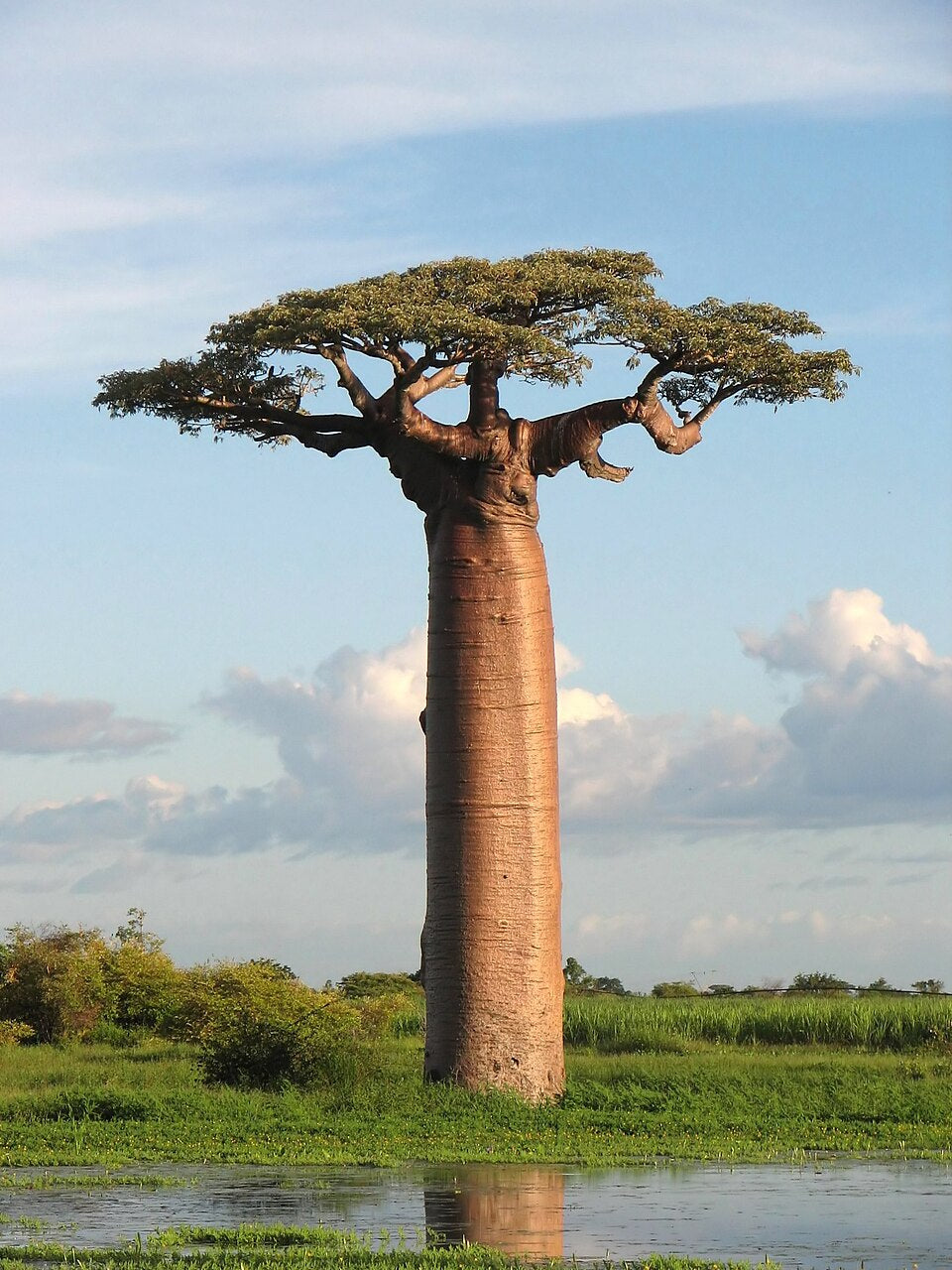
We have finally succeeded in sourcing the most iconic baobab tree. Adansonia grandidieri is the most iconic and majestic of all baobab species and a true symbol of Madagascar’s unique nature. The species is endemic to western Madagascar, where it grows in dry savanna and forest areas and forms the famous landscapes known as the “Avenue of the Baobabs”. The tree is known for its enormous, columnar trunk, which can reach up to 25–30 meters in height and several meters in diameter.
The trunk acts as a natural water reservoir, making the plant extremely drought-tolerant. The crown is relatively small in relation to the size of the trunk and bears palmate leaves, which are shed during dry periods. During the flowering period, the tree develops large, white to cream-colored flowers with long stamens – spectacular, but short-lived, and primarily pollinated by bats in the wild.
Cultivation and requirements:
Adansonia grandidieri is a distinctly heat- and sun-loving plant. It thrives best in:
- Full sun
- Very well-drained, sandy or mineral soil
- Sparse watering, especially during dormant periods
The species tolerates no frost and must be grown as a container plant in Denmark, which can be kept outdoors during the summer months and overwintered in a bright, frost-free location. The temperature should preferably be kept above 12–15 °C year-round. During the winter period, the plant often enters dormancy and sheds its leaves – which is completely natural for a baobab.
Growing from seed:
The seeds have a very hard shell and require pre-treatment to germinate. They should be lightly filed or covered with near-boiling water and then soaked for 24–48 hours. Afterwards, they should be sown in a very well-drained soil mix and kept at 25–30 °C.
Germination typically occurs after 2–6 weeks. The young plants quickly develop the characteristic thickened trunk (caudex) that makes the baobab so distinctive – even in pot culture.
Utility:
In its natural habitat, Adansonia grandidieri has great cultural and ecological significance. The trees serve as a habitat for birds, bats, and insects, and the trunks can store water during dry periods.
As an ornamental plant, the species is grown for its extreme and sculptural appearance and is particularly popular among collectors of caudex plants and exotic trees. Even as a young plant, it is a striking and conversation-starting addition to any collection.
Adansonia grandidieri is a slow-growing but truly unique plant – a living icon from Madagascar that brings drama, history, and exotic character in a pot-sized format. 🌳
Seed germination
Seed germination
Childcare
Childcare
Size
Size
Up to 20 meters tall (but much smaller in Denmark)
Difficulty level
Difficulty level
Between
NB
NB
Baobab trees are most often used as bonsai trees.