Buy 4 packs of seeds (or more) and get a 10% discount
a Piece of Nature
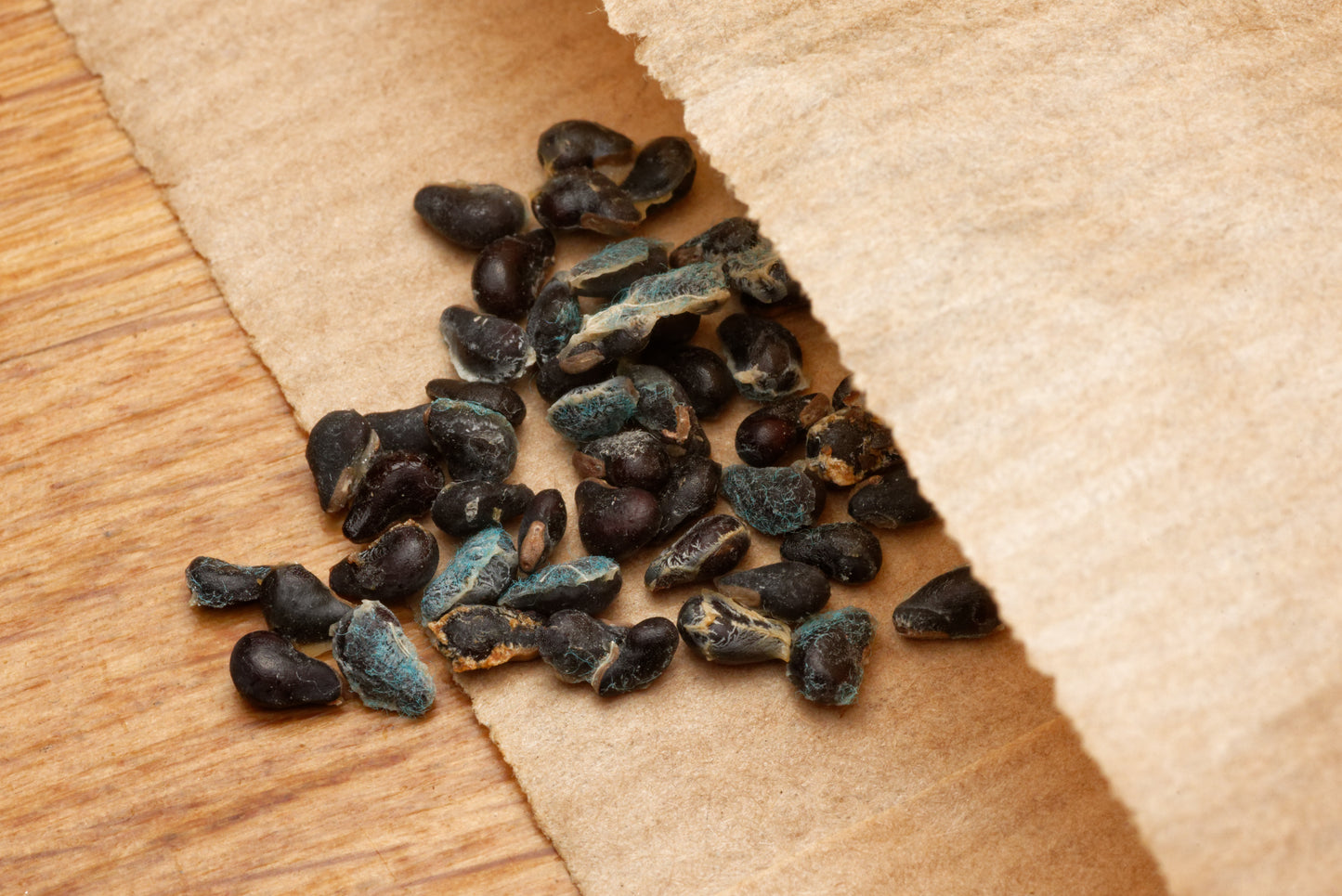
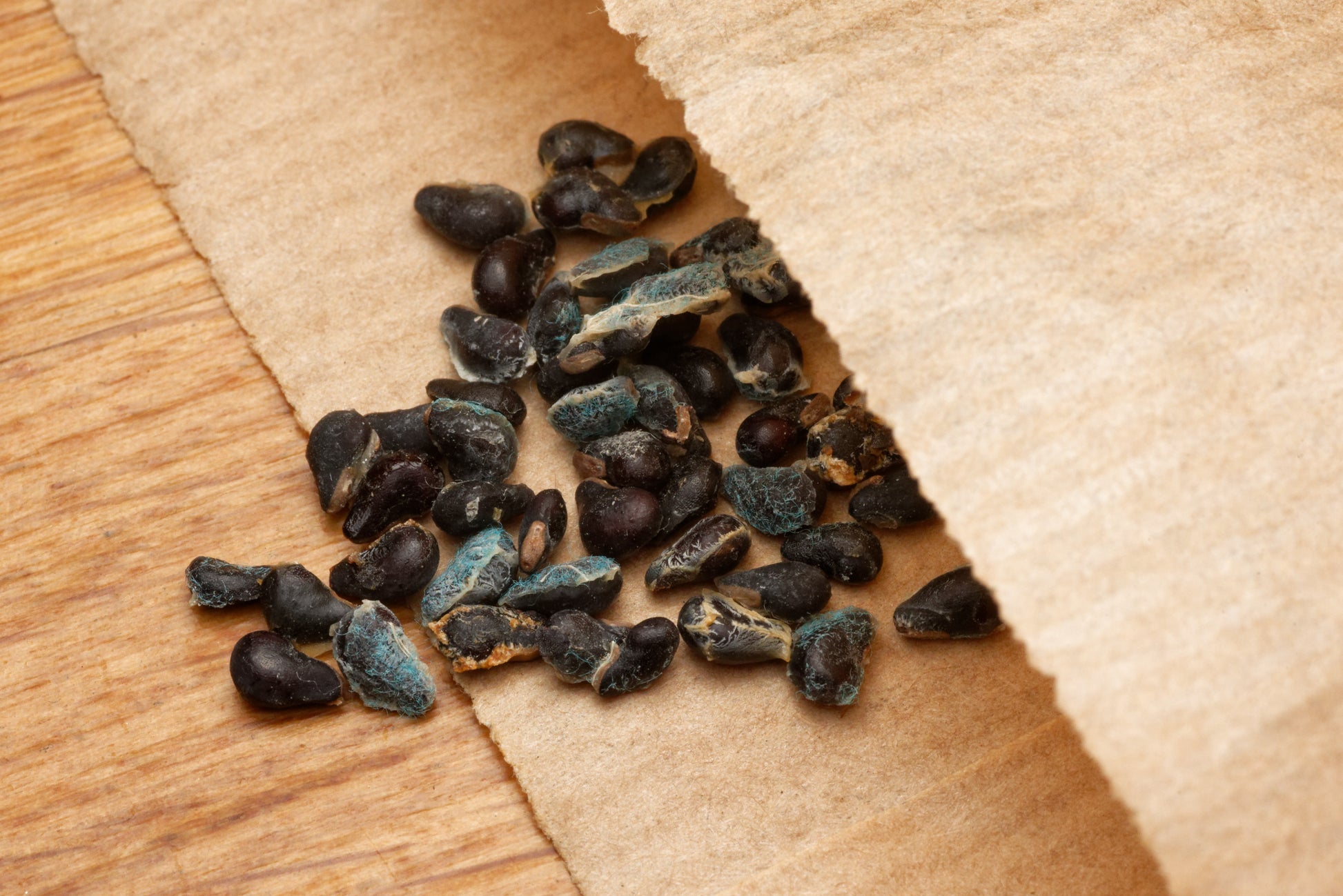
Yellow Dragon Fruit (Hylocereus megalanthus) (RARE) | seeds, 10 pcs.
Yellow Dragon Fruit (Hylocereus megalanthus) (RARE) | seeds, 10 pcs.
Couldn't load pickup availability
RARE
- Latin name: Hylocereus megalanthus (accepted name: Selenicereus megalanthus)
- Danish names: Gul pitahaya, gul dragefrugt
- English names: Yellow dragon fruit, yellow pitaya, yellow pitahaya
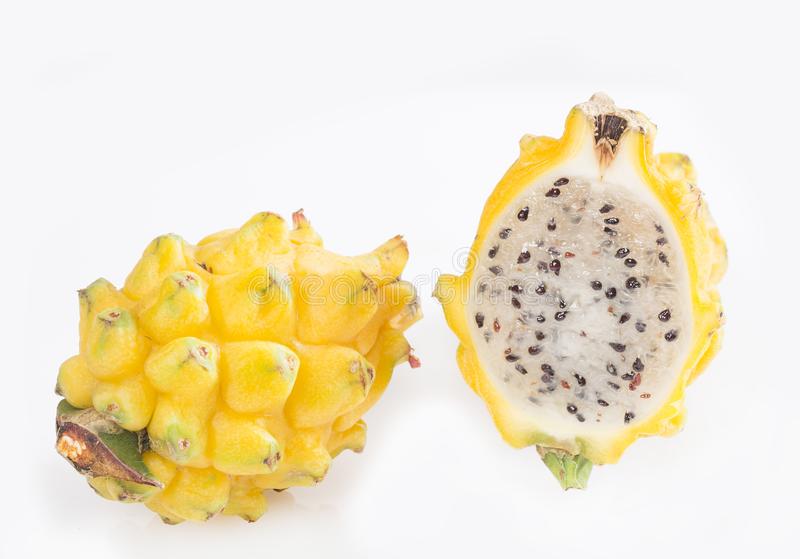
Hylocereus megalanthus is a rare and particularly exciting dragon fruit cactus that produces the characteristic yellow pitahaya. While most people associate dragon fruit with a vibrant pink or red skin, this species instead develops beautiful yellow fruits with light, almost white flesh and numerous small black seeds.
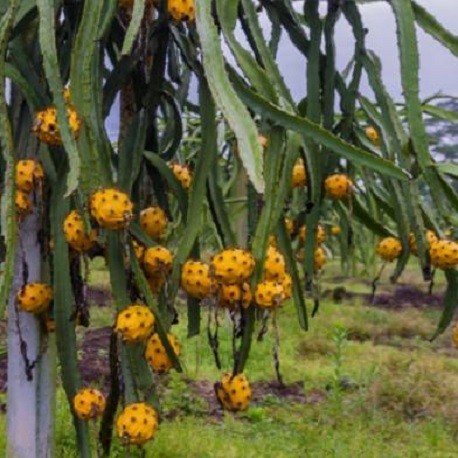
The species originates from northwestern South America and is found naturally in areas around, among others, Colombia and Ecuador. Here, it grows as a climbing or epiphytic cactus that uses trees and other vegetation for support. Its long stems can form aerial roots and climb toward the light, giving the plant a growth form that differs significantly from classic desert cacti.
Hylocereus megalanthus is seen far less frequently in cultivation than the classic white-fleshed dragon fruit and is therefore particularly interesting for collectors of exotic fruit plants and unusual cacti. The yellow pitahaya is grown commercially in parts of South America, but as a plant – and not least as seeds – it remains a much more uncommon sight than the red and pink types of dragon fruit.
As with other dragon fruit cacti, the flowering is spectacular. The plant develops large, bright flowers that typically open in the evening and at night. After successful pollination, the flowers can develop into the very characteristic yellow fruits.
The rare yellow dragon fruit
It is the fruit in particular that makes Hylocereus megalanthus quite special. The ripe fruit acquires a bright yellow skin, which is typically provided with small spines or spiny protrusions. Inside, there is light-colored flesh filled with small black seeds. The flavor is often described as sweet and aromatic, and yellow pitahaya is known for potentially being sweeter than many of the more common types of dragon fruit.
The yellow dragon fruit differs clearly from Hylocereus undatus, which produces the classic pink to red dragon fruit with white flesh. We also have seeds of Hylocereus costaricensis, which develops dragon fruits with deep red to purple flesh.
With these three species, it is therefore possible to grow an unusual collection of different pitahaya: the classic white-fleshed dragon fruit from H. undatus, the red-fleshed dragon fruit from H. costaricensis, and the rare yellow pitahaya from H. megalanthus.
H. megalanthus stands out in particular in this trio. Not only is the fruit's yellow skin very different, but the species also has its natural origin in South America and is generally less common in private plant collections. For the collector who already grows the better-known dragon fruits, yellow pitahaya is therefore an obvious species to add to the collection.
Cultivation and requirements
Hylocereus megalanthus thrives best in bright and warm conditions but, compared to some tropical dragon fruits, may prefer slightly less extreme heat. When cultivating, the plant should be provided with:
- A bright location, preferably with several hours of sun
- An airy and well-drained soil
- Regular, but moderate watering during active growth
- Warm and frost-free conditions
- A stable support that the plant can climb on
Although Hylocereus megalanthus belongs to the cactus family, it should not be treated as a classic desert cactus. Its natural climbing and partially epiphytic growth means that the plant wants well-drained and airy soil but also appreciates more regular watering during the growing season.
A good cactus and succulent soil is suitable. Throughout the growing season, the plant can also benefit from our organic slow-release cactus fertilizer to support healthy and vigorous growth.
As the plant grows, it should have something to climb on. A sturdy pole or trellis works well, and the longer shoots can later be allowed to hang down. In this way, the plant can develop the characteristic growth form also seen in commercial dragon fruit cultivation.
In Denmark, Hylocereus megalanthus is best grown in a pot, greenhouse, or conservatory. It can be kept outdoors in a warm and sheltered place during the summer, but the plant does not tolerate the Danish winter and must be overwintered frost-free.
Cultivation from seeds
The rare yellow dragon fruit can be grown entirely from seeds, and although it takes time before a seed-grown plant becomes large enough to flower and set fruit, it is an exciting way to get this unusual species into the collection.
- Sow the seeds superficially in fine and well-drained seed compost
- Cover the seeds only very lightly or leave them on the soil surface
- Maintain a temperature of around 22–28 °C during germination
- Keep the soil evenly slightly moist, but not wet
- Place the sowing in a bright spot without strong direct sunlight on the very young sprouts
Under good, warm conditions, the seeds can begin to germinate relatively quickly. The first seedlings are quite small and delicate, and it is therefore important that the seed compost does not dry out completely. At the same time, it should be airy so that the small roots are not constantly standing in water.
When the seedlings grow larger and begin to develop more distinct cactus growth, they can gradually be accustomed to more light. Later, the plants can be repotted into a coarser and better-drained cactus soil.
Seed propagation requires patience if the goal is home-grown yellow dragon fruits, but it also provides the opportunity to follow the entire development from tiny seedlings to large, climbing plants. For a rare species like Hylocereus megalanthus, this is a major part of the experience of growing the plant.
Utility and collector's value
Hylocereus megalanthus combines several features that make it particularly interesting: an unusual climbing growth form, large night-blooming flowers, and not least the possibility of developing one of the most characteristic dragon fruits.
The yellow pitahaya is also significantly less common in cultivation than the classic pink and red dragon fruits. This gives the species a special collector's value, and it is ideal for those who seek rare seeds and want to grow exotic fruit plants that you won't find in every plant collection.
Together with Hylocereus undatus and Hylocereus costaricensis, Hylocereus megalanthus provides the opportunity to collect three very different types of dragon fruit. But with its bright yellow fruit, South American origin, and more rare occurrence, H. megalanthus is undoubtedly the species that stands out the most in the collection.
Seed germination
Seed germination
Childcare
Childcare
Size
Size
Up to 10 meters long
Difficulty level
Difficulty level
Beginner
NB
NB
We are talking about the rare yellow dragon fruit.