Buy 4 packs of seeds (or more) and get a 10% discount
a Piece of Nature
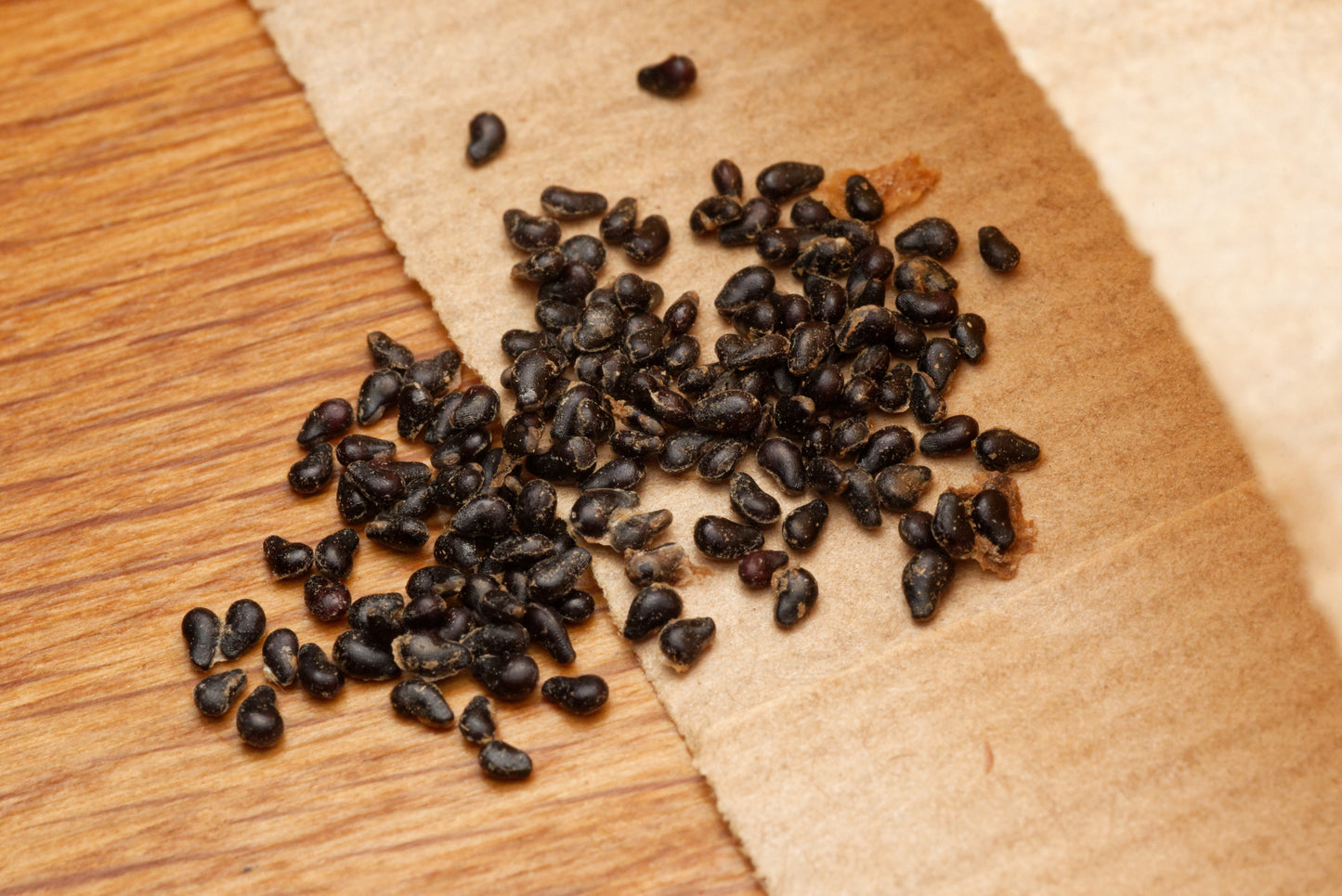
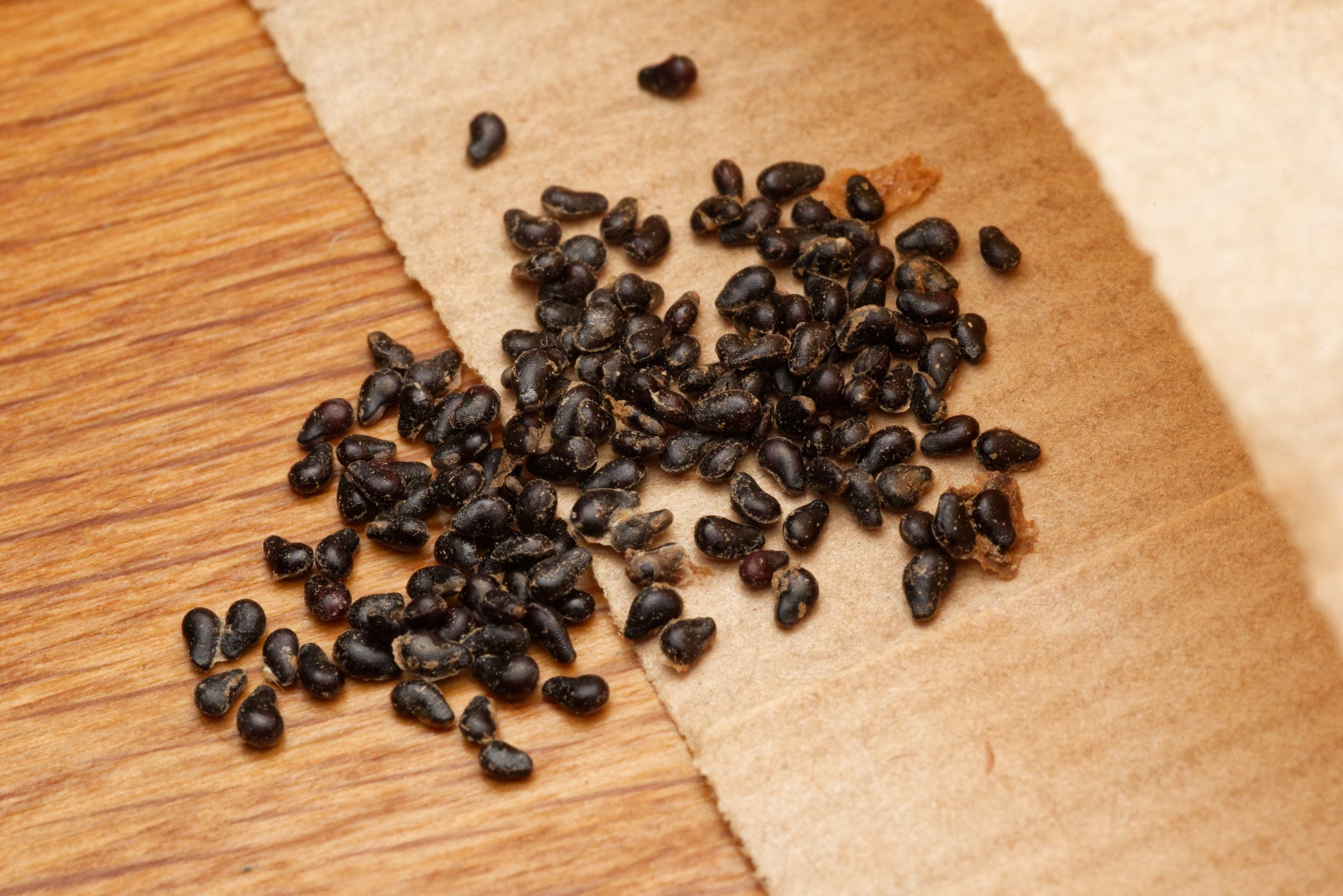
White Dragon Fruit (Hylocereus undatus) | seeds, 20 pcs.
White Dragon Fruit (Hylocereus undatus) | seeds, 20 pcs.
Couldn't load pickup availability
- Latin name: Hylocereus undatus (accepted name: Selenicereus undatus)
- Danish names: Pitahaya, dragon fruit, white dragon fruit
- English names: Dragon fruit, white-fleshed dragon fruit, pitaya
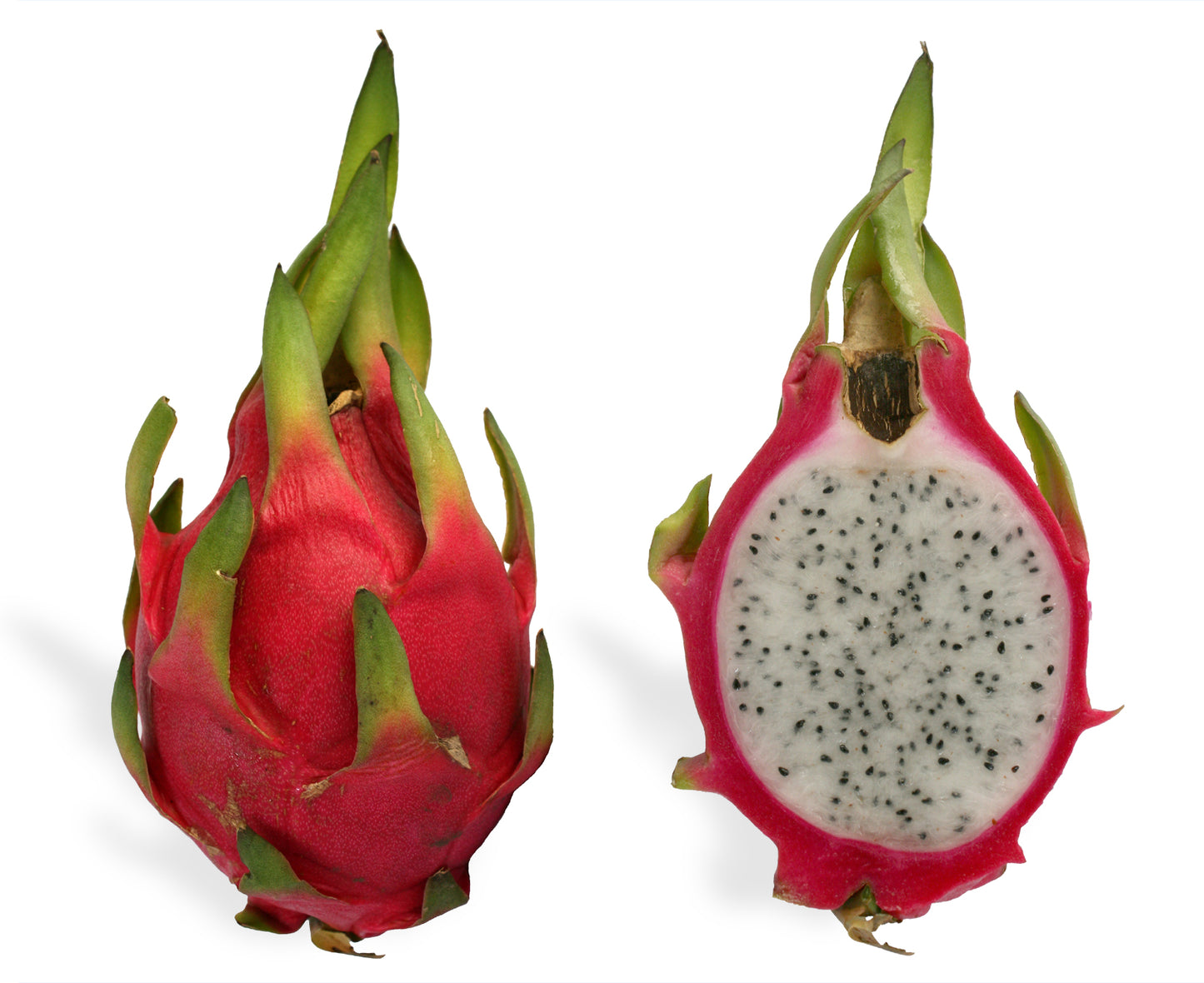
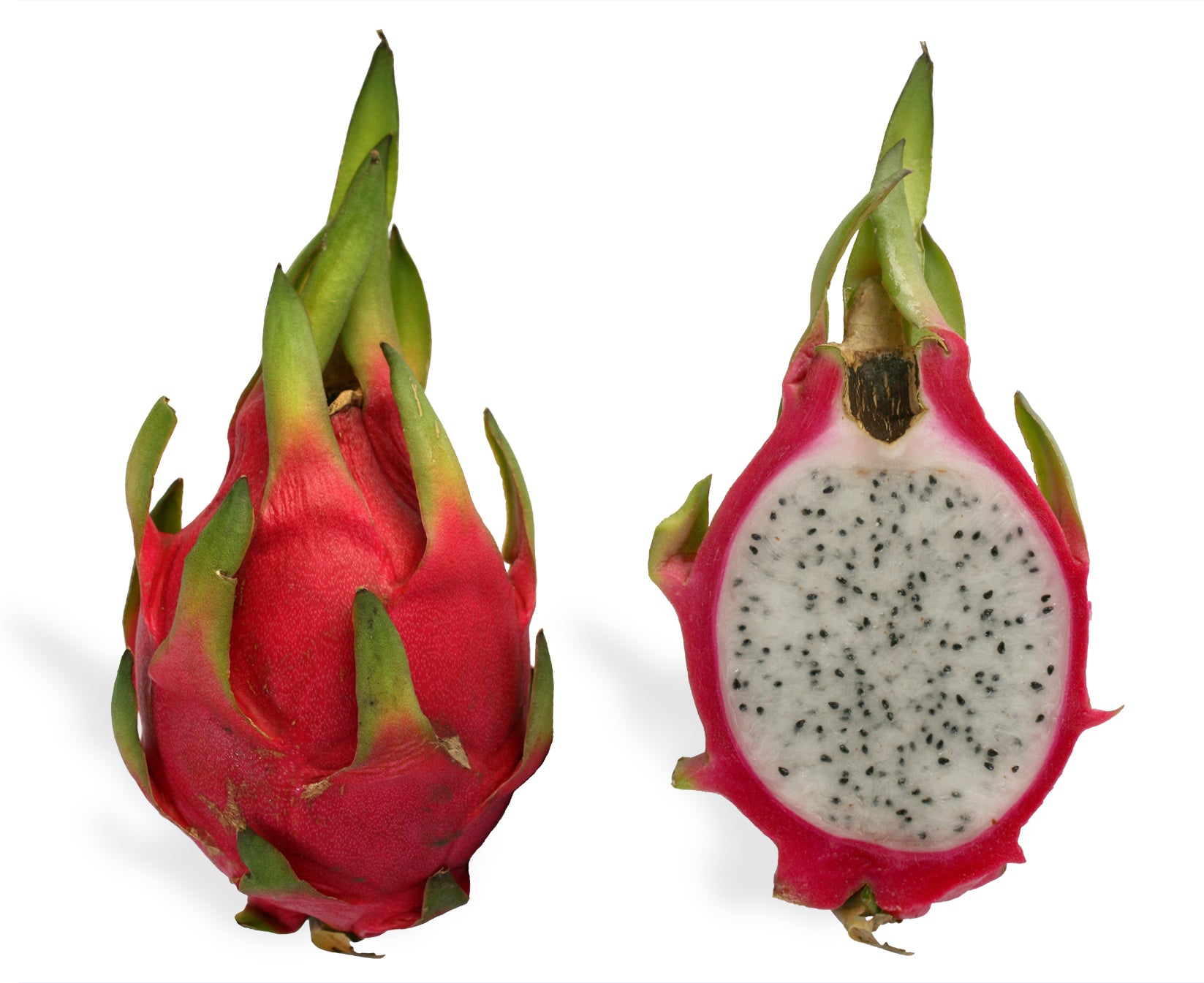
Hylocereus undatus is the plant behind the classic dragon fruit – the spectacular pink fruit with green scales and white flesh filled with tiny black seeds. The species is native to Central America, from Mexico to Honduras, but is today cultivated as a fruit crop in tropical and subtropical regions across large parts of the world.
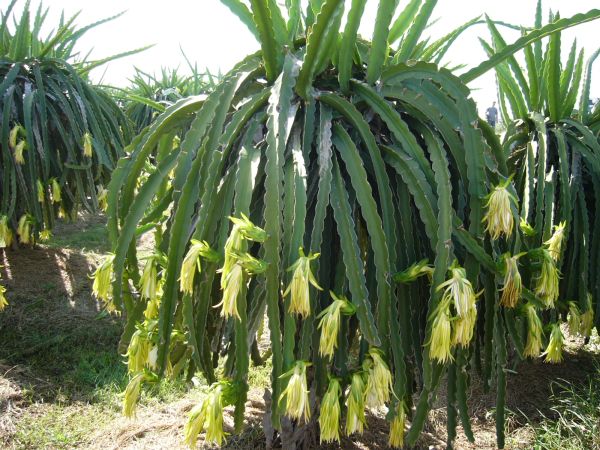
The plant is a climbing, epiphytic cactus with long, triangular, and vigorous stems. In nature, it uses trees and rocks for support and can climb several meters toward the light using aerial roots. This makes it very different from the spherical and columnar cacti we normally associate with the family.
One of the plant's greatest attractions is its flowering. Hylocereus undatus develops enormous white flowers that open in the evening and at night. The individual flowers only last a short time, but can reach about 25–30 cm in size and are an impressive sight. After successful pollination, the characteristic dragon fruits develop.
White, red, or yellow dragon fruit?
Hylocereus undatus is particularly known for its pink to red fruits with white flesh. We also have seeds of Hylocereus costaricensis, which is grown for dragon fruits with vibrant red to purple flesh. The two plants can look similar vegetatively, but the color of the fruits makes the difference very clear.
If you want an even more unique pitahaya, you can also grow Hylocereus megalanthus. It produces the so-called yellow pitahaya with a yellow, thornier skin and light flesh. The species originates from northwestern South America and thus differs from H. undatus in both the appearance of the fruit and its natural distribution.
These three species are therefore particularly exciting to grow together: the classic white-fleshed dragon fruit from H. undatus, the red-fleshed type from H. costaricensis, and the yellow pitahaya from H. megalanthus.
Cultivation and requirements
Hylocereus undatus grows faster than many traditional cacti and thrives best in a bright and warm environment. It prefers:
- Very bright light and preferably several hours of sun
- An airy and well-drained soil
- Regular watering during the active growing season
- Warm temperatures
- A sturdy support that the plant can climb on
Although it is a cactus, Hylocereus undatus is adapted to a more epiphytic lifestyle and should therefore not be treated exactly like a desert cactus. The soil must be well-drained, but the plant appreciates more regular watering and nutrients during active growth. A good cactus and succulent soil is suitable, and throughout the growing season, you can advantageously add our organic cactus fertilizer.
In Denmark, the plant is best grown in a pot, greenhouse, or conservatory. In the summer, it can stand outdoors in a warm and sheltered spot, but it cannot tolerate the Danish winter and must be overwintered frost-free.
Growing from seed
Dragon fruit is relatively easy to grow from seed and is therefore also an exciting cactus for beginners.
- Sow the seeds superficially in a fine and well-drained seed-starting soil
- Cover the seeds only very lightly or leave them on the surface
- Keep the temperature around 22–28 °C
- Keep the soil slightly moist during germination
- Place the sowing in a bright location, but avoid strong direct sun on very young sprouts
The seeds often germinate relatively quickly in warm conditions. The first seedlings are very small, but gradually develop their characteristic succulent growth. When the plants become larger, they can be repotted into a coarser and more well-drained cactus soil.
Seed-grown plants require patience before they become large enough to bloom and set fruit, but in return, you get the opportunity to follow the entire development from an almost microscopic seed to a large, climbing fruit cactus.
Utility and collector's value
Hylocereus undatus combines, in an unusual way, a cactus, an ornamental plant, and an exotic fruit plant. The enormous night-blooming flowers are in themselves worth growing the plant for, while the possibility of eventually having homegrown dragon fruits makes it even more interesting.
At the same time, the species is a good example of how diverse the cactus family is. Instead of growing slowly in a dry desert, this is a fast-growing, climbing cactus that can naturally grow up through other vegetation.
Hylocereus undatus is therefore an obvious choice for anyone who wants to grow one of the world's most recognizable exotic fruits entirely from seed – and together with H. costaricensis and H. megalanthus, you can create your own little collection of different dragon fruits.
- Can also be purchased as a plant here
Seed germination
Seed germination
Childcare
Childcare
Size
Size
Up to 10 meters long
Difficulty level
Difficulty level
Beginner
NB
NB
Please note that this is the standard variety with white flesh.