Buy 4 packs of seeds (or more) and get a 10% discount
a Piece of Nature
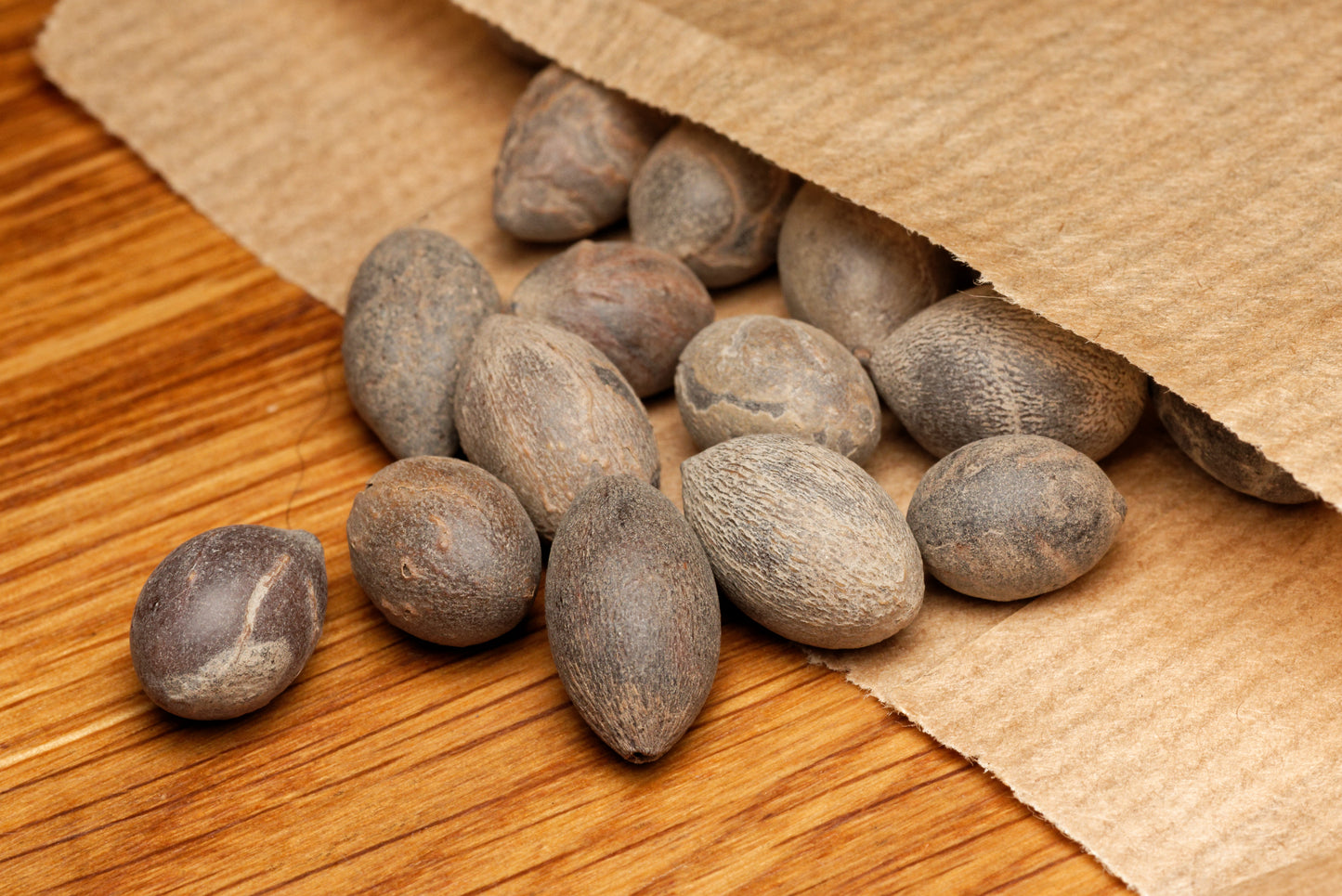
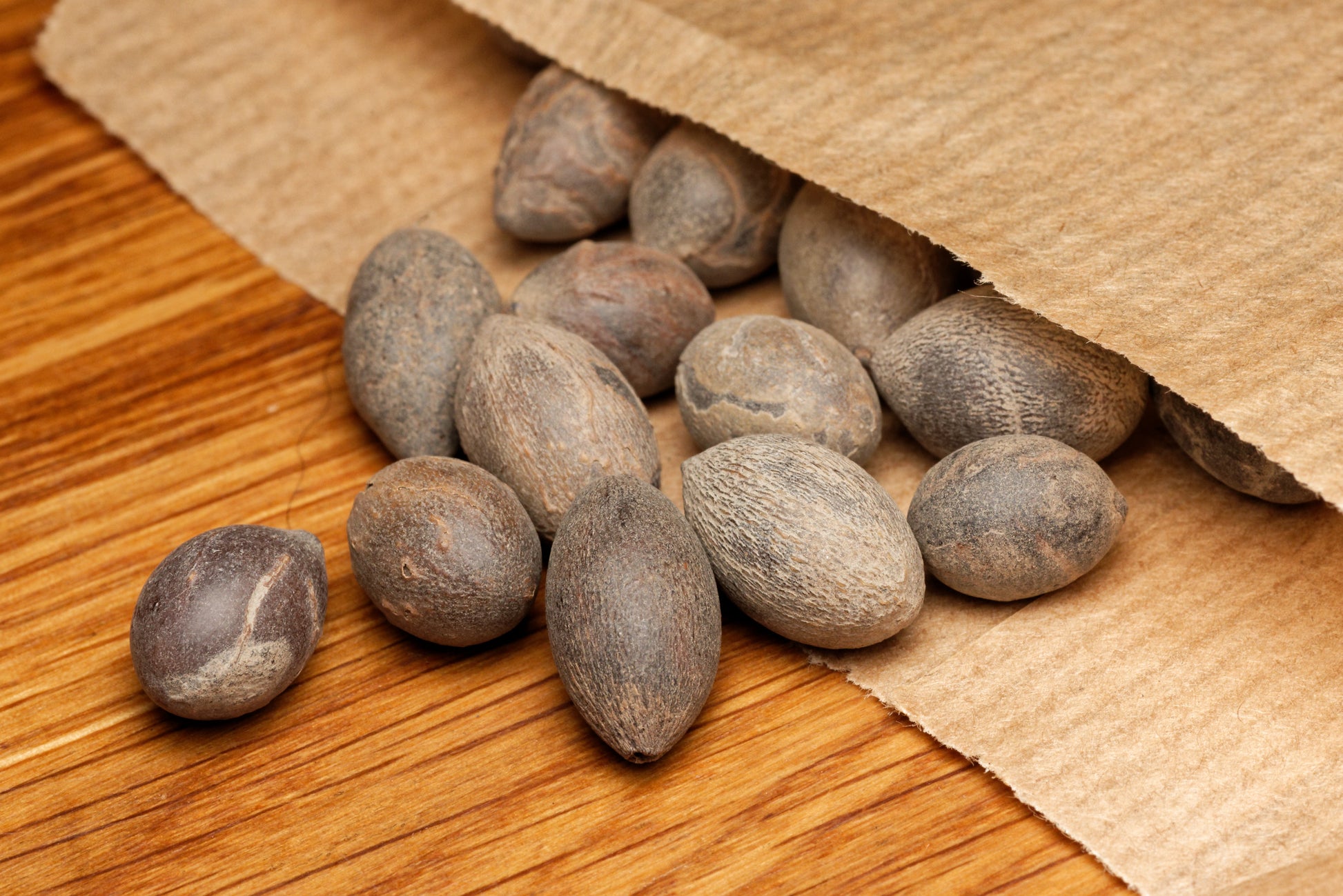
Bottle palm (Hyophorbe lagenicaulis) | seeds, 10 pcs.
Bottle palm (Hyophorbe lagenicaulis) | seeds, 10 pcs.
Couldn't load pickup availability
- Latin name: Hyophorbe lagenicaulis
- Danish names: Tøndepalme, flaskepalme
- English names: Bottle palm, Palmiste gargoulette
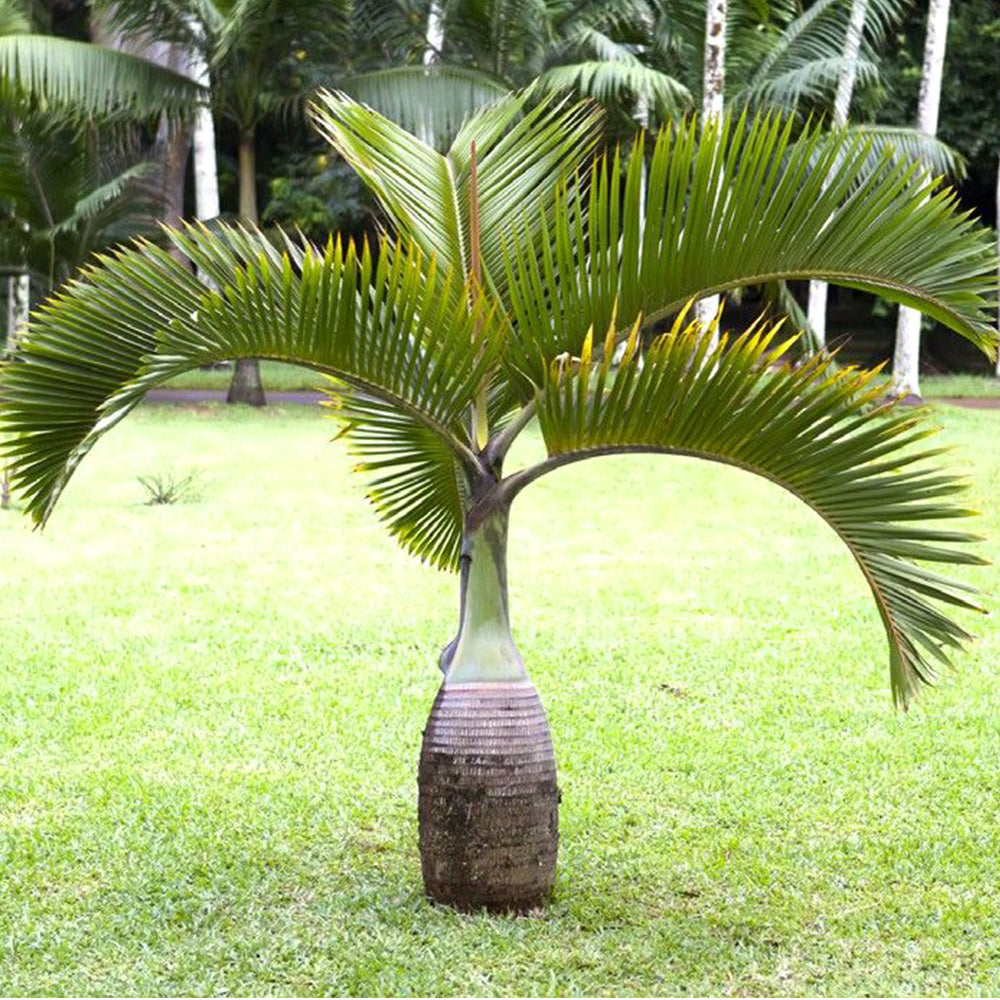
Hyophorbe lagenicaulis is one of the most distinctive tropical palms and is instantly recognized by its heavily swollen, bottle- or barrel-shaped trunk. Above the broad trunk sits a prominent, smooth crownshaft and a relatively small crown of elegantly arched, pinnate leaves. The combination gives adult plants an almost sculptural growth habit, which clearly distinguishes the species from most other palms.
The species has an unusually limited natural range and originates from Round Island, a small island north of Mauritius in the Indian Ocean. The original population was seriously reduced after the human introduction of, among other things, goats and rabbits, which changed the island's vegetation. The species is therefore of great botanical and natural historical interest, even though it is cultivated today as an ornamental palm in many tropical regions.
The bottle palm is a relatively compact palm and typically only grows to about 3-5 meters in height. The characteristic trunk becomes widest near the base and narrows toward the green crownshaft. The shape becomes more pronounced with age, and young seedlings therefore do not yet resemble the characteristic adult specimens.
The crown of leaves usually consists of relatively few, large pinnate leaves. This gives the palm an open and harmonious appearance, where the distinctive trunk remains very visible. Older plants can develop inflorescences below the crownshaft and subsequently small fruits that change color during ripening.
Hyophorbe lagenicaulis is closely related to the spindle palm, Hyophorbe verschaffeltii. Both species originate from the Mascarene Islands, but they have clearly different growth forms. The bottle palm develops the characteristic broad, bottle-shaped base, while H. verschaffeltii typically has a more elongated and spindle-shaped swelling in the middle of the trunk. The bottle palm also generally remains more compact.
If you are fascinated by unusual palms, you can explore our entire selection of palm seeds, where you will find both tropical collector species and more cold-tolerant palms.
Cultivation and requirements
Hyophorbe lagenicaulis is a tropical and heat-loving palm that thrives best with plenty of light and stable temperatures. It prefers:
- A very bright location with sun or lightly filtered sun
- An airy and well-drained soil
- Regular watering during the growing season with slight drying out between waterings
- Warm temperatures and good humidity during active growth
- Bright and frost-free overwintering
Good drainage is particularly important. The plant should be watered regularly throughout the summer, but the roots should not stand constantly in wet soil. A bright and warm growing site provides the best and most compact development.
The bottle palm is sensitive to cold and cannot tolerate frost. Under Danish conditions, it is therefore best suited as a container plant. It can be kept outdoors in a warm, sunny, and sheltered location in the summer, but should be moved inside in good time before the temperature approaches the freezing point.
Cultivation from seeds
Seeds of Hyophorbe lagenicaulis germinate best under constant heat and even humidity. It is recommended to soak the seeds in lukewarm water for 24-48 hours before sowing.
- Sow in an airy and well-drained sowing medium (alternatively, the baggie method can be used)
- Cover the seeds lightly with about 1 cm of sowing medium
- Keep the temperature stable at around 25-30 °C
- Keep the sowing medium evenly moist, but not wet
- The seeds do not require cold stratification
Germination can begin after a few weeks, but individual seeds may take several months. Stable heat and humidity are important, and the sowing should therefore not be discarded just because the seeds germinate at different times.
The young plants first develop simple leaves, and the characteristic bottle-shaped trunk only appears gradually with age. The young palms benefit from plenty of space for their roots, and our tall palm pots are well-suited for further cultivation.
See also our article on germinating palm seeds.
Utility and collector value
Hyophorbe lagenicaulis is primarily grown as an ornamental and collector's palm. The unusual trunk shape makes even a single adult specimen a very characteristic plant, and the species is therefore used as an ornamental palm in tropical gardens and botanical collections worldwide.
The species is also interesting due to its very small natural range. Round Island is only a small island, and the history of the bottle palm is closely linked to the work of preserving and restoring the island's original vegetation after the major changes caused by introduced animals in the past.
For the palm collector, the genus Hyophorbe is particularly exciting due to the different trunk shapes. In Hyophorbe lagenicaulis, the trunk becomes heavily swollen at the base and takes on the classic bottle shape, while the closely related Hyophorbe verschaffeltii develops a more spindle-shaped trunk. This makes the two species interesting to grow side by side.
The compact size of the bottle palm is also an advantage when growing in containers. It does not become nearly as overwhelming as many other tropical palms and can therefore be grown as a collector's plant for many years if it is given sufficient light, warmth, and room for the roots.
Hyophorbe lagenicaulis is therefore an obvious choice for those who wish to grow a truly unique tropical palm from seed – with both a fascinating natural history and a growth form that is difficult to confuse with other palm species.
Seed germination
Seed germination
Childcare
Childcare
Size
Size
Up to 4.5 meters
Difficulty level
Difficulty level
Trained
NB
NB