Buy 4 packs of seeds (or more) and get a 10% discount
a Piece of Nature
Jelly Palm (Butia odorata) | seeds, 10 pcs.
Jelly Palm (Butia odorata) | seeds, 10 pcs.
Couldn't load pickup availability
- Latin name: Butia odorata
- Danish names: Jelly Palme, Sydlig jelly palme, vinpalme
-
English names: South American jelly palm, jelly palm, pindo palm
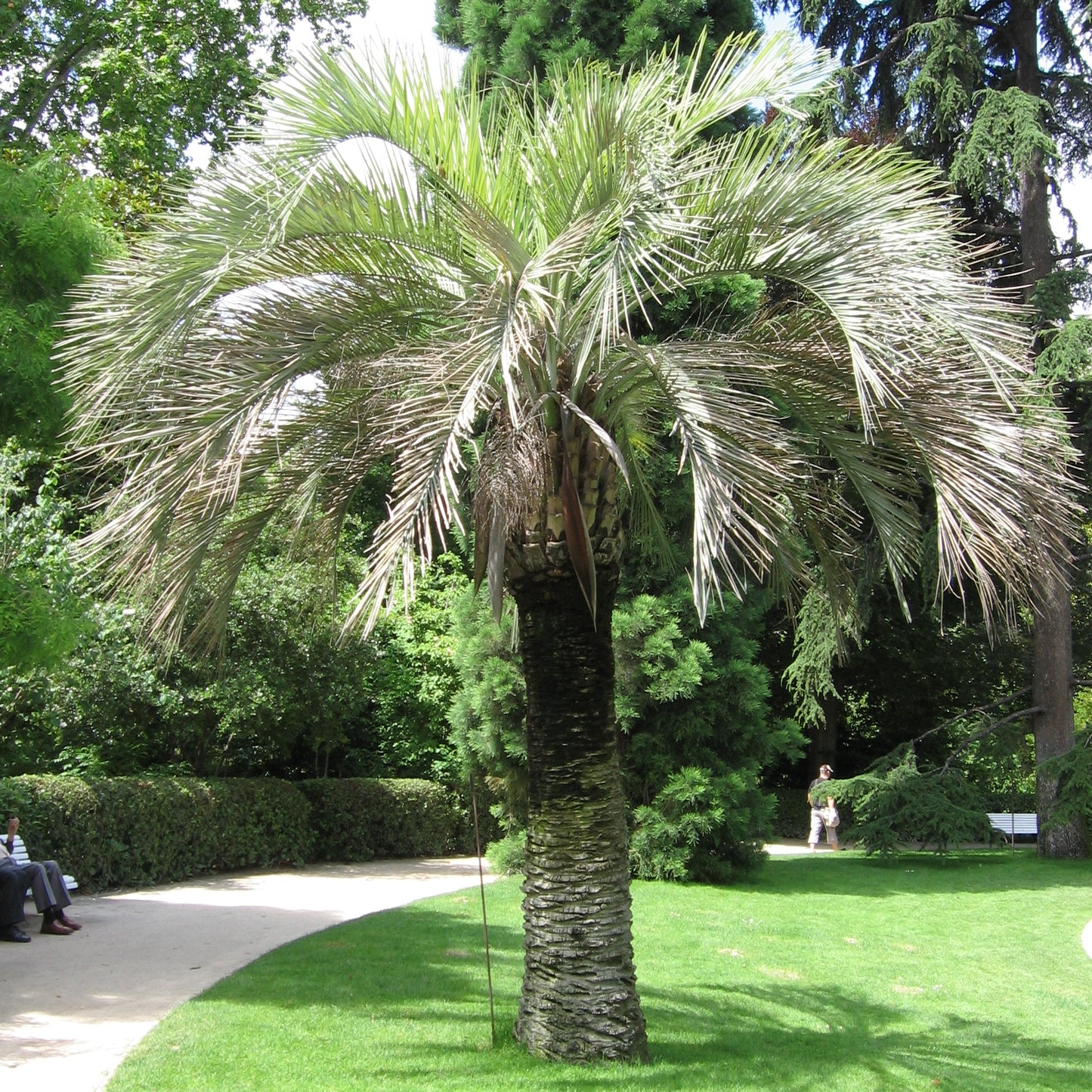
Butia odorata, also known as the jelly palm or wine palm, is one of the most cold-tolerant feather palms in the world and originates from southern Brazil, Uruguay, and northern Argentina. It is beloved for its graceful growth, its remarkable hardiness – and not least for its tasty fruits.
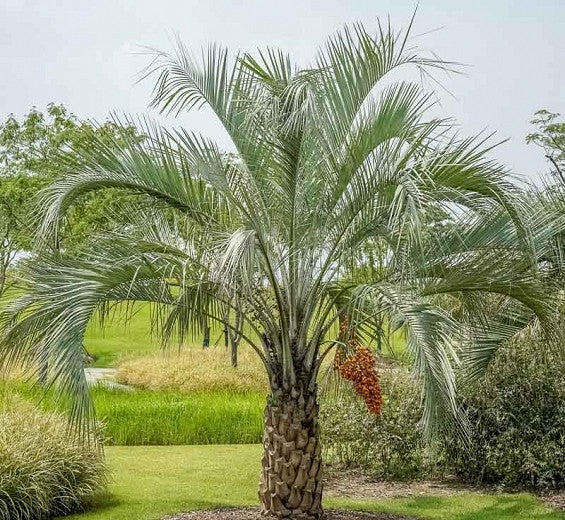
The palm forms a sturdy, single trunk and a dense, curved crown of blue-green to grey-green feather leaves, which often hang in elegant arches and provide a soft and tropical look. It grows relatively slowly, but with its characteristic silhouette, it is a prominent and decorative element in any palm garden.
During the flowering period, Butia odorata forms large inflorescences with reddish to yellowish-pink flowers, followed by round, orange to yellow fruits. The fruits have a sweet, aromatic flavor with notes of apricot, pineapple, and banana and are traditionally used for jelly, jam, and wine – hence the name "jelly palm".
Cultivation and requirements:
Butia odorata thrives in full sun and well-drained soil and is surprisingly drought-tolerant once established. It is one of the few feather palms that can realistically be attempted grown outdoors in mild regions of Denmark – for example, in a sheltered spot and with winter protection. It tolerates temperatures down to around -10 °C, and some established specimens have survived even lower temperatures for short periods.
In cold regions, it is recommended to grow it in a large pot so that it can be moved inside or covered in winter. Winter covering with fleece, a straw mat, or a plastic cover can protect the heart from frost damage during exposed periods.
Cultivation from seeds:
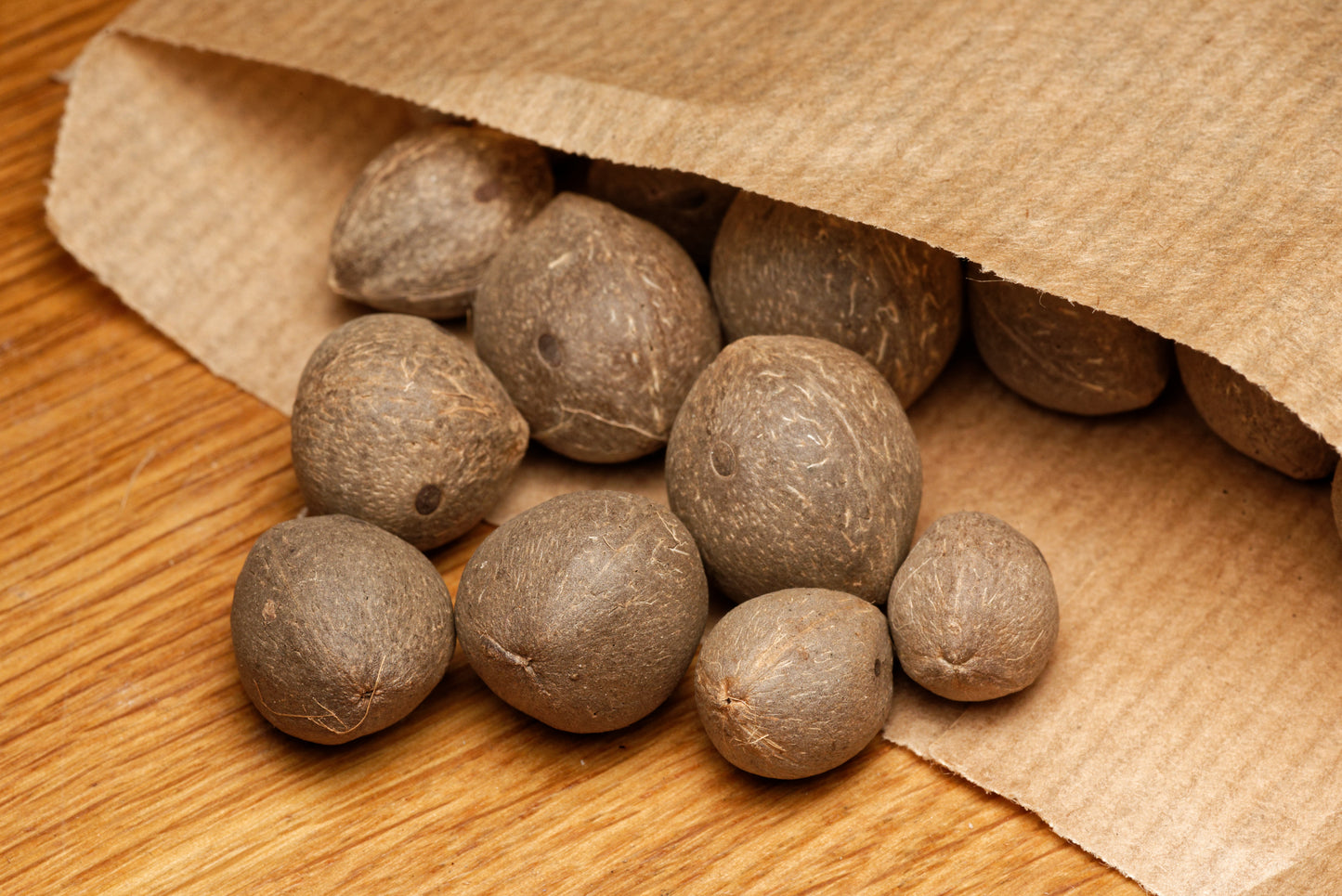
The seeds are hard and should be soaked in lukewarm water for 3–5 days before sowing. They are sown in a deep pot with well-drained soil (e.g., coconut coir and perlite) and placed in a warm – preferably 25–30 °C – and humid location. Germination can be slow, often 1–6 months, but the seeds have good viability. Seedlings develop a deep taproot early on, so deep containers, such as our palm pots, are recommended from the start.
- Feel free to read our article on germinating palm seeds
Utility:
The fruits are edible and popular in homemade jams, syrups, and even wine. In addition, the palm is highly decorative and used in landscape design all over the world – especially where a tropical touch is desired in cooler climates. Its high wind and salt resistance also make it suitable for coastal areas.
Butia odorata is an excellent choice for garden owners in temperate climates who dream of a genuine tropical palm with both beauty and function. It combines classic palm aesthetics with remarkable resilience – and a tasty surprise when the fruits ripen.
Seed germination
Seed germination
Childcare
Childcare
Size
Size
Up to 10 meters high
Difficulty level
Difficulty level
Beginner
NB
NB
Can withstand temperatures down to -10°C