Buy 4 packs of seeds (or more) and get a 10% discount


a Piece of Nature
Ruffled Fan Palm (Licuala grandis) | seeds, 10 pcs.
Ruffled Fan Palm (Licuala grandis) | seeds, 10 pcs.
Couldn't load pickup availability
- Latin name: Licuala grandis
- Danish names: Licuala-palme, stor licuala-palme
- English names: Ruffled fan palm, Vanuatu fan palm
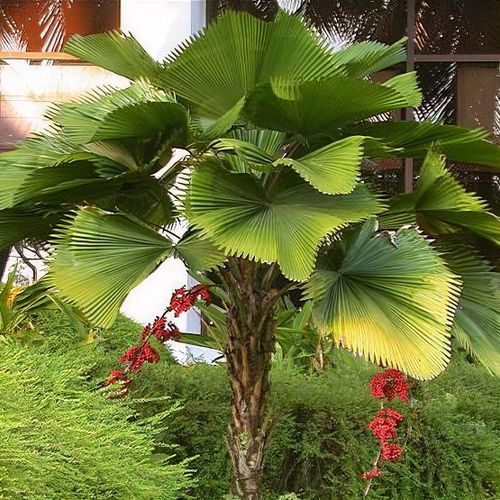
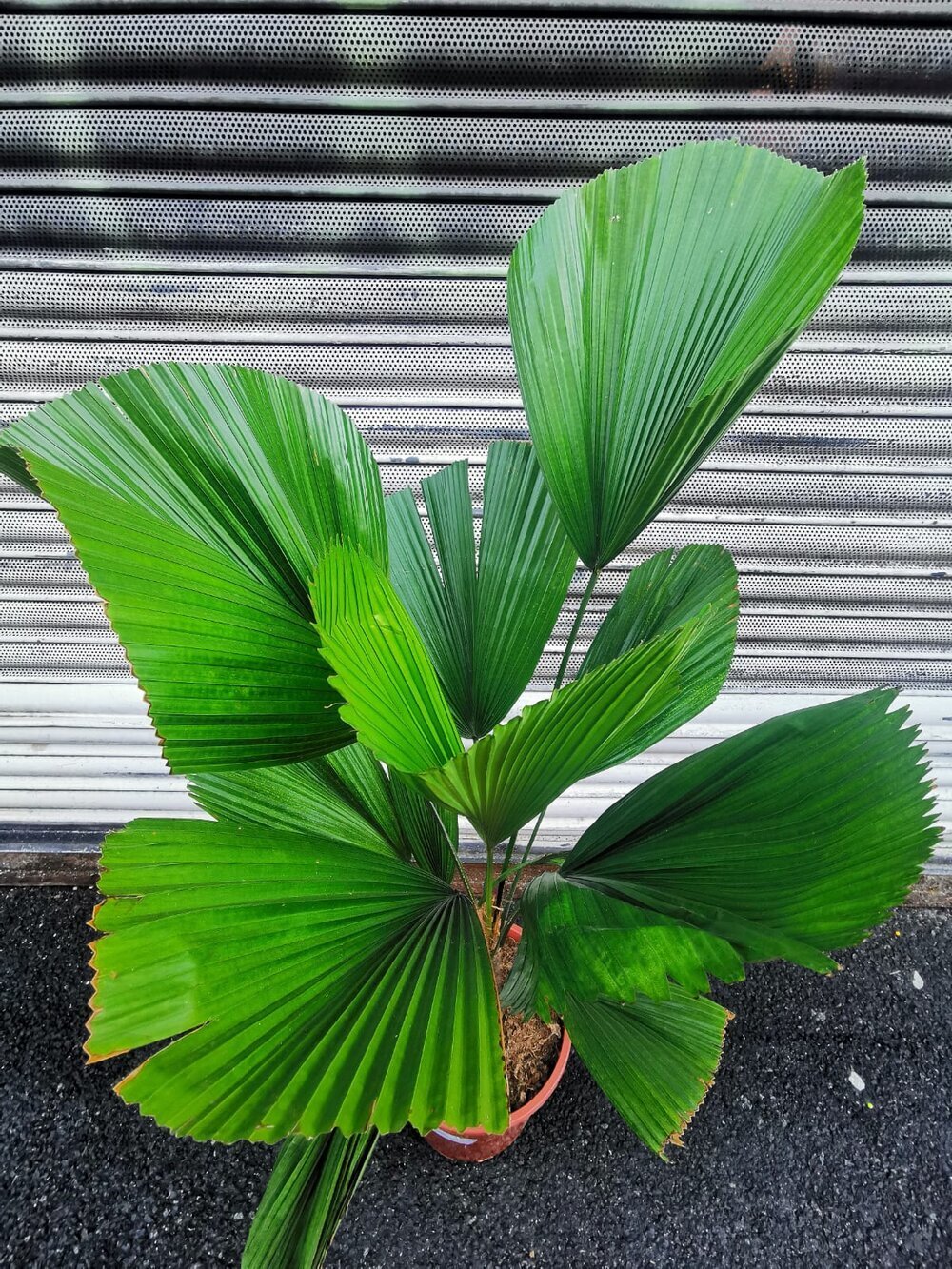
Licuala grandis is one of the most distinctive tropical fan palms, especially known for its large, almost circular, and beautifully pleated leaves. The leaves have a glossy, deep green surface and a slightly wavy edge, giving them an almost pleated appearance. The unusual foliage makes this palm a sought-after ornamental plant among collectors of tropical and exotic plants.
The species originates from the Santa Cruz Islands in the Solomon Islands group and Vanuatu in the southwestern Pacific. Here, it grows in humid tropical forest areas, where it is adapted to warmth, high humidity, and filtered sunlight under the forest canopy.
The palm grows relatively slowly and eventually develops a single, slender trunk with a crown of large, round fan leaves. In well-developed plants, the leaves can be about a meter wide. In nature, the palm can reach a height of several meters, but in a pot, it normally remains significantly smaller. Its slow growth makes it suitable for cultivation in a bright conservatory, heated sunroom, or as a special houseplant, provided the humidity is sufficient.
What especially distinguishes Licuala grandis from many other fan palms is the almost entire, circular leaf blades. In most other species in the genus, the leaves are clearly divided into several wedge-shaped segments. This difference is seen, for example, in the mangrove fan palm (Licuala spinosa), which also often develops multiple trunks and has a bushier growth habit.
Another interesting relative is the golden licuala palm (Licuala aurantiaca), which is particularly known for its characteristic orange to golden leaf stalks and leaf sheaths. Botanically, this palm is today accepted under the name Licuala paludosa. Unlike Licuala grandis, it has clearly divided fan leaves, and the unique color of its leaf stalks gives it a quite different appearance.
The three palms demonstrate in their own ways the great variation within the Licuala genus and are particularly interesting to grow side by side. You can also explore our entire selection of palm seeds, where you will find many other exciting palm species from all over the world.
Cultivation and requirements
Licuala grandis is a tropical forest palm that prefers warm, humid, and sheltered growing conditions. It thrives best with:
- A bright to semi-shaded location without intense, direct midday sun
- A nutrient-rich, airy, and well-drained soil
- Even soil moisture without standing water
- High humidity, preferably over 60%
- Temperatures around 22-30 °C during the growing season
- Bright and warm overwintering, preferably above 15 °C
High humidity is particularly important to maintain the large leaves without dry and brown leaf edges. The species does not tolerate frost and is therefore best suited for indoor cultivation or a heated conservatory under Danish conditions. In the summer, it can be placed outdoors in a warm and shaded spot protected from the wind.
Like many other palms, Licuala grandis develops a relatively deep root system. When repotting, it is therefore advantageous to choose a tall pot with plenty of room for the roots. Our special palm pots are developed with extra depth and are well-suited for growing young palms.
Growing from seeds
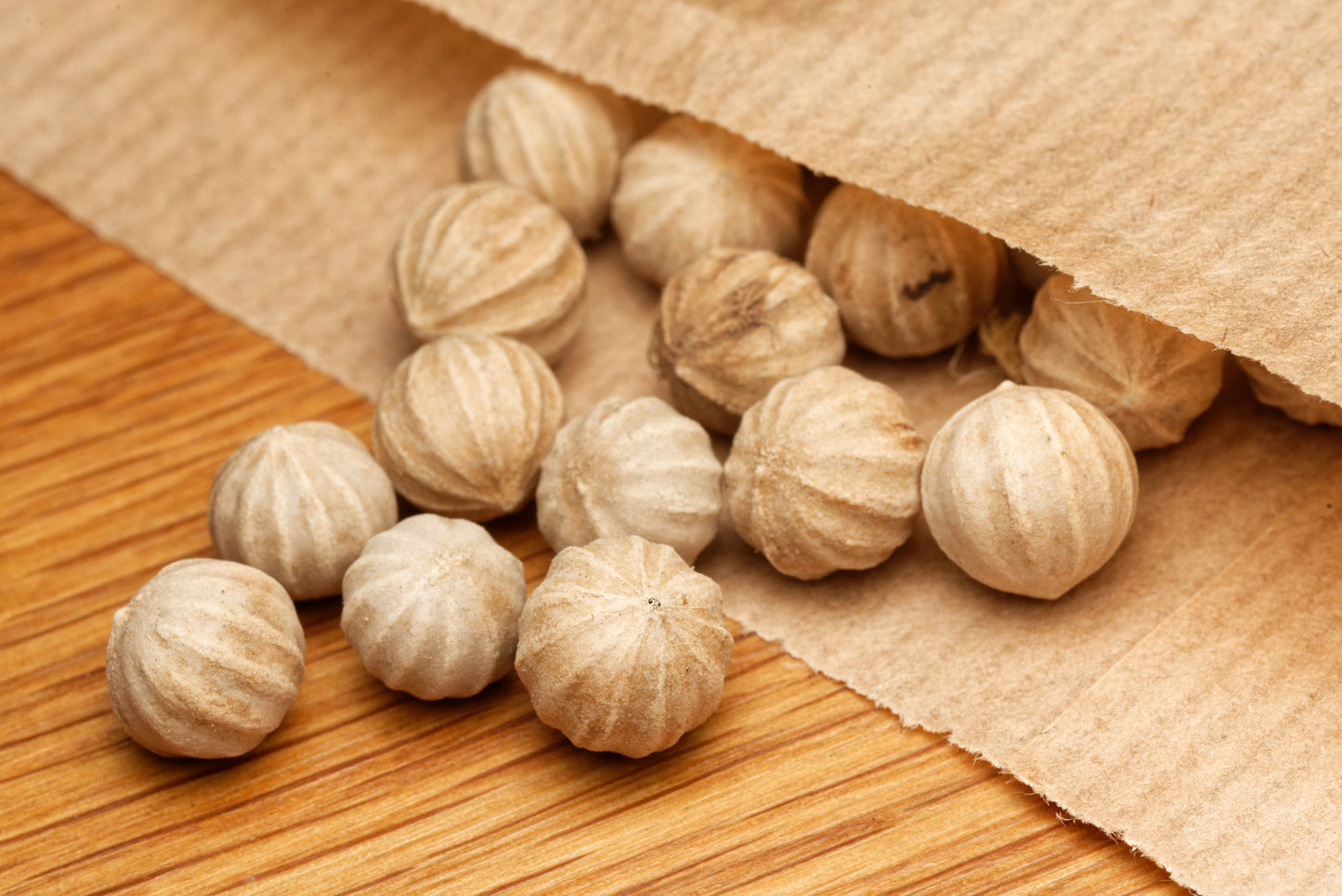
Seeds of Licuala grandis germinate best under stable, warm, and humid conditions. It is advantageous to soak the seeds in lukewarm water for 24-48 hours before sowing. Any remaining fruit flesh should be removed first.
- Sow in an airy and well-drained sowing medium, such as coconut coir mixed with perlite (alternatively, the bag germination method can be used)
- Cover the seeds lightly with about 1 cm of sowing medium
- Keep the temperature stable around 25-30 °C
- Keep the sowing medium evenly moist, but not wet
- Place the sowing in a bright location, but without direct sun
Germination can take several weeks to months and may be irregular. The freshness of the seeds and a stable temperature are very important, and it is crucial not to give up on the sowing too early.
Young plants should be kept warm and protected from direct sun. When repotting, it is important to avoid damaging the sensitive roots. See also our article on germinating palm seeds.
Ornamental and collector's value
Licuala grandis is grown primarily as an ornamental and collector's palm. Its almost perfect, circular leaves are unusual even within the highly varied palm family and make the species easily recognizable among other tropical palms.
The palm is especially appreciated in tropical gardens, botanical collections, and conservatories, where its large, glossy leaves create a striking contrast to plants with narrow or feathery leaves. Its relatively slow growth also makes it interesting as a container plant that can develop over many years.
For Licuala collectors, the species is particularly interesting as an example of the genus's almost undivided fan leaves. Compared to the bushier Licuala spinosa and the golden-colored Licuala aurantiaca, Licuala grandis has a simpler and more sculptural expression, where the large, round leaves are the plant's completely dominant feature.
Licuala grandis is therefore an obvious choice for the patient palm enthusiast who wants to grow an unusual tropical palm from seed and follow the development of its characteristic leaves.
Seed germination
Seed germination
Childcare
Childcare
Size
Size
Up to 3 meters tall
Difficulty level
Difficulty level
Between
NB
NB
The leaves can be a bit sharp and the leaf stalk has thorns.