Buy 4 packs of seeds (or more) and get a 10% discount
a Piece of Nature
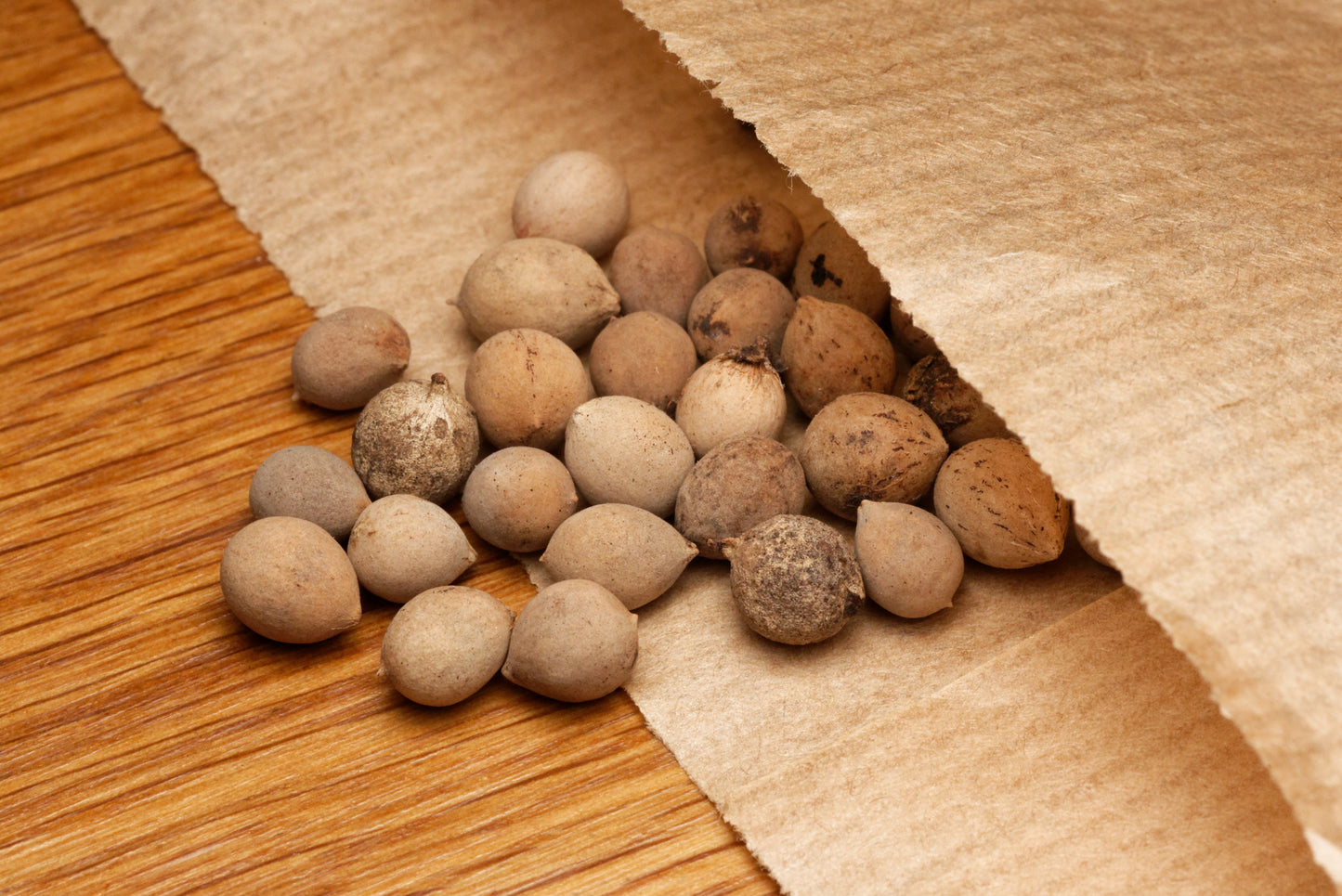
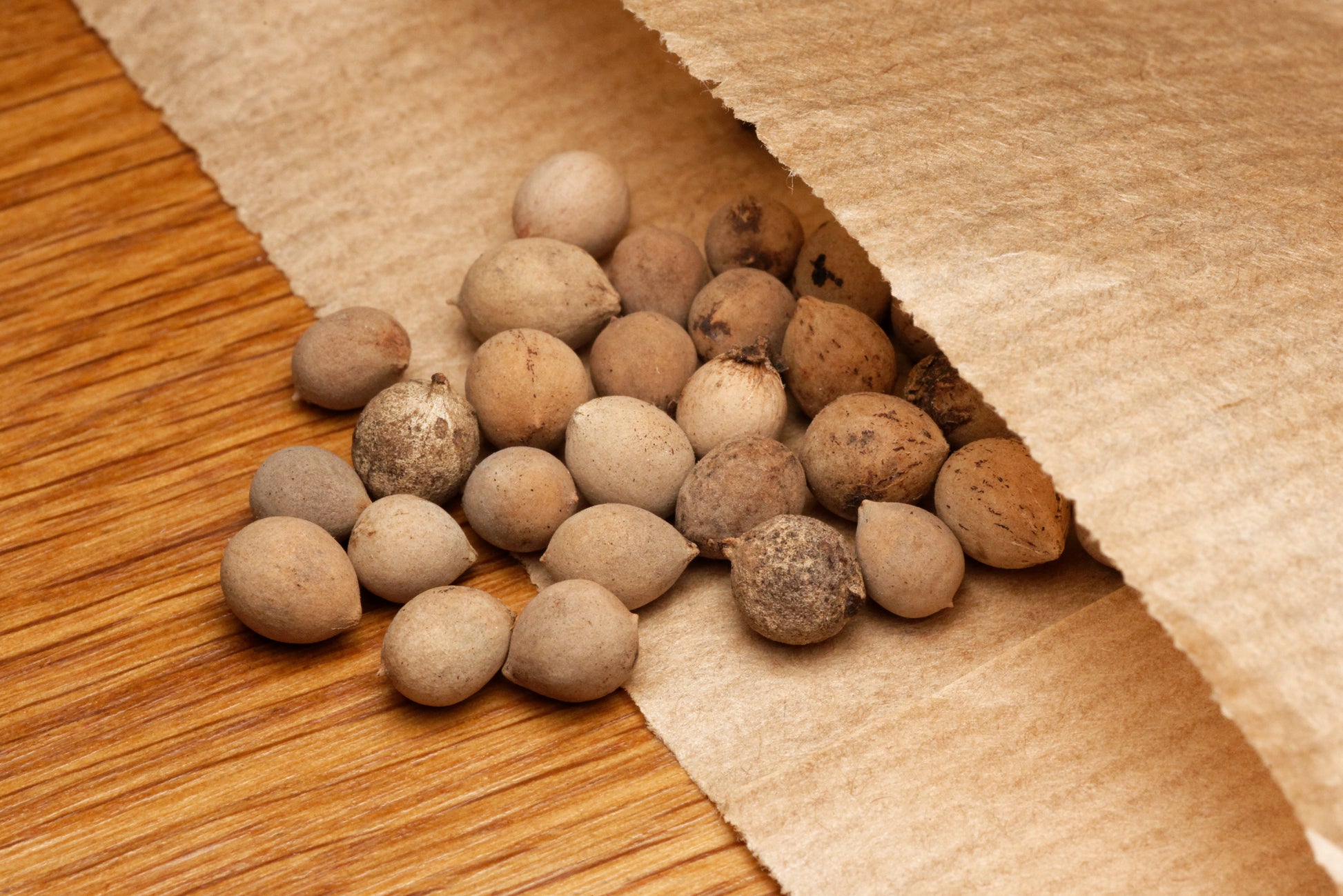
Mangrove fan palm (Licuala spinosa) | seeds, 10 pcs.
Mangrove fan palm (Licuala spinosa) | seeds, 10 pcs.
Couldn't load pickup availability
- Latin name: Licuala spinosa
- Danish names: Mangroveviftepalme, tornet Licuala-palme
- English names: Mangrove fan palm, Spiny licuala, Spiny fan palm
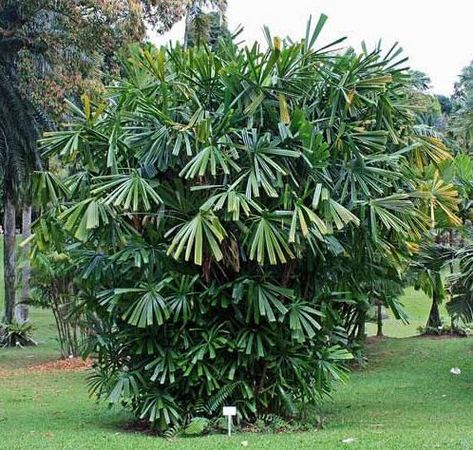
Licuala spinosa is a decorative Southeast Asian fan palm that, with its dense, multi-stemmed growth, distinguishes itself from many of the more classic, single-stemmed palms. Over time, it forms a lush group of slender trunks, each bearing a crown of almost circular fan leaves divided into broad, wedge-shaped segments.
The species has a wide natural distribution in Southeast Asia and occurs, among other places, in areas from Indochina and Thailand through Malaysia to parts of Indonesia and the Philippines. It is particularly associated with warm, humid lowland areas and can grow near swamps, watercourses, and mangrove forests. Here it is often found in very moist habitats where the soil can periodically be waterlogged.
Licuala spinosa typically grows to about 2–4 meters in height and forms new shoots from the base, so the plant develops into a dense cluster with age. The leaves are divided into numerous broad segments, which together form a characteristic round fan. The leaf stalks are equipped with thorns along the edges – a feature that has given the species the name spinosa.
Its growth habit differs clearly from the popular Licuala grandis. While L. grandis usually develops a single trunk and large, almost unbroken, pleated fan leaves, L. spinosa is multi-stemmed and has leaves that are divided into distinct segments. The result is a denser and more shrub-like palm with a completely different appearance.
The species is also interesting due to its association with humid and coastal environments. It tolerates significantly more moisture around the roots than many palms from dry areas and is naturally adapted to a warm climate with high humidity and abundant rainfall.
If you are fascinated by fan palms and other unusual species, you can explore our entire selection of palm seeds.
Cultivation and requirements
Licuala spinosa is a tropical palm that thrives best when it is warm, humid, and bright. It prefers:
- A bright location with filtered sun or partial shade when young
- A nutrient-rich and moisture-retaining soil
- Regular watering and even soil moisture
- High humidity and warm growing conditions
- Bright and frost-free overwintering
The species tolerates moist soil better than many other palms, but when grown in a pot, an airy substrate is still an advantage. The plants should not be allowed to dry out completely for extended periods. Larger specimens can gradually be accustomed to more sun, while young plants thrive best protected from the strongest midday sun.
Licuala spinosa is tropical and should be protected from frost. Under Danish conditions, it is best suited as a potted plant that can stand outdoors in a warm and protected location during the summer and overwinter in a bright and frost-free place.
Growing from seed
Seeds of Licuala spinosa germinate best at a high and stable temperature. The seeds can advantageously be soaked in lukewarm water for 24–48 hours before sowing.
- Sow in an airy and moisture-retaining sowing medium (alternatively, the baggie method can be used)
- Cover the seeds lightly with about 1 cm of sowing medium
- Maintain a temperature of around 25–30 °C
- Keep the sowing medium evenly moist, but ensure air circulation around the seeds
- The seeds do not require cold stratification
Germination can be slow and irregular. Some seeds may germinate after a few weeks, while others may take several months. The sowing should therefore be kept warm and moist for a long time, even if there are no immediate signs of germination.
The young plants initially develop relatively simple leaves, and the characteristic segmented fan leaves become clearer with age. They can advantageously be grown in our tall palm pots, which provide good space for the continued development of the roots.
- See also our article on germination of palm seeds.
Use and collector value
Licuala spinosa is grown primarily as an ornamental palm and is particularly interesting due to the combination of dense stems and decorative fan leaves. In tropical gardens, the plant can eventually develop into a large, lush group and be used as a striking green structure in the planting.
It differs clearly from Licuala grandis, which is often grown for its large, almost whole and strongly pleated leaves. In L. spinosa, it is instead the combination of the many stems and the clearly segmented fans that give the plant its characteristic appearance. The two species are therefore interesting to grow side by side as examples of the variation within the genus Licuala.
The species' natural association with swampy and coastal areas also makes it botanically interesting. Where many palms are associated with well-drained or even dry habitats, Licuala spinosa is evolved for environments with ample access to water and high humidity.
As a potted plant, it remains, of course, significantly smaller than in tropical surroundings, but the multi-stemmed growth means that even younger plants can eventually achieve a dense and lush appearance.
Licuala spinosa is therefore an exciting choice for the palm collector who wants a tropical fan palm with a different growth form than the more common single-stemmed species.
Seed germination
Seed germination
Childcare
Childcare
Size
Size
Up to 7 meters
Difficulty level
Difficulty level
Beginner
NB
NB