a Piece of Nature
Mexican fan palm (Washingtonia robusta) | plant
Mexican fan palm (Washingtonia robusta) | plant
Couldn't load pickup availability
FROST TOLERANT
- Latin name: Washingtonia robusta
- Danish names: Mexicansk viftepalme, mexicansk washingtonia
- English names: Mexican fan palm, Mexican Washingtonia, sky duster palm
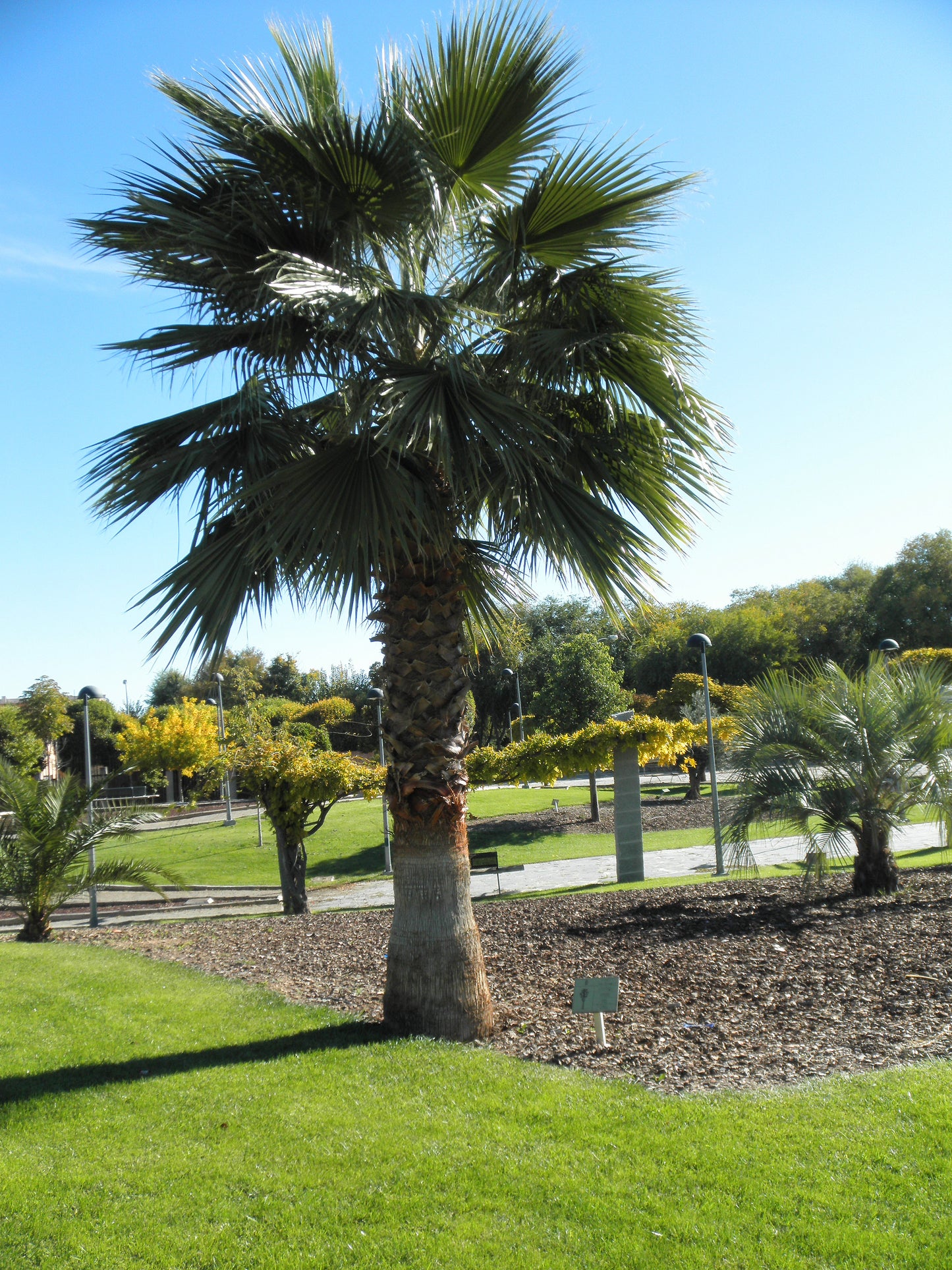
Washingtonia robusta, better known as the Mexican fan palm, is an impressive and fast-growing palm with large, green fan-shaped leaves and a characteristically slender trunk. It is one of the palms often associated with sunny boulevards, Californian landscapes, and exotic gardens, where its tall, elegant silhouette creates a very special atmosphere.
The species is originally from northwestern Mexico, particularly Baja California and Sonora, where it grows in areas with access to water, such as in oases and along watercourses. Today, Washingtonia robusta is grown as an ornamental palm in warm and subtropical areas across large parts of the world.
The Mexican fan palm is especially interesting for palm enthusiasts because it grows relatively quickly compared to many other palm species. At the same time, it is relatively easy to grow and, with the right care, can develop into a beautiful and robust potted plant under Danish conditions.
Appearance and growth
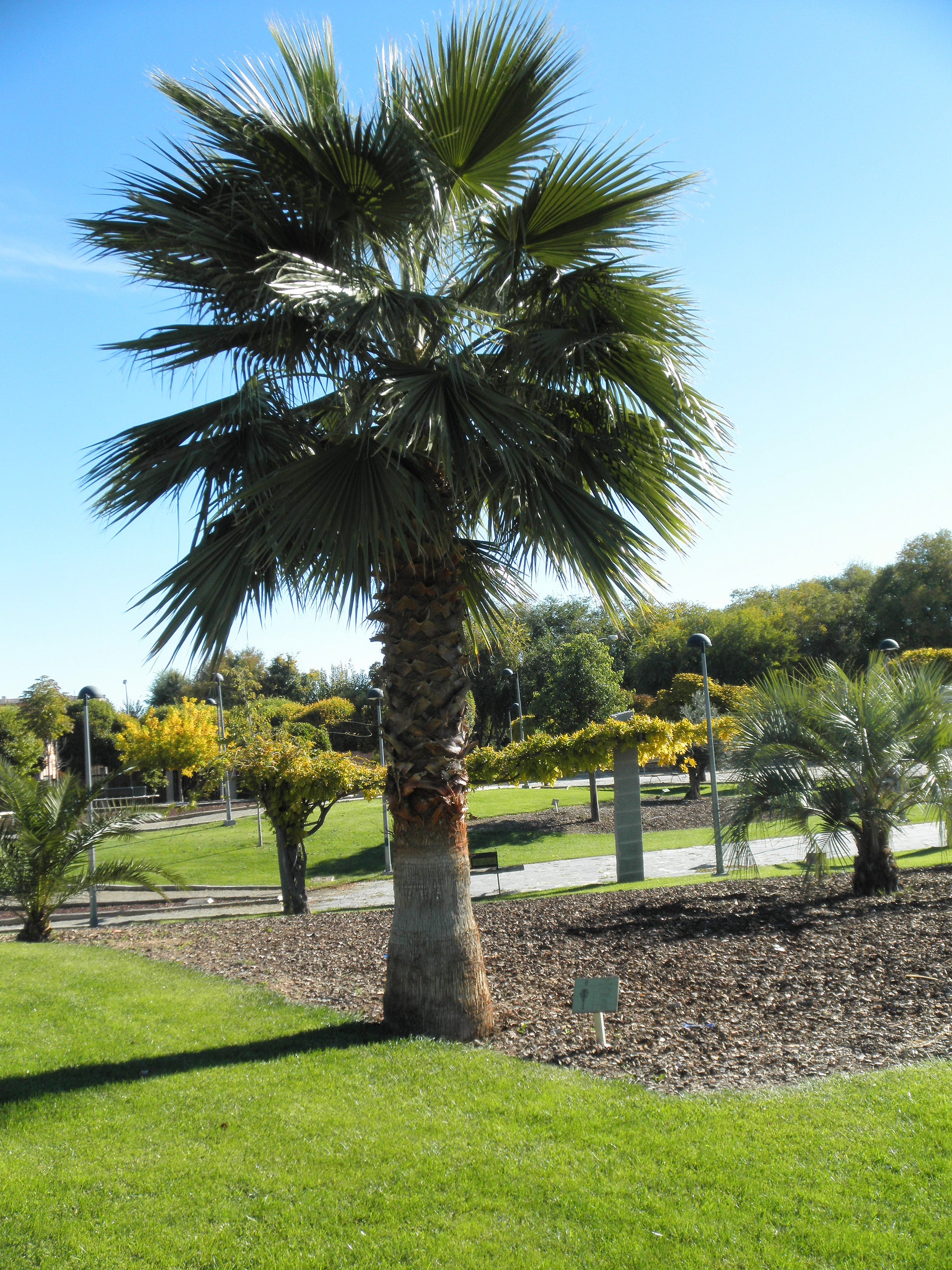
Washingtonia robusta is an evergreen palm that eventually develops a tall, slender trunk with a dense crown of large, fan-shaped leaves. The leaves are fresh green and divided into numerous narrow segments, which give the crown an elegant and light appearance.
Fine, light threads can form along the leaf segments, which are characteristic of the Washingtonia genus. The leaf stalks also have sharp thorns along the edges, which one should be aware of when handling larger plants.
In the wild, the Mexican fan palm can grow to be over 20 meters tall and is thus among the tallest fan palms commonly grown as ornamental plants. When grown in a pot, it is naturally significantly smaller, but it can still develop into an impressive plant.
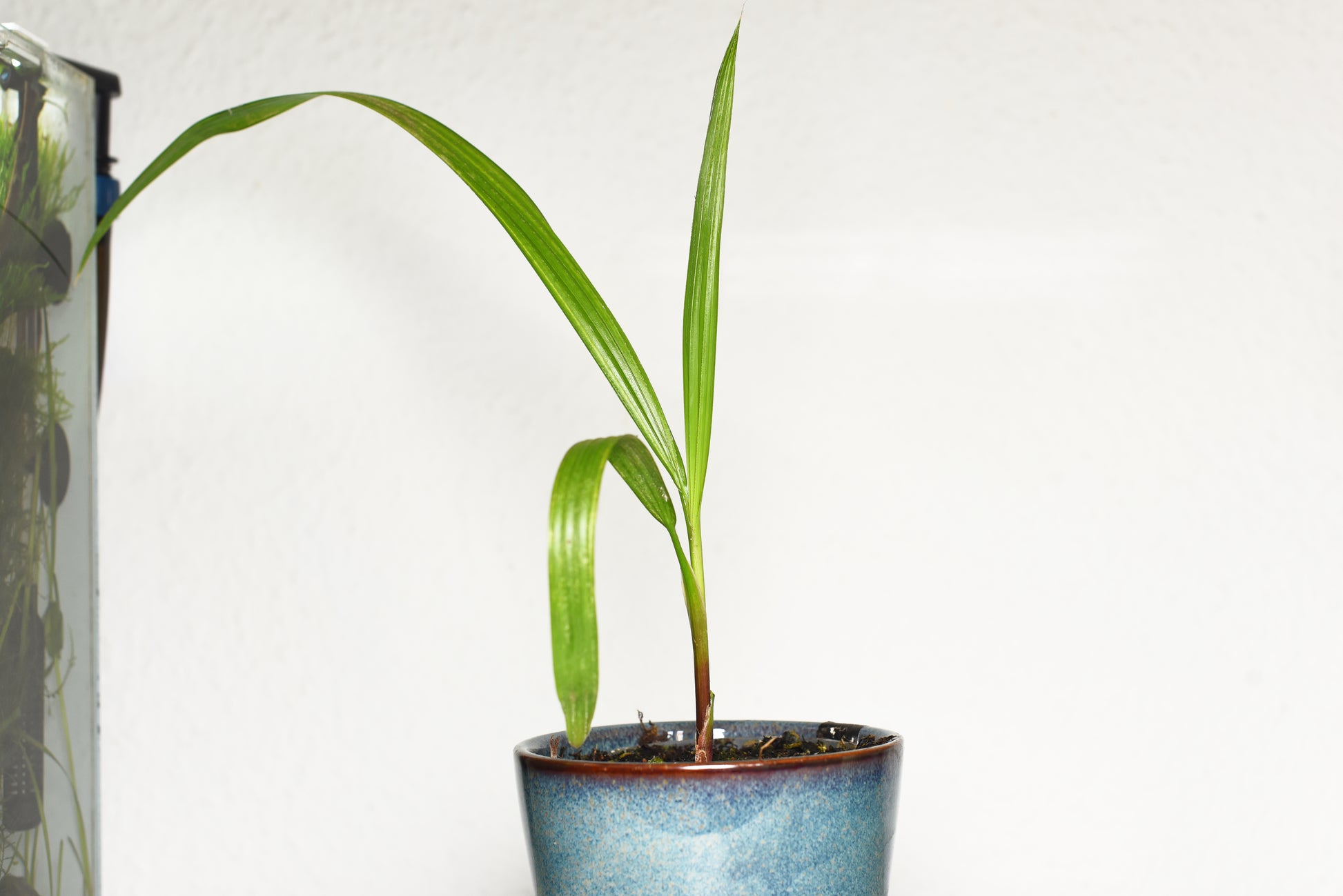
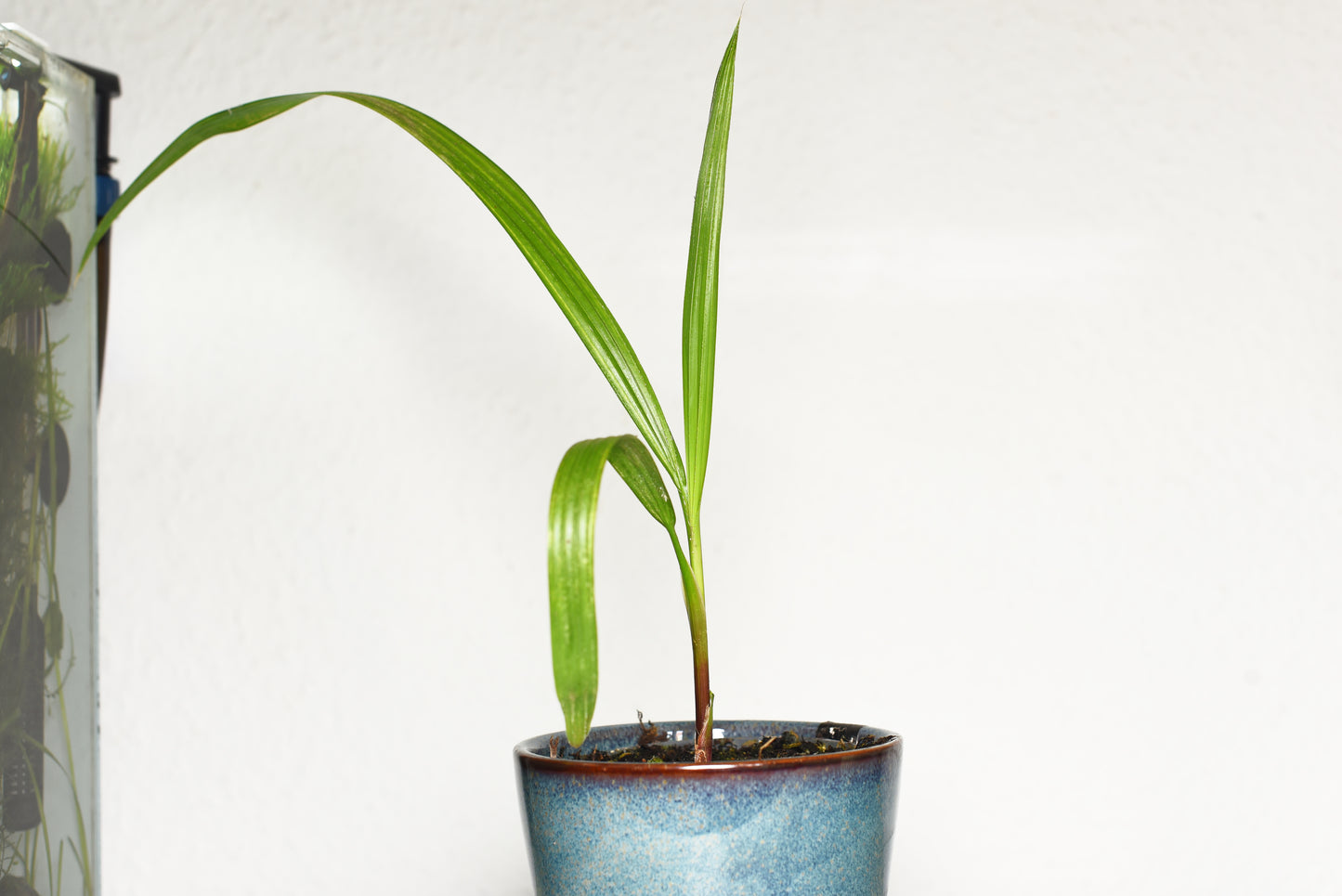
Young plants do not yet have a visible trunk, but instead form a rosette of green leaves. As the plant grows, the leaves become larger and more distinctly fan-shaped, and the characteristic trunk gradually begins to develop.
A fast-growing fan palm
One of the characteristics that makes Washingtonia robusta particularly attractive is its relatively fast growth. While many palms require several years to reach a visible size, the Mexican fan palm can develop quite quickly when given plenty of warmth, sunlight, water, and nutrients.
This makes it an exciting palm to follow from a small seedling to a larger specimen with robust fan leaves. At the same time, its slender growth habit gives the palm a different look than, for example, the more robust Canary Island date palm (Phoenix canariensis), which develops long feathery leaves and a significantly wider trunk.
Flowers and fruits
Older Mexican fan palms can develop long, branched flower clusters that extend between and often beyond the leaves. The flowers are small, creamy white, and grow in large clusters.
After pollination, small, round fruits develop, maturing from green to dark brown or almost black. Each fruit contains one seed and can attract birds and other animals in the palm's natural habitats.
Flowering is primarily seen on larger, well-established plants and is therefore not something one should normally expect from smaller potted plants in Denmark.
Can the Mexican fan palm overwinter outdoors in Denmark?
Washingtonia robusta is more cold-tolerant than many tropical palms and, as a larger, established plant, can withstand short periods of light frost. Under favorable conditions, it can handle temperatures around -5 to -7 °C, but prolonged periods of frost can cause serious damage.
The biggest challenge when growing outdoors in Denmark is the combination of frost, winter moisture, and long periods of low temperatures. Therefore, the Mexican fan palm is not reliably winter-hardy in the Danish climate.
In particularly mild and sheltered locations, one can experiment with outdoor cultivation, but it requires effective winter protection, good drainage, and the ability to keep the palm's growth point dry and protected from hard frost.
The safest solution is to grow the palm in a pot that can be kept outdoors during the summer months and moved to a bright and frost-free place in the winter.
Cultivation and care
- Light: Thrives best in a very bright and sunny location. Plenty of direct sunlight promotes vigorous growth and the development of large, well-formed fan leaves. Young plants should be gradually acclimated to strong sun.
- Temperature: Prefers warm conditions and thrives well at around 20–35 °C during the growing season. Larger plants can tolerate short periods of light frost, but young plants should be kept frost-free.
- Soil: Use a nutrient-rich, airy, and well-drained soil. A good palm soil or high-quality potting soil mixed with perlite, gravel, or other mineral material is suitable.
- Watering: Water regularly and thoroughly during the growing season. The Mexican fan palm can tolerate periods of drought, but it grows best with a steady water supply. Avoid waterlogged soil.
- Fertilization: Fertilize regularly throughout the spring and summer with a suitable organic fertilizer. Its relatively fast growth means the plant benefits from sufficient nutrition.
- Repotting: Young plants may need regular repotting. Choose a deep and stable pot with good drainage so the roots have room to develop.
- Pruning: Remove only old, completely withered leaves. Avoid damaging the palm's central growth point, as it only has one active growth point.
- Outdoors in summer: Thrives exceptionally well on a warm, sunny terrace or in a sheltered courtyard. Gradually acclimate the plant to direct sun after the winter.
- Overwintering: Overwinters best in a bright, cool, and frost-free place, preferably around 5–10 °C. Significantly reduce watering during the winter, but avoid letting the root ball dry out completely.
Mexican fan palm as a potted plant
Washingtonia robusta is particularly suitable for those who want an exotic palm with distinct and relatively rapid development. It is decorative even as a young plant, and over time it gains larger fan leaves and a more striking growth habit.
In the summer, the palm can be placed on the terrace, in the courtyard, or in the greenhouse, where it will benefit from warmth and plenty of light. With regular watering and fertilization, it can develop a dense and beautiful crown of leaves.
However, it is worth remembering that the Mexican fan palm can eventually become a large plant. It is therefore particularly well-suited to places where there is room for it to grow and where it can be overwintered under appropriate conditions.
Explore more exciting palms
The Mexican fan palm is an obvious choice for both beginners and more experienced palm enthusiasts. It combines a classic exotic look with relatively fast growth and is an exciting contrast to slower-growing palms.
At a Piece of Nature, you will also find a large selection of other exciting palms. See our category of palms, where you will find, among others, the Canary Island date palm (Phoenix canariensis) and other species with different leaf shapes, sizes, and cultivation requirements.
We are constantly expanding our range as we find new, interesting palm species, so there are plenty of opportunities to explore both well-known and more unusual palms.
- If you have extra patience, you can also buy Mexican fan palm seeds (Washingtonia robusta).
Childcare
Childcare
Size
Size
Grows up to 20 meters (though significantly less here at home)
Difficulty level
Difficulty level
Beginner
Note
Note
Exclusive pot

ALSO REMEMBER
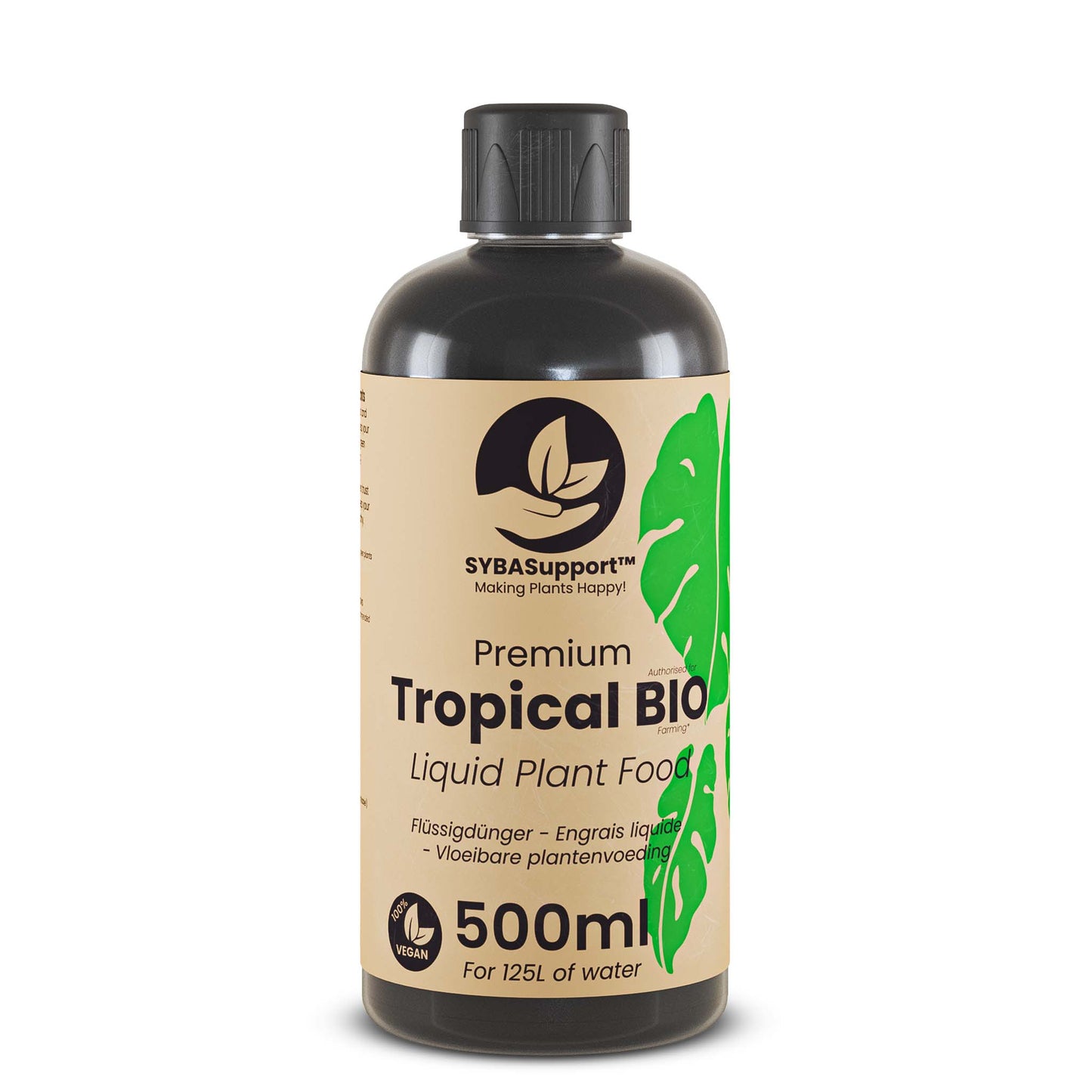
Organic fertilizer (Tropical) | 500 ml
Del