Buy 4 packs of seeds (or more) and get a 10% discount


a Piece of Nature
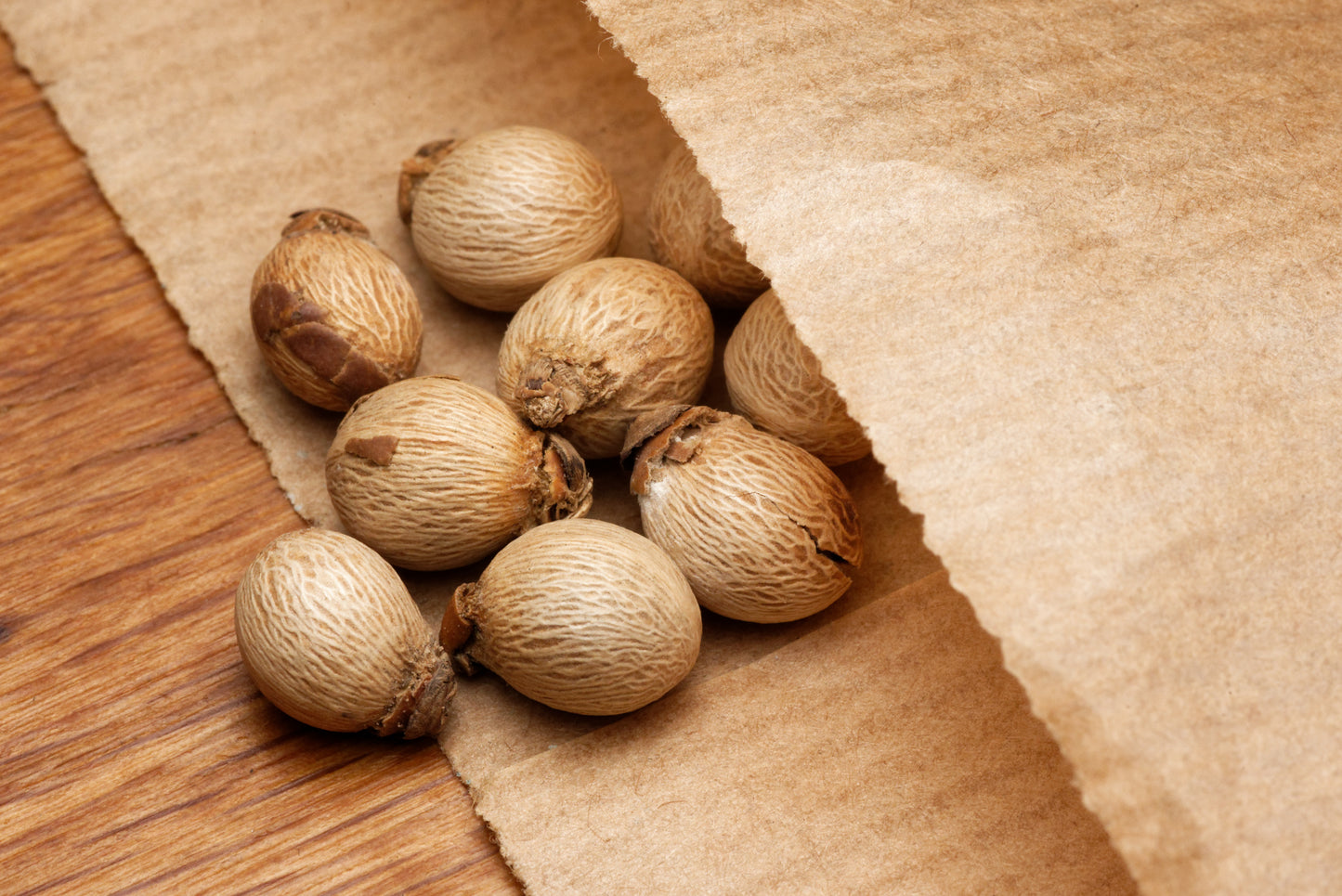
Cuban royal palm (Roystonea regia) | seeds, 10 pcs.
Cuban royal palm (Roystonea regia) | seeds, 10 pcs.
Couldn't load pickup availability
- Latin name: Roystonea regia
- Danish names: Kongepalme, cubansk kongepalme
- English names: Royal palm, Cuban royal palm, Florida royal palm
Roystonea regia is a majestic tropical palm that lives up to its name with its tall, elegant growth and almost perfectly smooth trunk. The species is known in particular for its light gray to almost whitish trunk, the distinct green crownshaft, and the large canopy of long, feathery leaves. This combination gives the royal palm a very characteristic and almost architectural appearance.
The species is native to parts of the Caribbean and southern Florida, with Cuba being an important part of its natural distribution. Here, it grows in warm, humid areas, including forests, on moist soils, and along watercourses. It thrives best where there is plenty of heat, water, and nutrients.
In the wild, Roystonea regia can reach a height of about 20-30 meters. The trunk is robust yet elegant and can vary in thickness along its length, which often gives older palms a characteristic slightly swollen or bulging profile. At the top, the trunk is finished with a long, smooth, and fresh green crownshaft from which the large leaves unfold.
When the palm reaches maturity, it develops large, branched inflorescences just below the crownshaft. The small flowers are followed by numerous dark red to purple-black fruits, which are eaten by birds and other animals, thereby contributing to the dispersal of the seeds.
The royal palm is one of the most well-known palms in Cuba and holds a special cultural significance in the country, where it is considered the national tree. The tall, elegant palm is a characteristic element of the Cuban landscape and appears, among other things, in Cuba's coat of arms.
If you are fascinated by large tropical palms, you can explore our entire selection of palm seeds, where you will find both tropical species and more cold-tolerant palms.
Cultivation and requirements
Roystonea regia is a distinctly heat-loving palm that grows quickly when given plenty of light, heat, water, and nutrients. It prefers:
- A very bright location, and preferably full sun as a larger plant
- A nutrient-rich, airy, and well-drained soil
- Ample and regular watering during the growing season
- High heat, and preferably temperatures around 25-30 °C in the summer
- Bright and frost-free overwintering
The royal palm has a relatively high demand for both water and nutrients during active growth. The soil should be kept evenly moist in the summer, but plants in pots should also have good drainage. Growth is naturally reduced at lower temperatures and less light in the winter, when watering should therefore also be limited.
The species is tropical and does not tolerate sustained frost. Under Danish conditions, it is therefore grown as a potted plant that can stand outdoors in a warm and sunny location during the summer, but must be overwintered in a bright and frost-free place.
Growing from seed
Seeds of Roystonea regia germinate best at a high and stable temperature. It is beneficial to soak the seeds in lukewarm water for 24-48 hours before sowing.
- Sow in an airy and moisture-retaining sowing medium (alternatively, the bag-germination method can be used)
- Cover the seeds lightly with approximately 0.5-1 cm of sowing medium
- Keep the temperature stable around 25-30 °C
- Keep the sowing medium evenly moist, but not waterlogged
- The seeds do not require cold stratification
Under good conditions, germination can begin after a few weeks, but some seeds may take considerably longer to germinate. Stable heat and humidity are more important than attempting to speed up the process with additional treatment of the seeds.
The young palms first form simple, narrow leaves, and the characteristic feathery leaves develop later. The root system quickly needs space in terms of depth, and our tall palm pots are therefore well-suited for the further cultivation of the young plants.
- You may also want to see our article on germinating palm seeds.
Use and collector value
Roystonea regia is primarily an important ornamental palm and is planted on a large scale along roads, avenues, and in parks in tropical and subtropical areas. A row of mature royal palms, with their uniform, light-colored trunks and large green crowns, can create some of the most characteristic palm avenues.
At the same time, the species has had various local uses in its natural range. Leaves and other parts of the palm have traditionally been used for purposes such as roofing and other practical applications, while the fruits can be used as feed for livestock.
The cultural significance is particularly strong in Cuba. The royal palm is the country's national tree and has long been closely associated with the Cuban landscape and the nation's identity.
For the palm collector, Roystonea regia is especially interesting because it develops an elegant tropical look even as a young plant and, under good conditions, can grow relatively quickly. It requires more heat than, for example, the windmill palm, Trachycarpus fortunei, but rewards good growing conditions with large, lush leaves and vigorous growth.
Roystonea regia is therefore an exciting choice for anyone wishing to grow one of the world's classic tropical palms from seed – and follow its development from a small seedling to an elegant royal palm.
Seed germination
Seed germination
Childcare
Childcare
Size
Size
Up to 30 meters
Difficulty level
Difficulty level
Trained
NB
NB