Buy 4 packs of seeds (or more) and get a 10% discount
a Piece of Nature
Senegal date palm (Phoenix reclinata) | seeds, 10 pcs.
Senegal date palm (Phoenix reclinata) | seeds, 10 pcs.
Couldn't load pickup availability
TOLERATES LIGHT FROST
- Latin name: Phoenix reclinata
- Danish names: Senegal-daddelpalme, afrikansk daddelpalme
- English names: Senegal date palm, African wild date palm, wild date palm
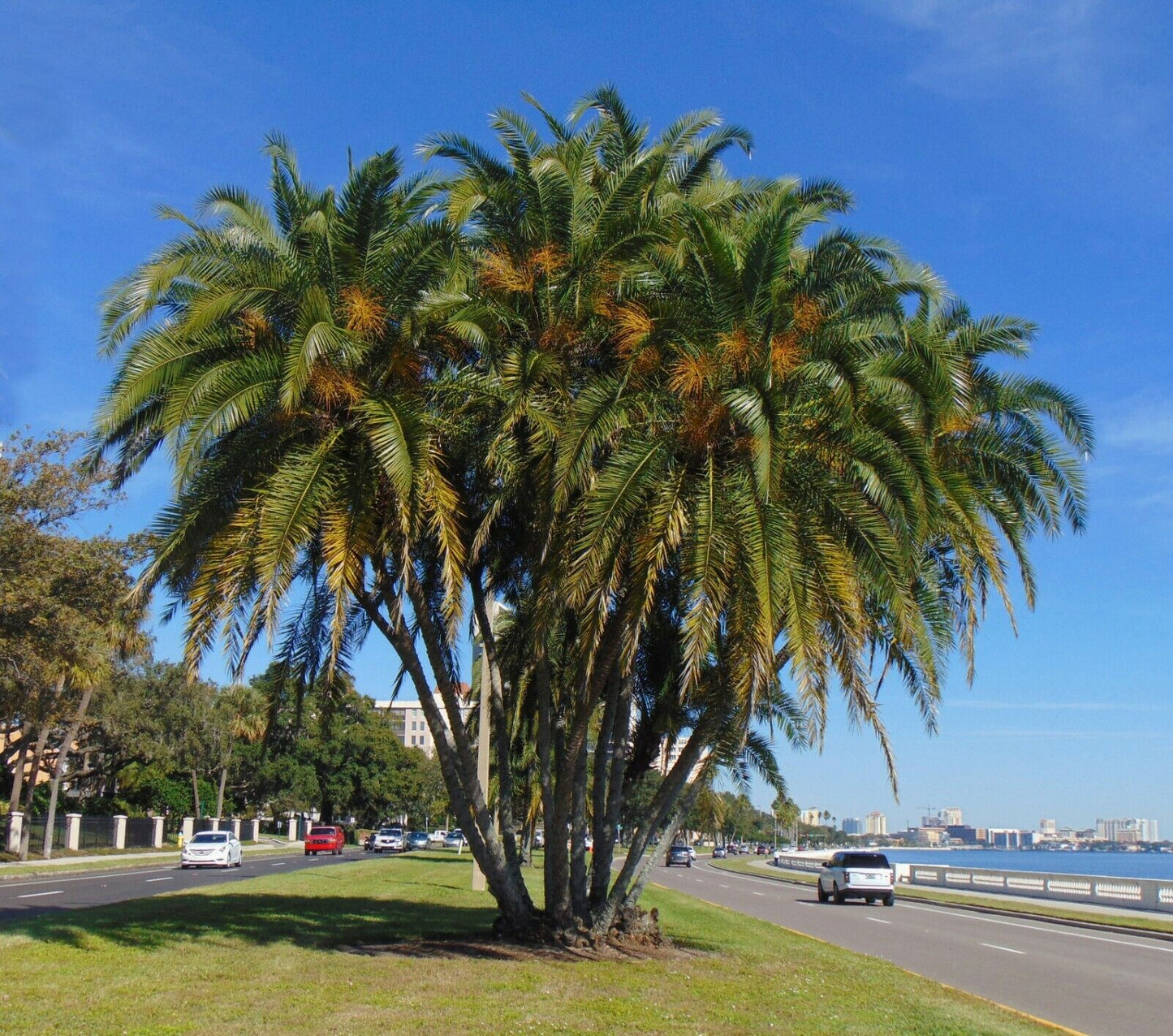
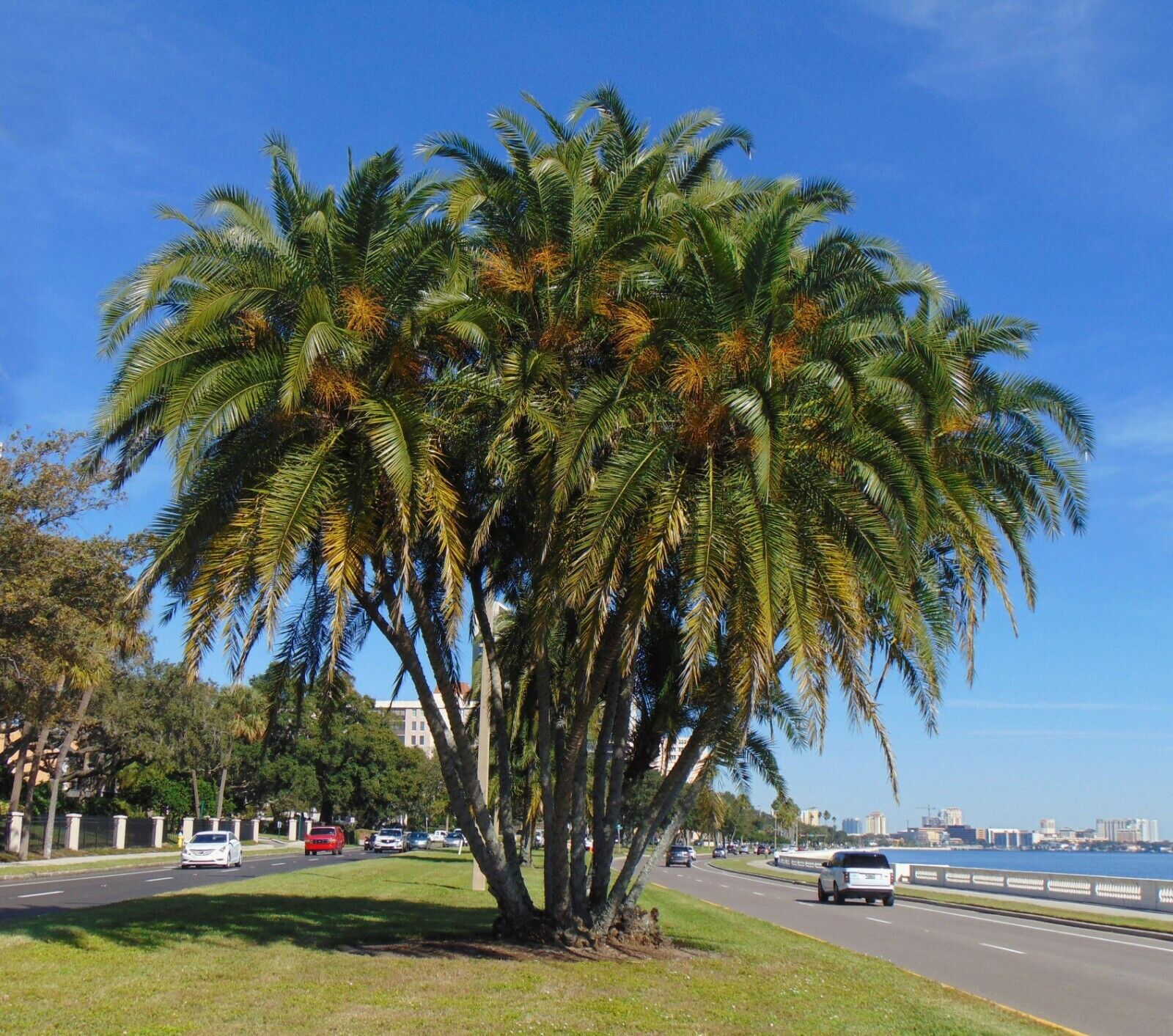
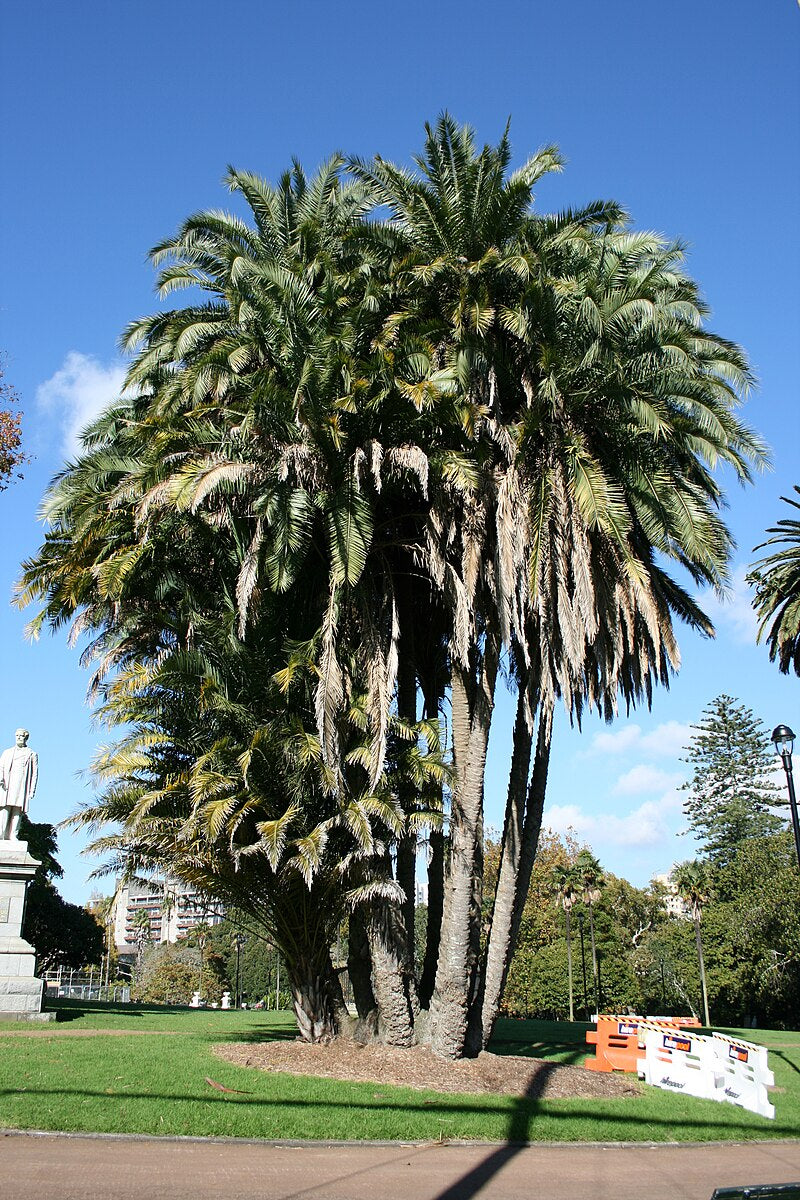
Phoenix reclinata is an elegant and characterful date palm, which differs from many other species in the genus due to its unique growth habit. While most well-known Phoenix palms develop a single sturdy trunk, this species often forms large groups of slender, slightly arched trunks that together create an almost sculptural expression. It is native to large parts of tropical and southern Africa, as well as Madagascar, the Comoros, and the southwestern part of the Arabian Peninsula.
In the wild, Phoenix reclinata is found, among other places, along rivers, by streams, in humid lowlands, and on open slopes. It is remarkably adaptable and can grow in both humid tropical regions and more seasonal landscapes. Under good conditions, the palm can reach a height of over 10 meters, but it is primarily its ability to form multiple trunks from the base that makes it so distinctive.
The leaves are long, feathery, and elegantly arched with narrow, green leaflets. The slender trunks often grow at an angle away from the center of the plant before bending upwards. It is precisely this reclined growth habit that has given the species the name reclinata, which means leaning back or reclined.
Older plants can develop inflorescences, which, in female plants after pollination, are followed by clusters of small, oval fruits. The fruits ripen from yellowish to orange or reddish hues and resemble small dates. They are edible, but contain significantly less pulp than the dates from the common date palm.
How does Phoenix reclinata differ from other Phoenix palms?
The most characteristic feature of Phoenix reclinata is its multi-trunked growth habit. Where Phoenix canariensis (Canary Island date palm) usually develops one massive trunk and a large, dense crown of leaves, P. reclinata often forms several slender trunks with a lighter and more open expression.
It also differs from Phoenix dactylifera, the common date palm, which is especially known for its large, sweet dates. Both species can develop root suckers, but in P. reclinata, the large, multi-trunked palm groups are a particularly prominent feature.
Compared to Phoenix rupicola, which is known for its elegant, curved leaves and typically single trunk, P. reclinata has a more bushy and branched appearance. It also differs from Phoenix theophrasti, which can also form multiple trunks, but has more rigid and often blue-green leaves, as well as a natural distribution around the eastern Mediterranean.
You can find these and many other exciting palm species in our collection of palm seeds, which includes both classic palms and more unusual species for collectors.
Cultivation and requirements
Phoenix reclinata is a relatively robust palm that thrives best with plenty of light and heat. It prefers:
- Full sun to light partial shade
- Well-drained and preferably nutrient-rich soil
- Regular watering during the growing season
- Plenty of space for roots and any side shoots
- A bright and frost-protected location during the winter
Although the species often grows near water in the wild, it should not stand in waterlogged soil in a pot. A well-drained soil mix and regular watering provide good growing conditions, especially in the warm summer months.
Phoenix reclinata tolerates short-term, light frost, but is not sufficiently winter-hardy for regular year-round outdoor cultivation in Denmark. It is therefore best suited as a container plant that can be kept outdoors on a sunny terrace in the summer and overwinter in a bright and cool, but frost-free place.
Young plants can be grown in large standard pots, while older specimens with multiple trunks eventually require considerable space. In a spacious conservatory or a frost-free greenhouse, the species can eventually develop into a highly impressive palm.
Cultivation from seeds
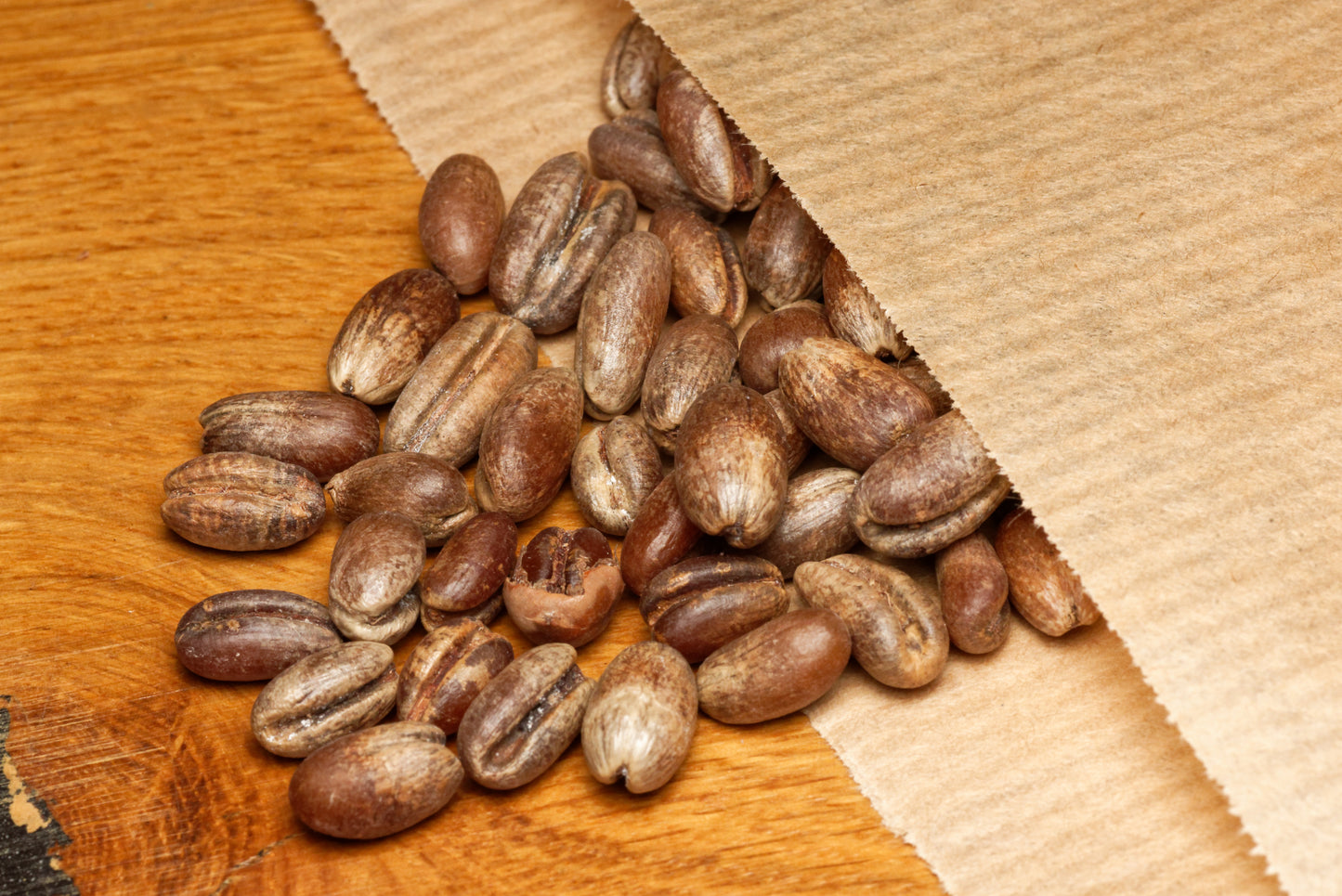
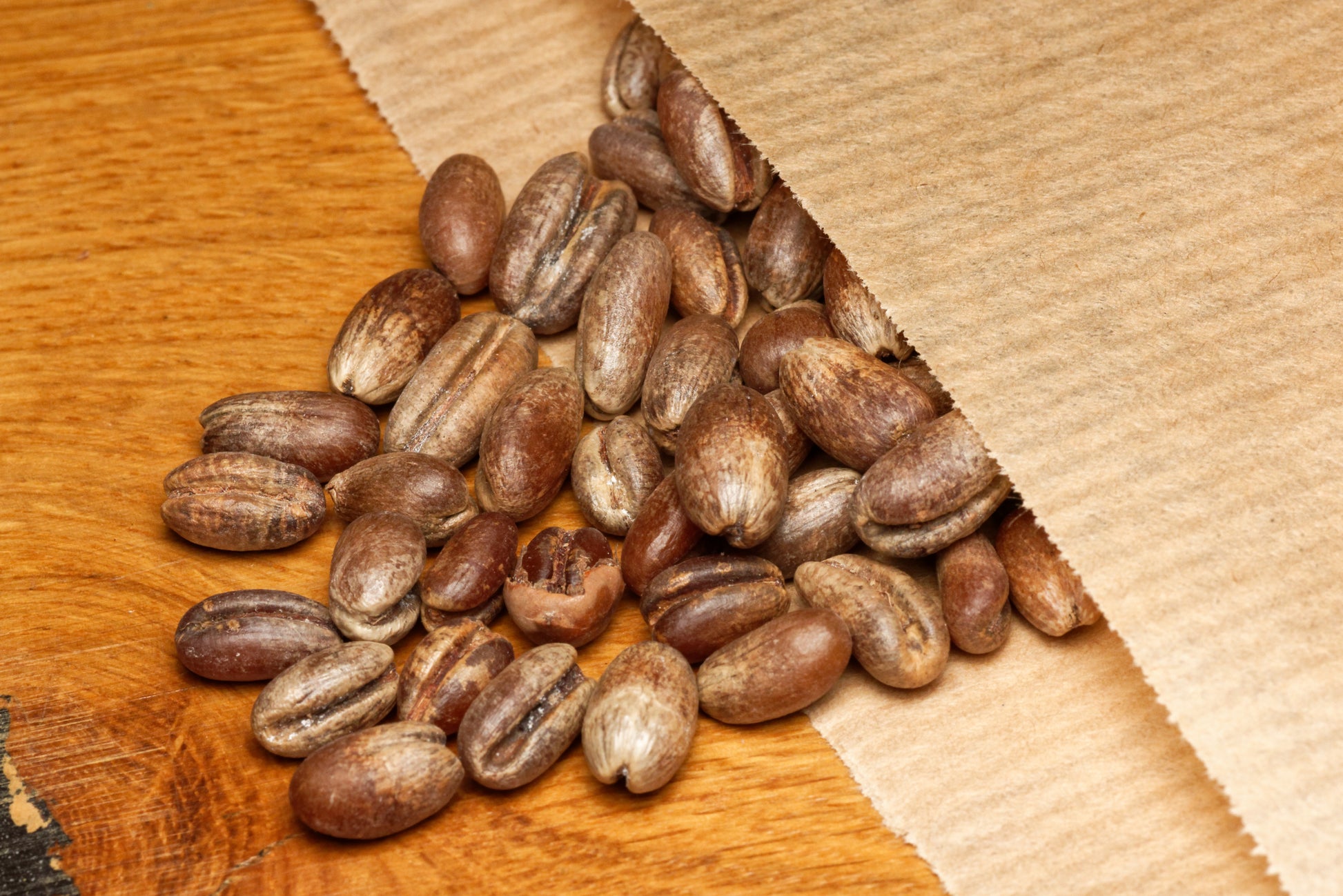
Phoenix reclinata can be grown from seeds and is an exciting project for palm enthusiasts who want to follow the development of an unusual date palm from the beginning.
- Preferably soak the seeds in lukewarm water for 24–48 hours before sowing
- Sow the seeds approximately 1–2 cm deep in airy and well-drained seed compost
- Keep the temperature around 25–30 °C
- Keep the soil slightly moist, but avoid overwatering
- Place the sowing in a bright location, but out of strong direct sunlight
Germination can take from a few weeks to several months, and the seeds may sprout at different times. A stable soil temperature and patience are therefore important factors.
The first leaves are narrow and relatively simple. Gradually, the plant develops the characteristic feathery palm leaves, and with age, it can begin to form side shoots from the base. The multi-trunked growth habit develops gradually and will usually only become apparent on more established plants.
Utility and collector value
Phoenix reclinata has a long history as a useful plant in various parts of Africa. The small date-like fruits have traditionally been eaten, while the sap has in some places been used to produce palm wine. The leaves have also been used for, among other things, weaving, mats, and other practical purposes.
As an ornamental plant, however, it is especially the unusual growth habit that makes the species desirable. The many slender trunks and elegantly arched leaves provide a completely different expression than the more classic, single-trunked date palms.
For collectors of Phoenix palms, Phoenix reclinata is therefore a particularly interesting species. It combines a large natural distribution, exciting traditional uses, and a characteristic architecture that can develop into an impressive palm group over the years.
Seed germination
Seed germination
Childcare
Childcare
Size
Size
Up to 12 metres
Difficulty level
Difficulty level
Beginner
NB
NB