Buy 4 packs of seeds (or more) and get a 10% discount


a Piece of Nature
Elisha's Tears (Carpobrotus acinaciformis) | seeds, 10 pcs.
Elisha's Tears (Carpobrotus acinaciformis) | seeds, 10 pcs.
Couldn't load pickup availability
- Latin name: Carpobrotus acinaciformis
- Danish names: Strandfigen, isskræppe, spiselig isplante
- English names: Sea fig, Sally-my-handsome, coastal ice plant
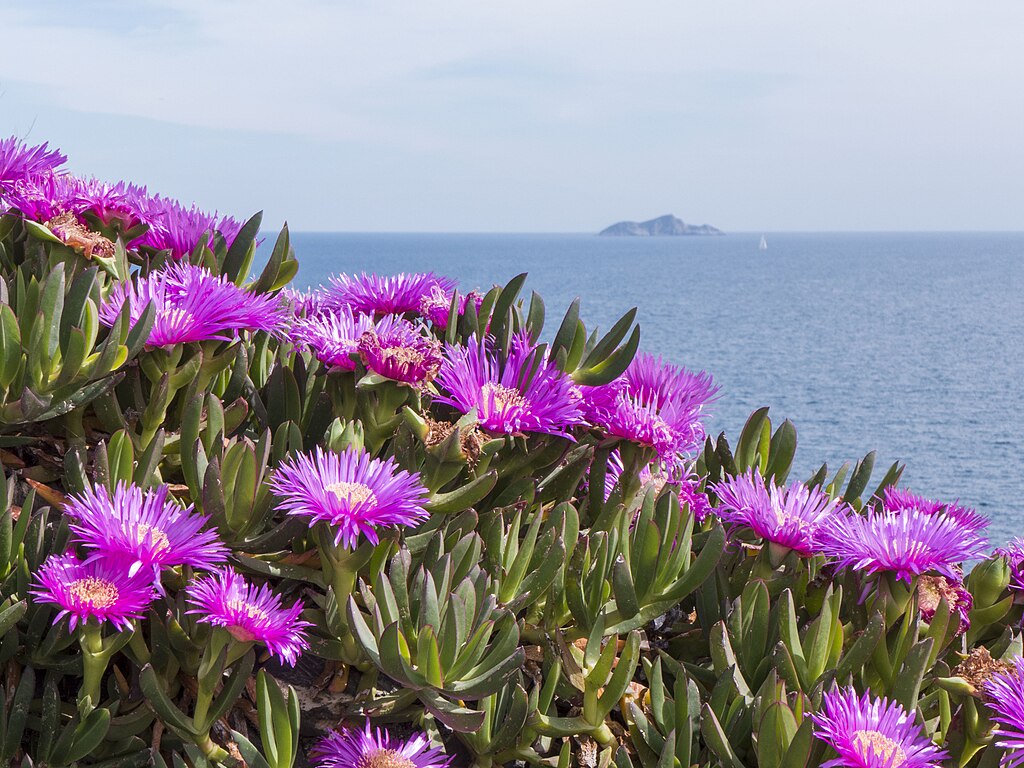
Carpobrotus acinaciformis is a low-growing, mat-forming succulent from the coastal areas of South Africa, where it spreads across sand, cliffs, and slopes with its succulent, sword-shaped leaves and large, magenta-pink flowers. It resembles Carpobrotus edulis, but has broader leaves, a more compact growth habit, and far more intense flower colors – an ideal plant for sunny and dry locations.
The plant forms dense, creeping cushions of fleshy stems that quickly cover the ground and prevent dehydration and erosion – a natural adaptation to its harsh, coastal homeland. During the flowering period from spring to late summer, it is covered in vibrant violet-pink flowers with golden centers, which attract bees and butterflies.
Cultivation and requirements:
Carpobrotus acinaciformis thrives best in full sun and requires a very well-drained, sandy, or gravelly soil. It tolerates drought and salty air and is perfect for rock gardens, cliff-side environments, coastal gardens, and large pots.
The plant tolerates short periods of temperatures down to about 0 °C, but should be overwintered frost-free or covered during cold and wet periods. It performs best when the soil is kept dry in winter.
Cultivation from seeds:
The seeds should be sown in a well-drained, sandy soil mix and covered only lightly. They germinate best at 18–25 °C and should be kept moist, but not wet. Germination typically takes 2–4 weeks. The seedlings grow rapidly and can be planted out once the risk of frost has passed.
Utility:
In its homeland, the fruits are traditionally used as food and natural medicine – they can be eaten fresh, dried, or used for jam. The plant has also been used as natural erosion control on slopes and dunes. Today, it is primarily grown as an ornamental plant for its colorful and exotic appearance.
Carpobrotus acinaciformis is an ideal plant for those who want a strong, sun-loving succulent with vibrant flower colors – a compact, colorful, and more elegant counterpart to the classic C. edulis.
Seed germination
Seed germination
Childcare
Childcare
Size
Size
Carpet-forming
Difficulty level
Difficulty level
Easy
NB
NB
Produces edible small figs