Buy 4 packs of seeds (or more) and get 10% off


a Piece of Nature
Rush-leaved bird of paradise (Strelitzia juncea) | seeds, 5 pcs.
Rush-leaved bird of paradise (Strelitzia juncea) | seeds, 5 pcs.
Couldn't load pickup availability
RARE
- Latin name: Strelitzia juncea
- Danish names: Sivbladet paradisfugleblomst
- English names: Narrow-leaf bird of paradise, Rush-leaf bird of paradise
Strelitzia juncea is one of the most distinctive and sought-after species in the bird of paradise genus. The species originates from the Eastern Cape in South Africa, where it grows in dry and sunny areas. In the wild, it is far rarer than the classic Strelitzia reginae, and it has therefore become a popular collector's plant among enthusiasts worldwide.
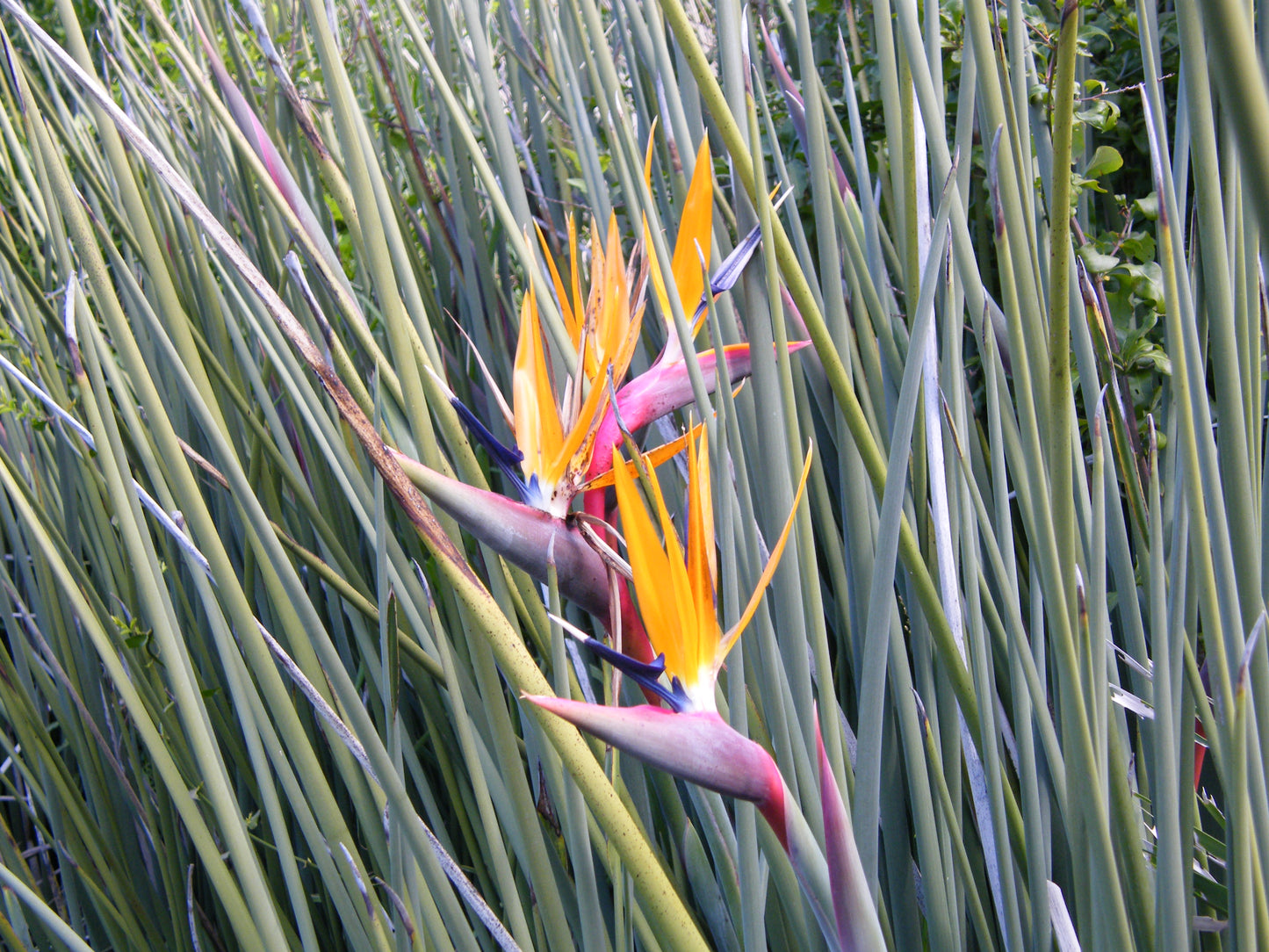
The most remarkable feature of Strelitzia juncea is the leaves – or rather, the lack thereof. While most other bird of paradise plants develop broad, banana-like leaves, the foliage of this species consists of long, cylindrical, and rush-like leaf stalks. This gives the plant a very modern, architectural, and almost sculptural appearance.
Despite the different foliage, the plant develops the same iconic flowers as Strelitzia reginae with bright orange and blue colors. The combination of the minimalist foliage and the spectacular flowers makes the species one of the most desirable bird of paradise plants in cultivation.
If you are interested in bird of paradise plants, you can also explore the rest of our collection of Strelitzia seeds, where you will find both classic species, rare collector's plants, and exciting varieties such as Strelitzia reginae 'Mandela's Gold', Strelitzia reginae 'Dwarf', Strelitzia nicolai, and Strelitzia parvifolia.
Cultivation and requirements
Strelitzia juncea thrives best in full sun to light shade and prefers:
- Well-drained and nutrient-rich soil (we recommend our Calathea & Maranta soil)
- Consistent watering during the growing season
- Good air circulation
- Warm and bright conditions
A well-drained Mediterranean or tropical potting soil is ideal for cultivation. For optimal growth, an organic fertilizer can be used during the growing season.
The species tolerates short periods of light frost, but in Denmark, it is best grown as a potted plant, greenhouse plant, or conservatory plant. During winter, it should be kept in a bright, frost-free environment.
The rush-like growth makes the plant more drought-tolerant than many other bird of paradise plants, but it develops best with regular watering during the growing season.
Growing from seeds
Seeds of Strelitzia juncea germinate best under warm conditions. For best results, we recommend:
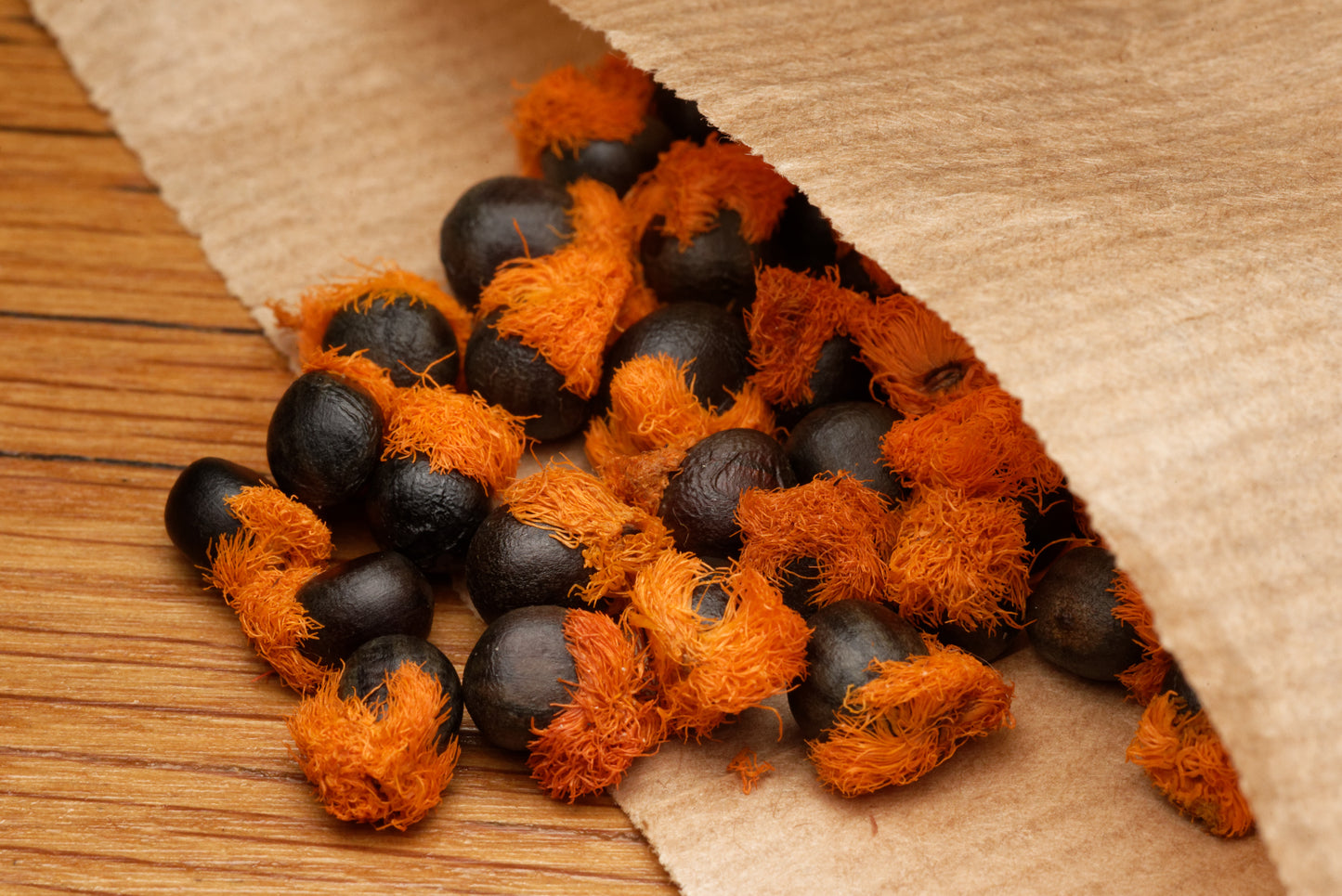
- First, remove the orange "tuft" from the seed
- Soak in lukewarm water for 24–48 hours
- Sow in a well-drained soil mix
- Maintain a temperature of 22–28 °C
- Keep the soil evenly moist, but not soggy
Germination typically occurs within 4–12 weeks, though some seeds may take longer. The young plants grow moderately and gradually develop their characteristic rush-like leaves.
As with other bird of paradise plants, it requires patience to grow the plant to a flowering size, but the reward is some of the most spectacular flowers in the plant kingdom.
Utility and collector value
Strelitzia juncea is primarily grown as an ornamental and collector's plant. Its unusual growth form makes it one of the most distinctive species in the genus and an obvious choice for collectors of exotic plants.
For many enthusiasts, the rush-like growth is almost as attractive as the flowers. The plant adds an exotic and modern touch to conservatories, greenhouses, and plant collections.
Strelitzia juncea is an obvious choice for the plant enthusiast who wants to grow one of the most unique bird of paradise plants from seed – a rare species with architectural growth, iconic flowers, and high collector value.
-
See our article on care for Strelitzia
Seed germination
Seed germination
Size
Size
Up to 2 meters
Difficulty level
Difficulty level
Trained