a Piece of Nature
Giant prickly stick insect (Extatosoma tiaratum)
Giant prickly stick insect (Extatosoma tiaratum)
Couldn't load pickup availability
- Latin name: Extatosoma tiaratum
-
Danish name: Vandrende rosengren, vandrende pind
-
English name: Giant Prickly Stick Insect, Macleay's Spectre, Spiny Leaf Insect
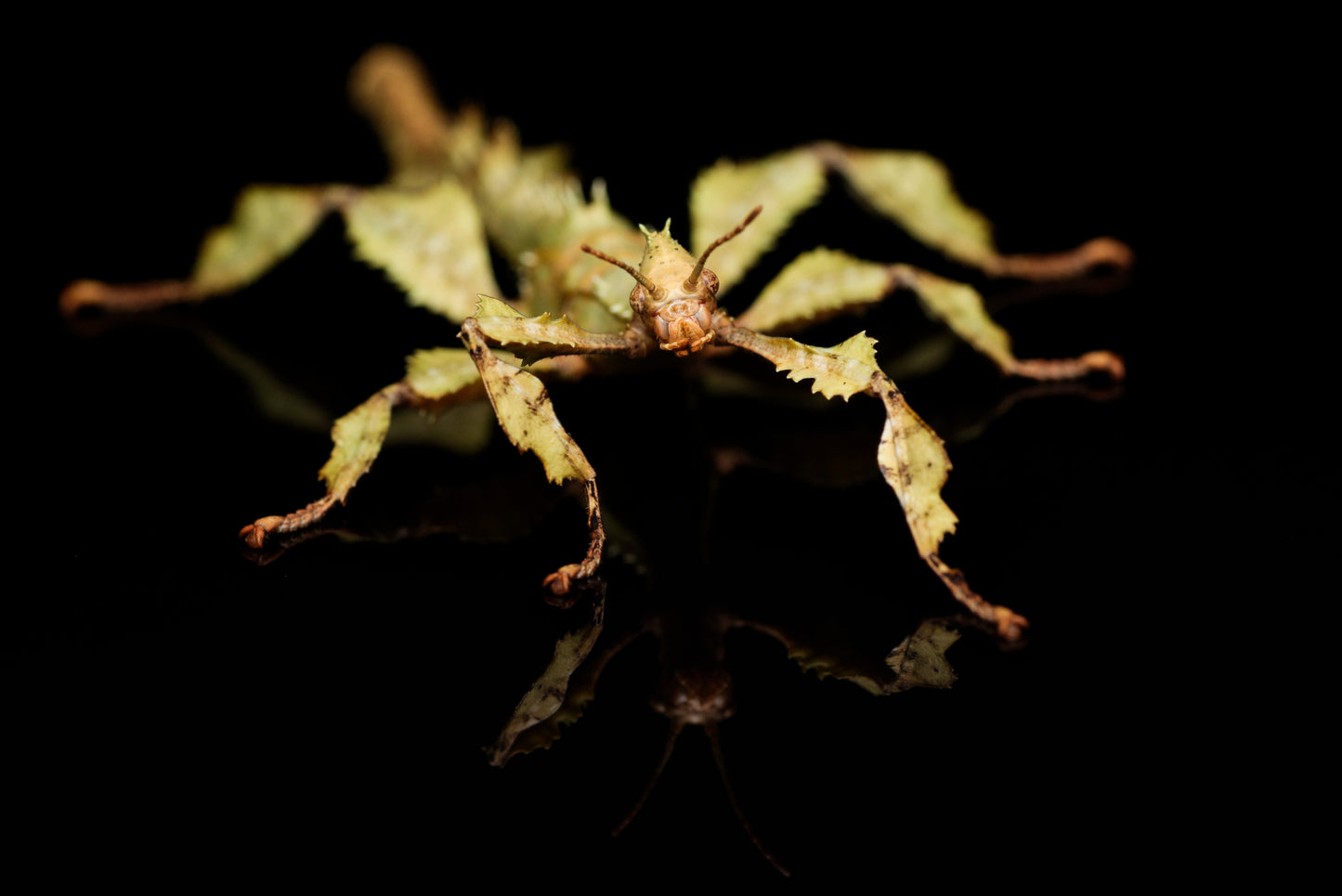
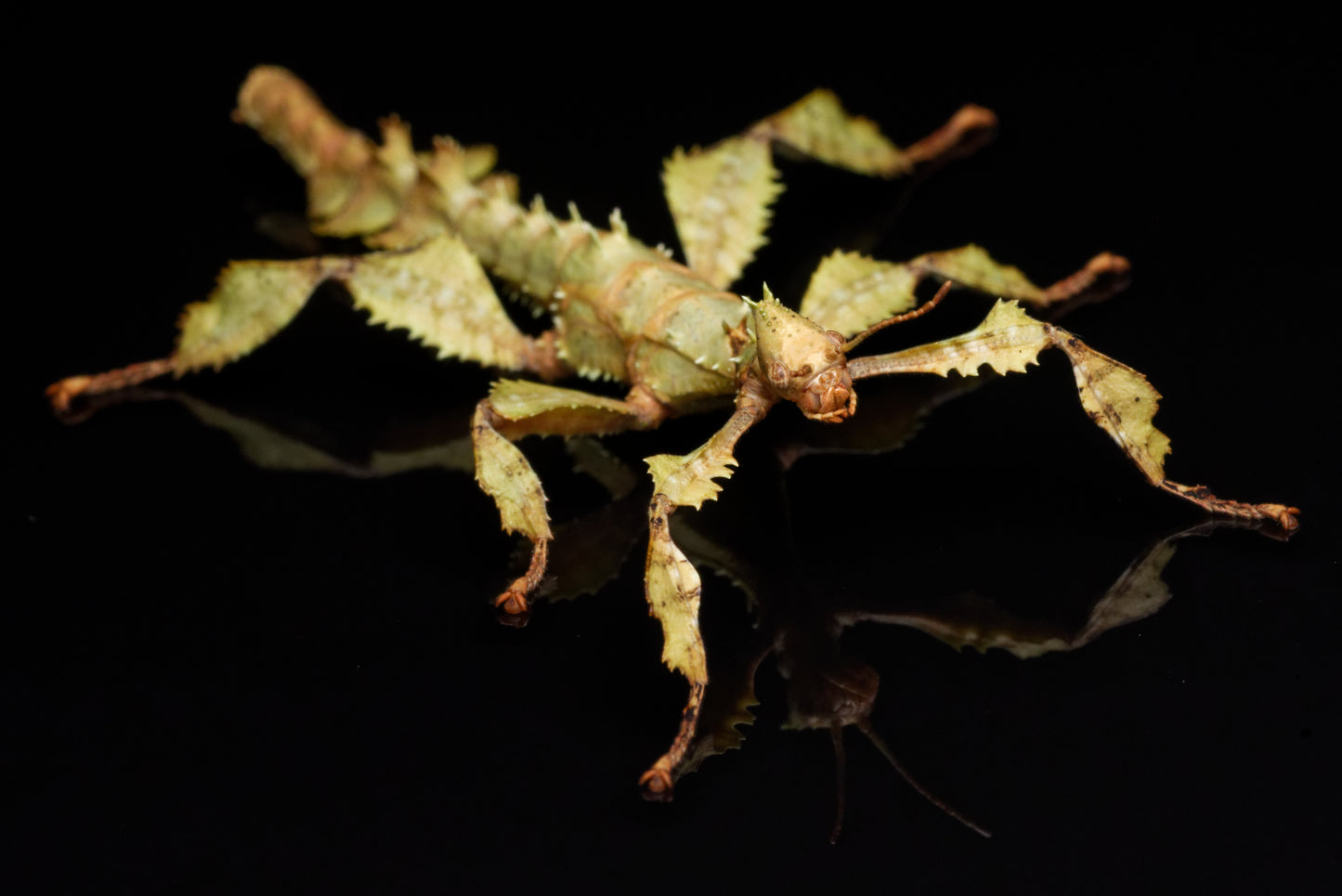
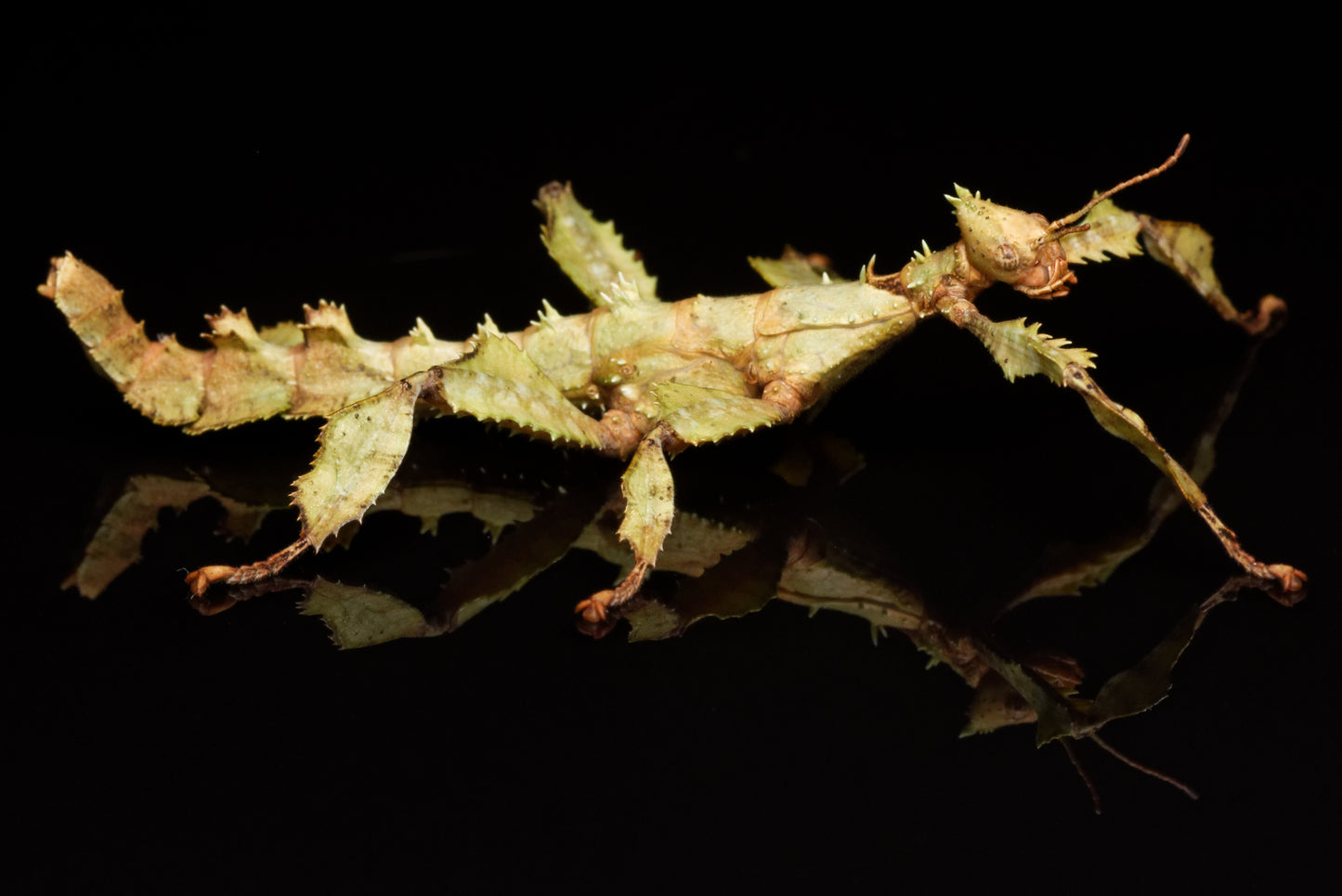
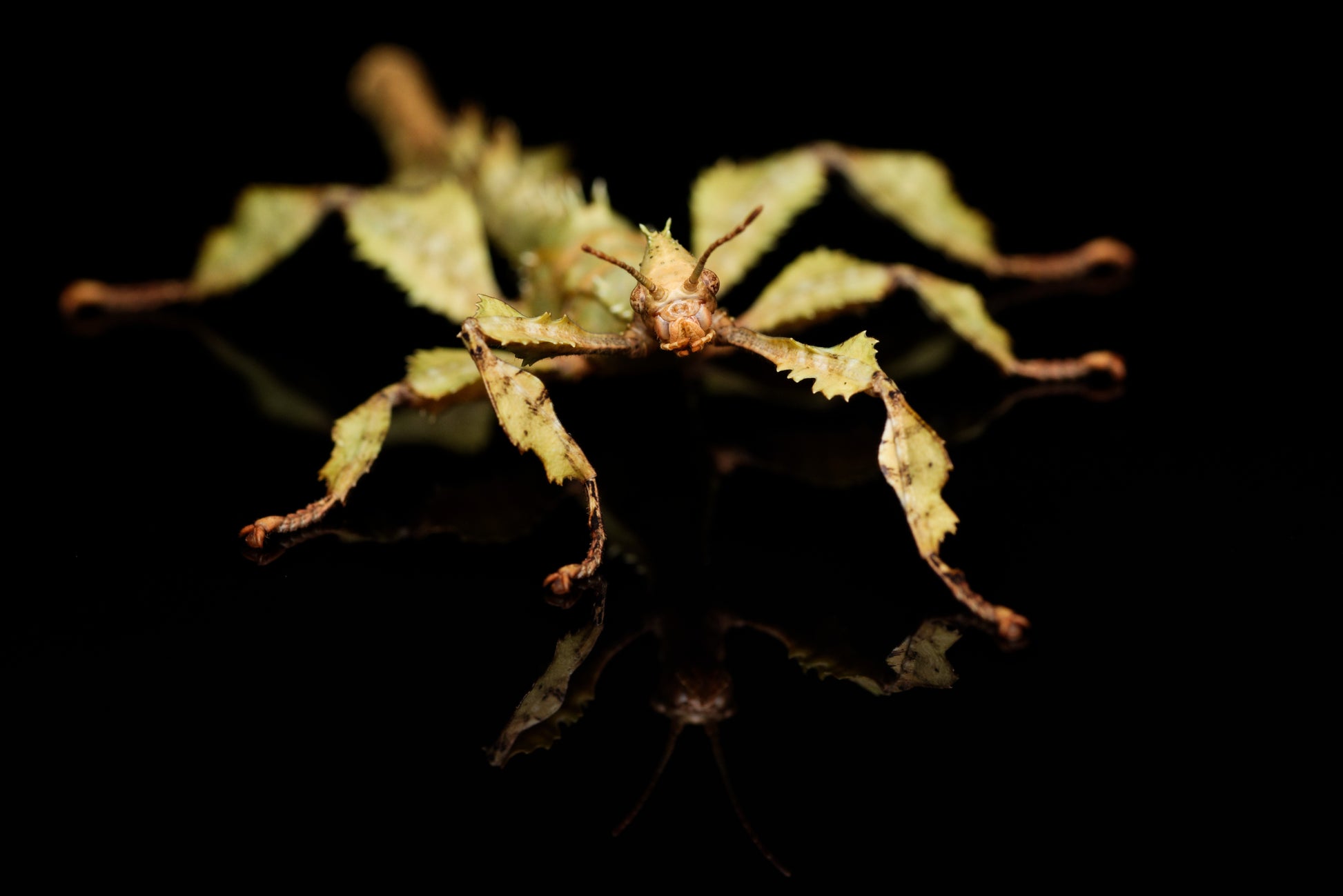
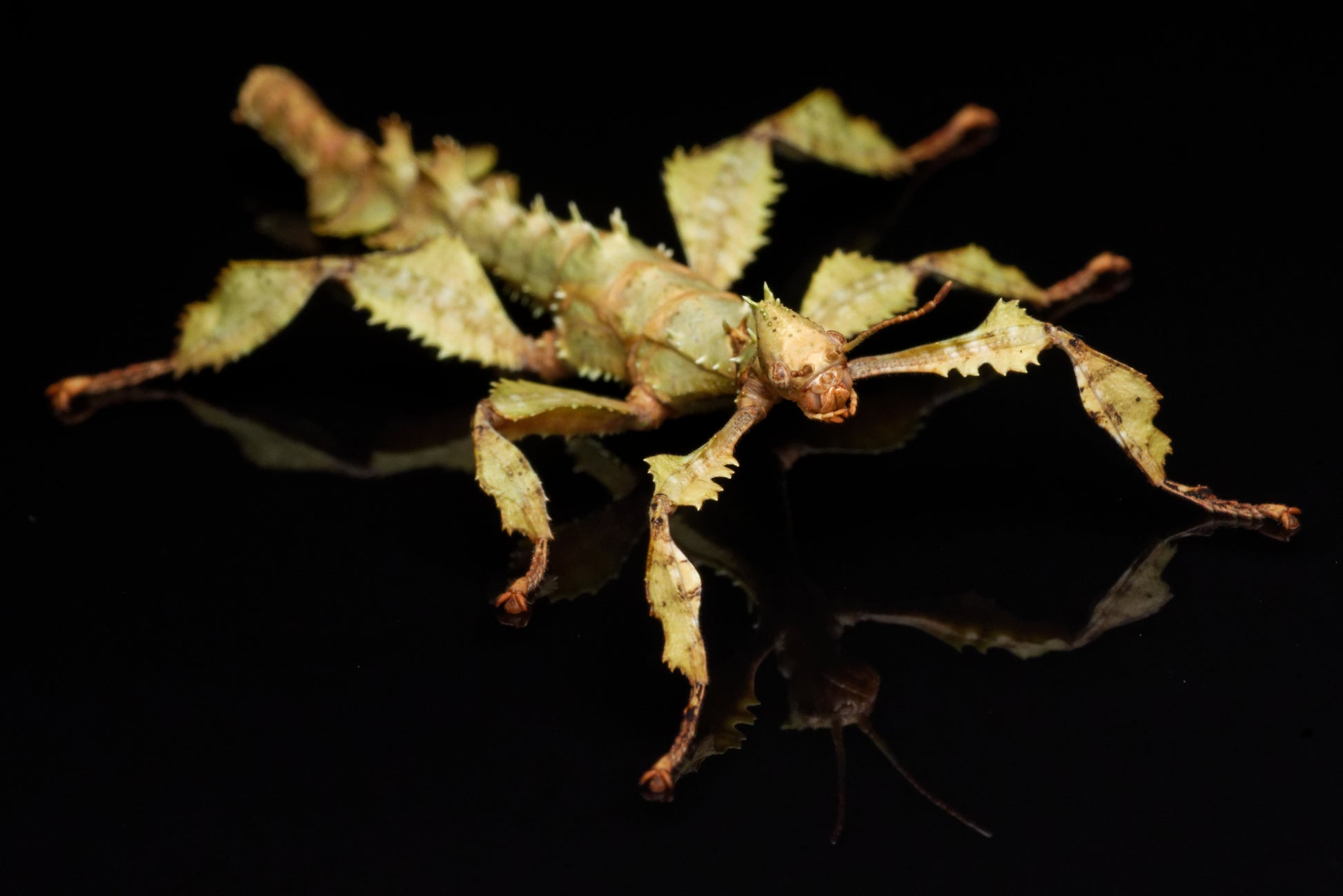
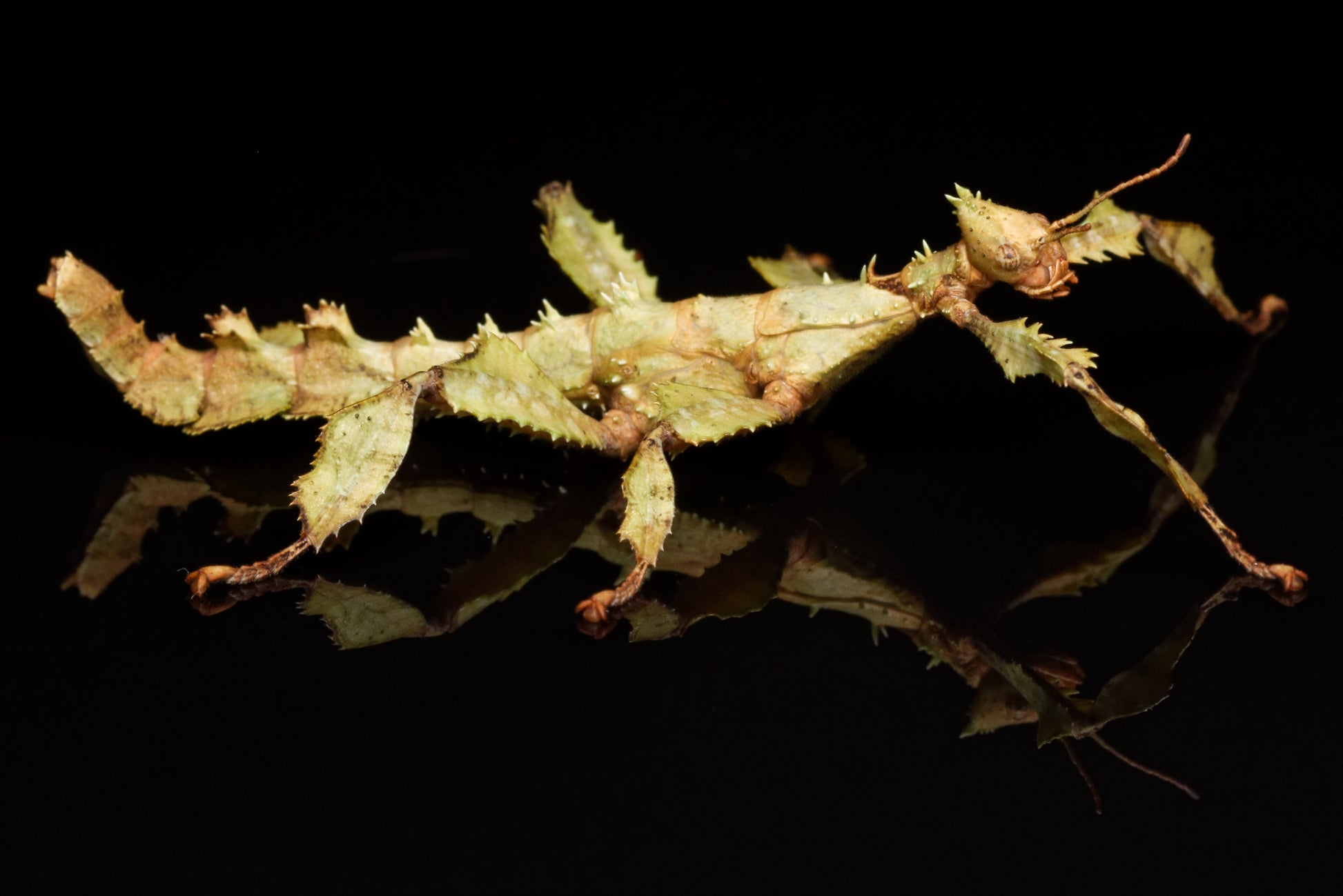
Extatosoma tiaratum, also known as the Giant Prickly Stick Insect, is one of the most impressive and unique of all stick insects. This fascinating species is famous for its thorny appearance and remarkable camouflage, which makes it look like a dried-out leaf branch or thorny twig.
Origin
Extatosoma tiaratum originates from Australia and New Guinea, where it lives in forest areas and rainforests. It thrives in a warm and humid environment, where its natural appearance helps it avoid predators.
Appearance and Characteristics
The Giant Prickly Stick Insect is known for its impressive size and thorny body structure. Females can grow up to 20 cm long, while males are somewhat smaller and more slender. They have a brown or greenish hue, which further helps them blend into their natural surroundings. Despite their thorny appearance, they are not dangerous, and you cannot prick yourself on their thorns.
Females
- Larger and more robust than the males.
- Have large, thorny body protrusions that resemble dry leaves or thorns.
- Are generally more stationary and move more slowly.
- Have short, vestigial wings that cannot be used for flight.
Males
- Smaller and more slender than the females.
- Have a less pronounced thorny body structure.
- Have fully developed wings and can fly.
- Are more active and move around the terrarium more often.
Maturity and Reproduction
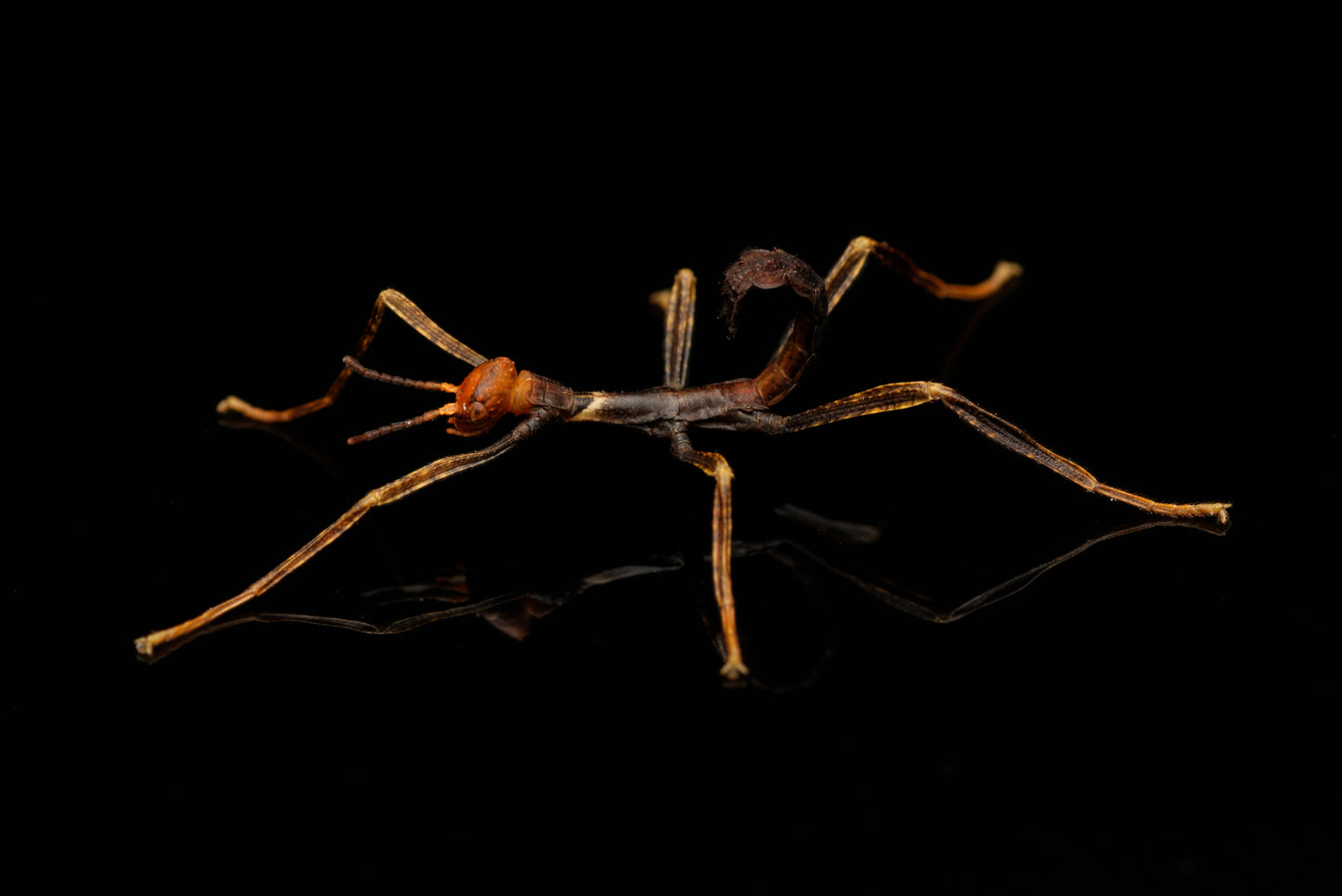
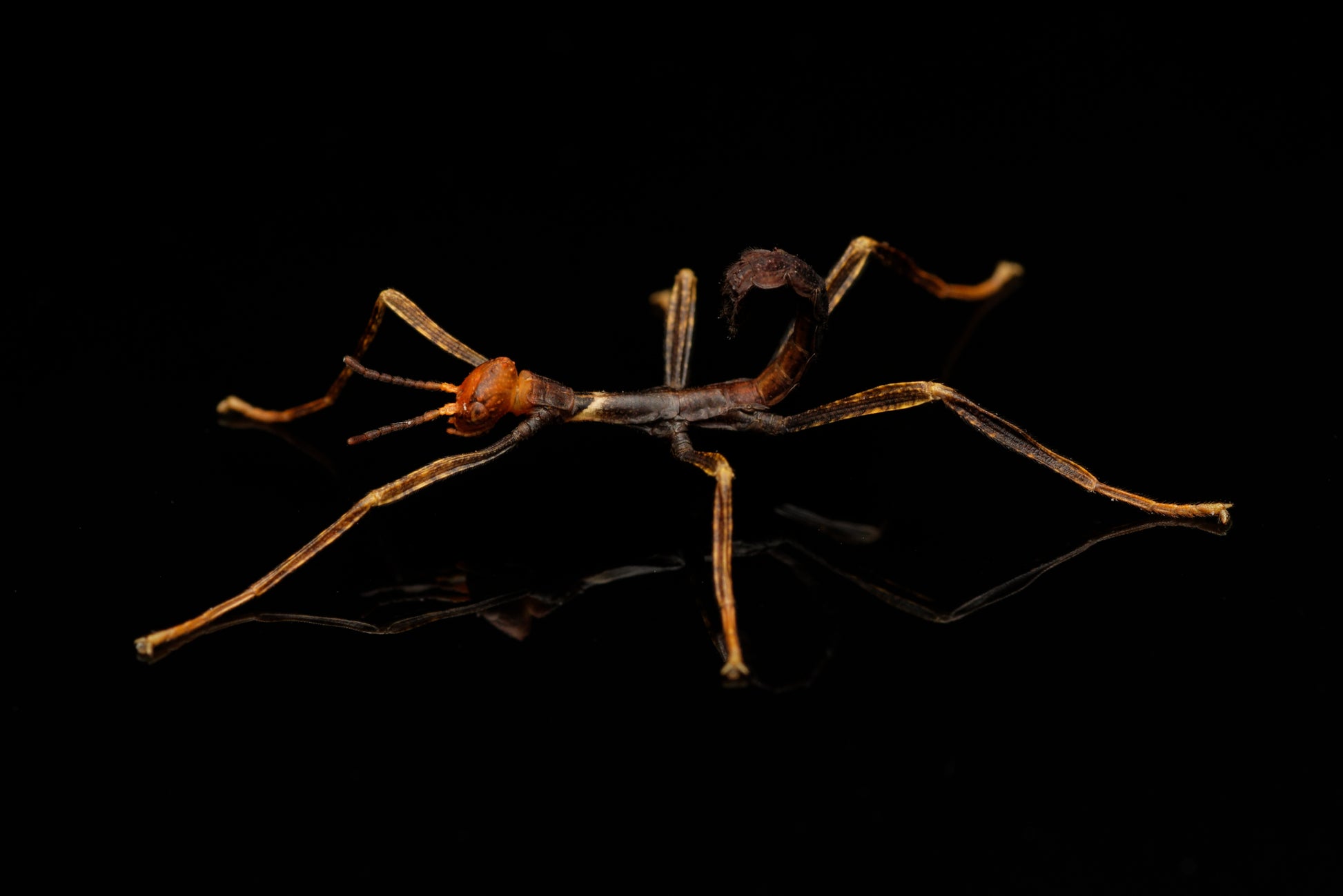
Maturity Extatosoma tiaratum reaches maturity approximately 6-12 months after hatching, depending on temperature and feeding conditions. During this period, they undergo several molts, where they grow and develop their characteristic appearance. Males reach maturity before females and have a shorter lifespan after reaching maturity. A curious detail is that when they first hatch, the nymphs mimic small black ants, and their abdomen is curled up over their back, almost like a scorpion. After the first molt, however, they begin to look like "real" stick insects.
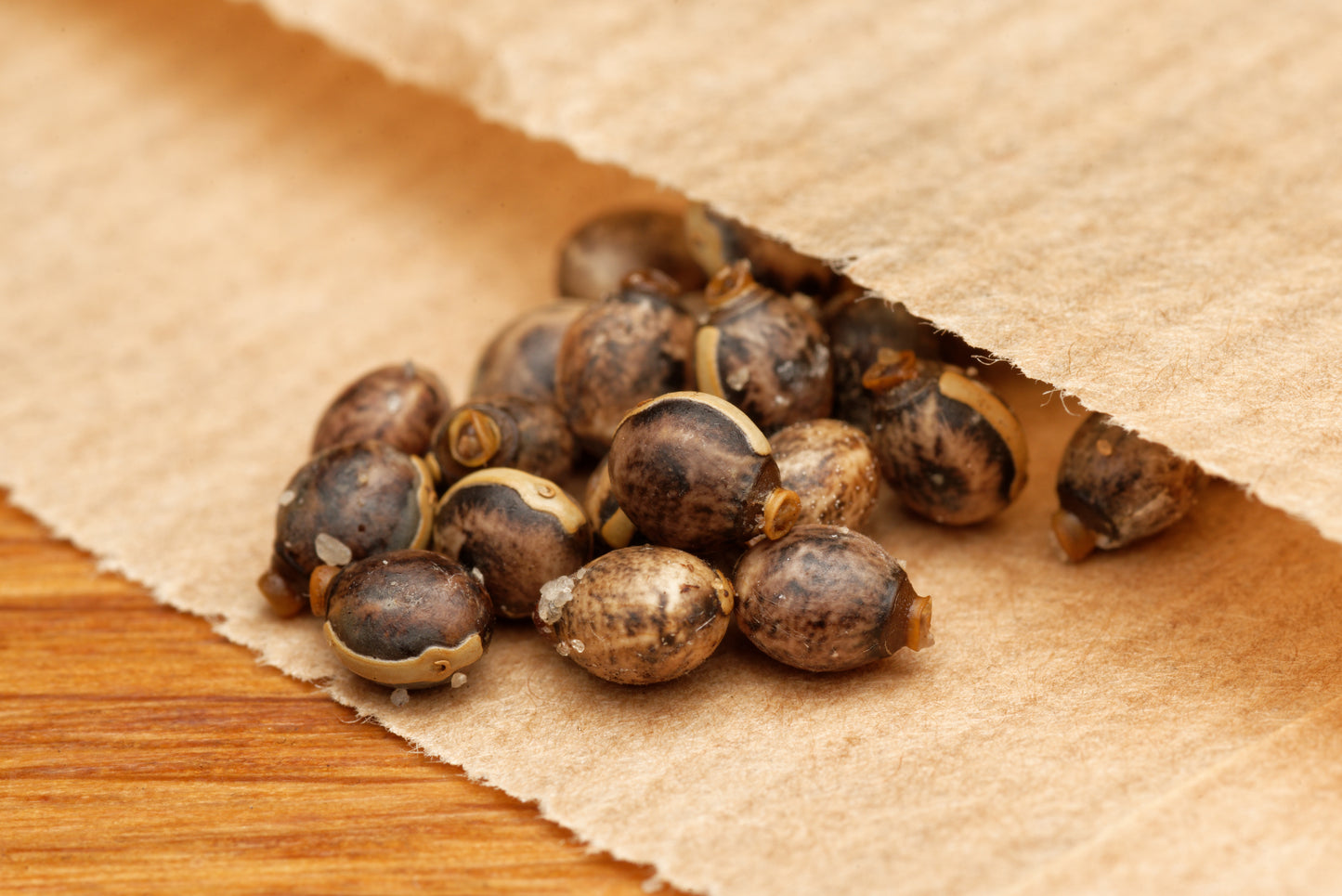
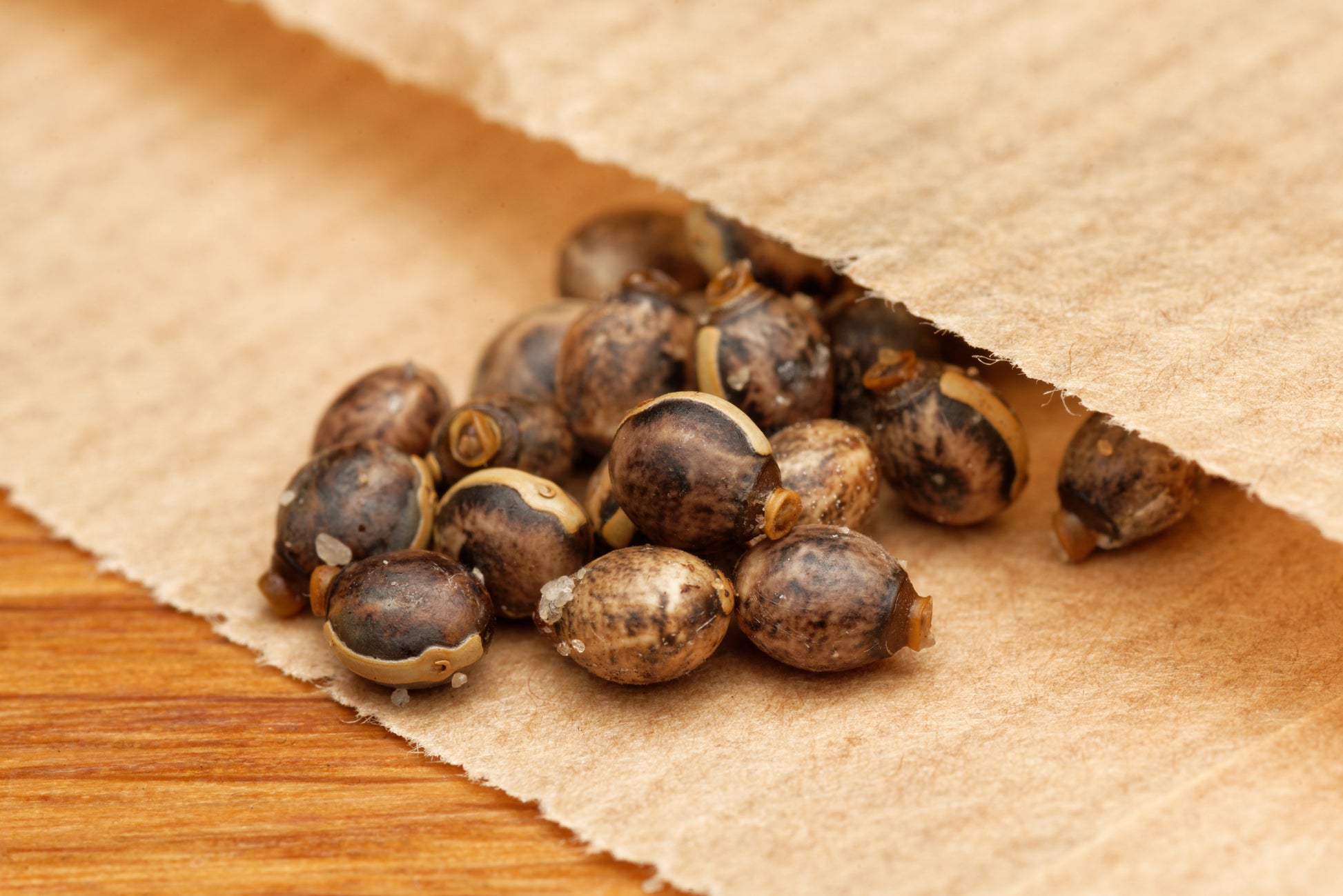
Egg hatching After mating, the female lays eggs that require an incubation period of about 4-9 months before they hatch. The female can lay up to three eggs a day. The eggs must be kept at a constantly high humidity and a temperature of around 25°C to ensure successful hatching. However, they can also be kept at room temperature, which just makes the process a bit slower. The eggs can be placed on a moist substrate such as vermiculite and kept moist by spraying with water a few times a week.
This species can reproduce parthenogenetically. This means without mating, with the offspring emerging as carbon copies of their mother. Eggs that are not fertilized will usually take longer to hatch.
Care Instructions
Terrarium To provide the best conditions, you should use a terrarium that measures at least 45 x 45 x 60 cm. Good ventilation and a humid environment are important. The terrarium must also have sufficient height so that the Giant Prickly Stick Insects can molt without hitting the bottom.
Substrate A good substrate should contribute to a healthy environment and help increase humidity. It can be coconut fiber or potting soil mixed with leaves, as well as the addition of bioactive animals to the base layer. We use exclusively specialized terrarium soil and have bioactive animals in all our terrariums with stick insects.
Temperature and Humidity The ideal temperature is between 22-26°C during the day and can drop to 18-20°C at night. This species thrives well at room temperature without additional heating. Humidity should be kept around 70-80%, which can be achieved by daily misting of water in the terrarium with a water mister.
Feeding Giant Prickly Stick Insects are herbivores and can be fed with leaves from eucalyptus, raspberry, blackberry, oak, and rose bushes. It is important to ensure that the leaves have not been sprayed with pesticides. To keep the leaves fresh for longer, they can be placed in a glass of water, covered with plastic wrap with small holes. A better solution might be a jam jar where holes have been drilled in the lid for the leaves. It is very important that the stick insects cannot fall into the water and drown.
During winter, it can be difficult to find suitable food. In some places, blackberries can be evergreen. Alternatively, you can freeze blackberry leaves during the summer and take them out in the winter. However, the thawed leaves do not stay fresh for very long. Other alternatives are the so-called wintergreen or salal plants (Gaultheria), which are evergreen and a good winter food for stick insects. They can, however, be difficult to find.
Maintenance Clean the terrarium regularly by removing any droppings and old leaves. Note that the eggs of most stick insects can look like their droppings!
Handling Even though Giant Prickly Stick Insects are harmless, they should be handled with care. Their fragile bodies can easily be damaged, so use gentle movements and let them crawl onto your hand instead of grabbing them. Despite their thorny appearance, Giant Prickly Stick Insects can easily be handled with a little care.
Fascinating Facts
- The Giant Prickly Stick Insect has a unique ability for regeneration; it can grow new legs if it loses one.
- Their natural camouflage is one of the most effective defense mechanisms in the insect world.
- The females secrete a scent to attract males during mating.
- When the female is about to lay her egg, she flicks her abdomen to catapult the egg as far away as possible. This is done both to increase dispersal and to avoid attracting predators. In terrariums, this can sometimes be heard as small "clunks" when the egg hits the terrarium glass.
The Giant Prickly Stick Insect (Extatosoma tiaratum) is an ideal species for both beginners and experienced insect keepers. Their impressive appearance and fascinating behavior make them an exciting addition to any terrarium.
Note: All of our stick insects are kept on a substrate of premium terrarium soil
- Also see our article on caring for stick insects.
Brief description
Brief description
Feed
Feed
Difficulty level
Difficulty level
Easy
Egg care
Egg care
NB
NB
The adult males can fly