Buy 4 packs of seeds (or more) and get a 10% discount


a Piece of Nature
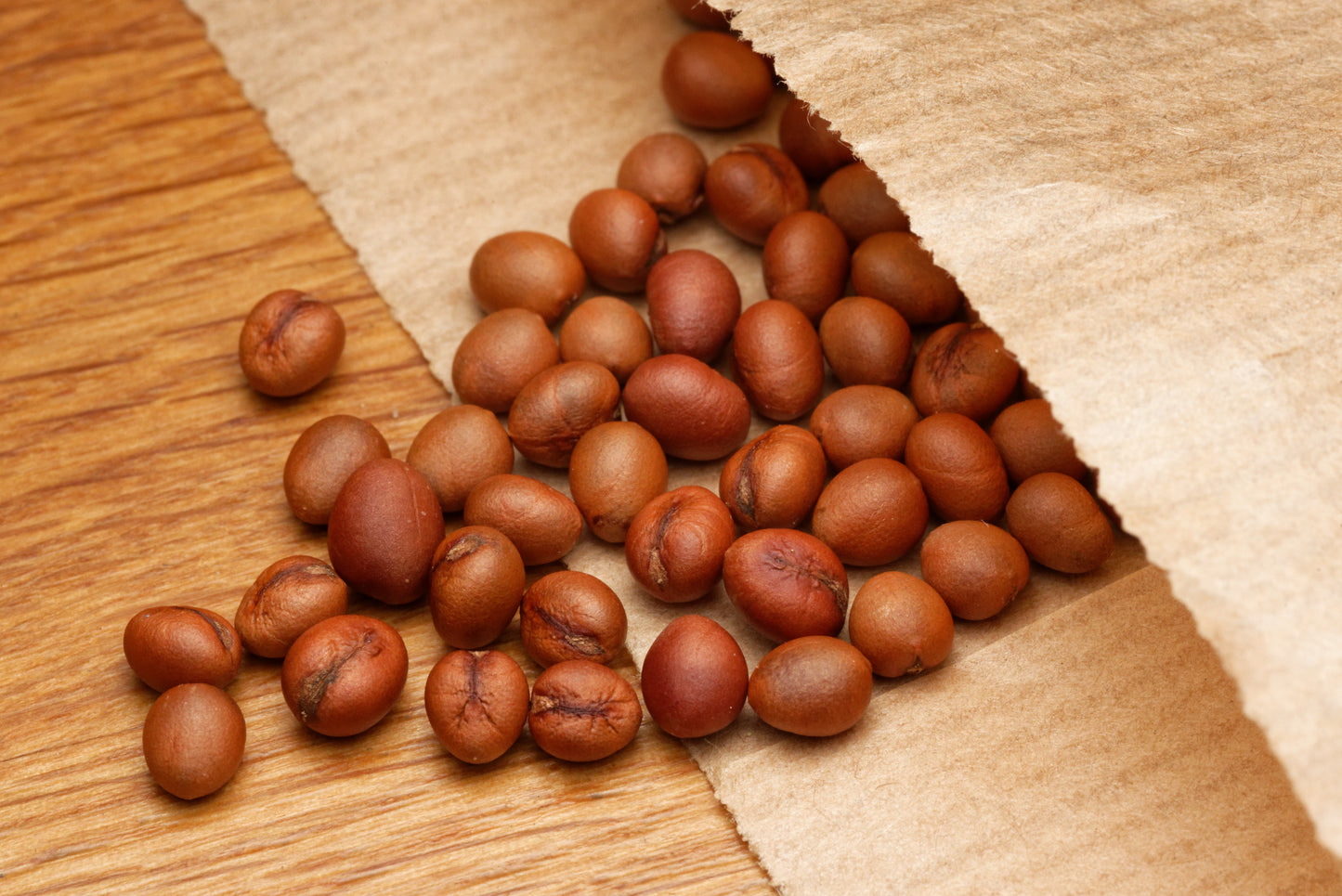
Mexican fan palm (Washingtonia robusta) | seeds, 10 pcs.
Mexican fan palm (Washingtonia robusta) | seeds, 10 pcs.
Couldn't load pickup availability
- Latin name: Washingtonia robusta (accepted name: Washingtonia filifera var. robusta)
- Danish names: Mexicansk viftepalme, mexicansk Washingtonia-palme
- English names: Mexican fan palm, Mexican Washington palm, Skyduster palm
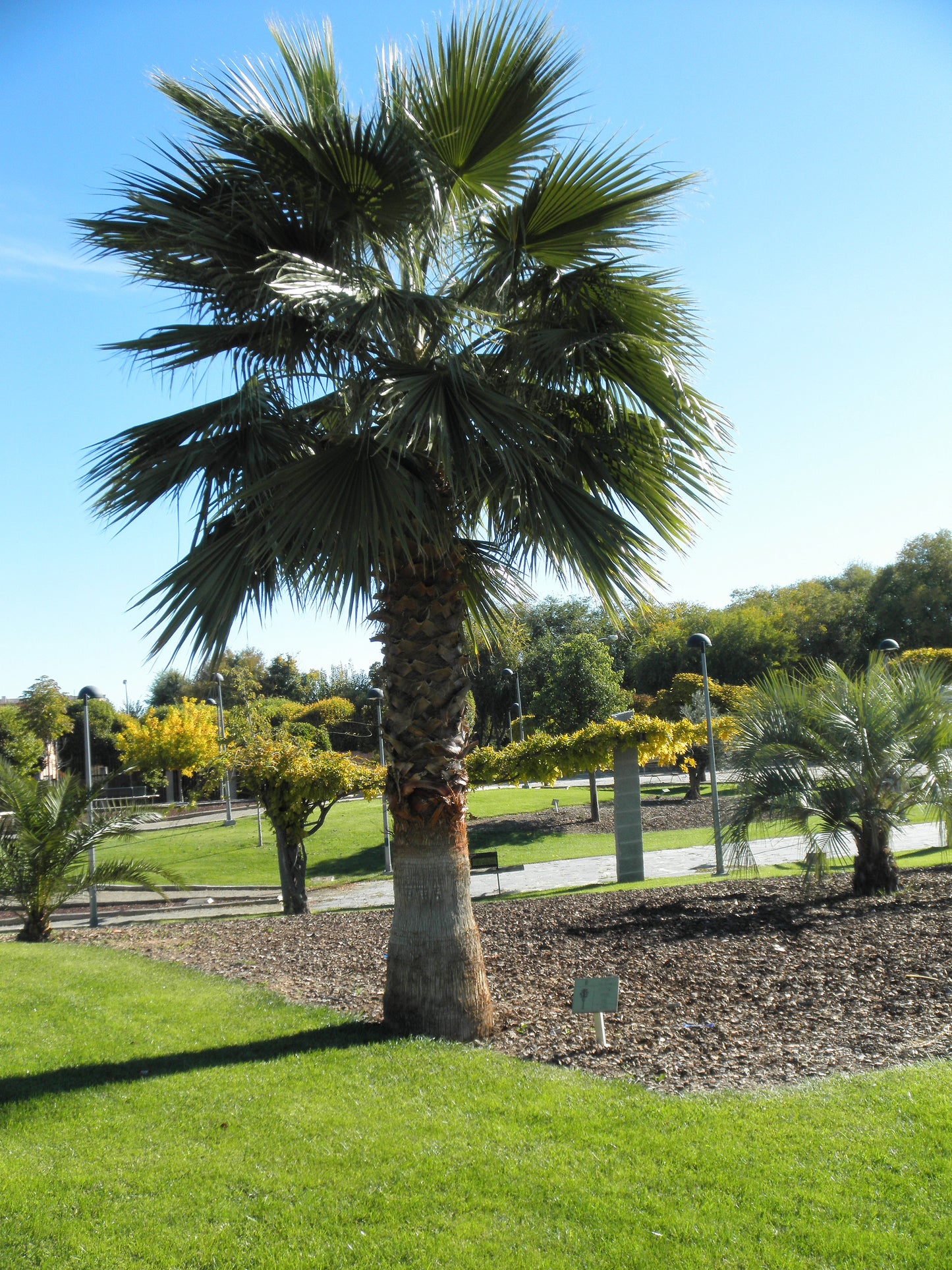
Washingtonia robusta is an impressive and fast-growing fan palm, best known for its exceptionally tall, slender trunk and large crown of green, fan-shaped leaves. The palm has become a characteristic sight along boulevards and promenades in places such as California and the Mediterranean, where its elegant silhouette often towers over the surrounding vegetation.
The species originates from northwestern Mexico, particularly the southern and central parts of the Baja California peninsula. Here, it grows naturally in dry and hot areas, but typically in locations with access to water, such as in canyons, near springs, and along seasonal streams. Although the palm is adapted to a dry climate, it therefore requires regular access to moisture to develop optimally.
Under good conditions, Washingtonia robusta can reach 20-25 meters in height or more. It develops a single, relatively narrow trunk that is often noticeably wider near the base in older specimens. The large fan leaves sit on long petioles with sharp spines along the edges. The leaves have fine, thread-like fibers along the segments, but usually fewer than in the closely related Washingtonia filifera.
A special feature of the Mexican fan palm is that the old, withered leaves often remain attached to the trunk, forming a dense, downward-hanging layer that can resemble a skirt. This is especially seen in palms where the old leaves are not removed and is a characteristic trait of naturally growing specimens.
The Mexican fan palm is closely related to the California fan palm (Washingtonia filifera), but the two differ in several interesting ways. Washingtonia filifera normally develops a significantly thicker trunk and has more characteristic white threads along the leaf segments. Washingtonia robusta, on the other hand, is more slender and often grows taller. It generally grows faster but is also less cold-tolerant than W. filifera.
The two palms can also cross-pollinate and form hybrids, which are often referred to as Washingtonia × filibusta. These plants may possess characteristics from both parent species, which sometimes makes it difficult to identify cultivated Washingtonia palms based solely on their appearance.
If you are interested in growing more exciting palms from seeds, you can explore our selection of palm seeds, where you will find classic fan palms, date palms, and more unusual tropical collector species.
Cultivation and requirements
Washingtonia robusta is a relatively robust and fast-growing palm that thrives best in warm and sunny locations. It prefers:
- Full sun and a very bright location
- A well-drained, preferably sandy and nutrient-rich soil
- Regular watering during the growing season with slight drying out between waterings
- A warm and sheltered growing site
- Reduced watering during the winter
Although the palm is adapted to dry areas, it grows fastest with regular watering and sufficient nutrients. Established plants tolerate short periods of drought, but young plants should not dry out completely.
Washingtonia robusta tolerates short-term, light frost, but is less hardy than Washingtonia filifera. Larger, established plants can, under favorable conditions, survive temperatures around -5 °C, but leaf damage can occur even at milder frost. The combination of cold and winter humidity is particularly problematic.
In Danish conditions, cultivation in a pot with light and frost-free overwintering is the safest solution. The palm can be kept outdoors on a sunny terrace during the summer and moved to a sheltered place before the frost sets in. Young plants are significantly more sensitive to cold than older specimens.
Cultivation from seeds
Seeds of Washingtonia robusta are relatively easy to germinate compared to many other palm species. It is beneficial to soak them in lukewarm water for 24-48 hours before sowing.
- Sow in an airy and well-drained seed compost (alternatively, the bag germination method can be used)
- Cover the seeds with approximately 0.5-1 cm of seed compost
- Keep the temperature around 25-30 °C
- Keep the soil slightly moist, but not wet
- The seeds do not require cold stratification
Under good conditions, germination can begin after 2-4 weeks, but some seeds may take longer to sprout. The freshness of the seeds and a stable temperature have a significant impact on the germination result.
The first leaves are narrow and only slightly divided. As the plant grows, the characteristic fan-shaped leaves with distinct segments develop. Young plants develop a relatively deep root system early on and can therefore benefit from being grown in our tall palm pots, which provide extra space for root development.
You may also want to see our article on germinating palm seeds.
Utility and collector value
Washingtonia robusta is primarily grown as an ornamental palm and is especially valued for its rapid growth, slender trunk, and characteristic fan leaves. It is one of the most widely used palms in warm urban environments, where its tall and relatively narrow growth habit makes it suitable for avenues, boulevards, and larger gardens.
For palm enthusiasts, the species is particularly interesting due to its growth rate. Compared to many slow-growing palms, Washingtonia robusta can develop relatively quickly from a small seedling into a vigorous potted palm with large fan leaves when given sufficient heat, light, and nutrients.
It is also interesting to compare with Washingtonia filifera, which has a more massive growth habit and generally better frost tolerance. The two palms illustrate how closely related plants can develop different characteristics as an adaptation to their natural habitats.
Although the Mexican fan palm is commonly grown in subtropical areas, it remains an exciting addition to a Danish palm collection. It combines a classic, exotic palm appearance with relatively fast development and the possibility of spending a large part of the year outdoors.
Washingtonia robusta is therefore an obvious choice for anyone who wants to grow an impressive fan palm from seed and follow its development from the first small leaves to an increasingly large and characterful palm.
Seed germination
Seed germination
Childcare
Childcare
Size
Size
Up to 25 meters
Difficulty level
Difficulty level
Beginner
NB
NB