a Piece of Nature
Dwarf Bird of Paradise (Strelitzia reginae "dwarf") | plant
Dwarf Bird of Paradise (Strelitzia reginae "dwarf") | plant
Couldn't load pickup availability
VERY RARE!
-
Latin name: Strelitzia reginae "dwarf"
- Danish names: Dværg Paradisblomst, paradisfugleblomst, paradisfugl, papegøjeblomst, traneblomst
-
English names: Orange Bird of Paradise, Dwarf Bird of Paradise
Strelitzia reginae 'Dwarf' is a very rare and sought-after dwarf form of the classic Bird of Paradise. It possesses the same distinctive exotic appearance as the common Strelitzia reginae, but is distinguished by a more compact growth habit, making it particularly interesting for collectors and for those who wish to grow Strelitzia where space is more limited.
The common Strelitzia reginae originates from South Africa and is famous worldwide for its spectacular orange and blue flowers. The dwarf form combines this very iconic bloom with a more compact growth habit and belongs to those Strelitzia that are only rarely encountered in common trade.
Appearance and growth
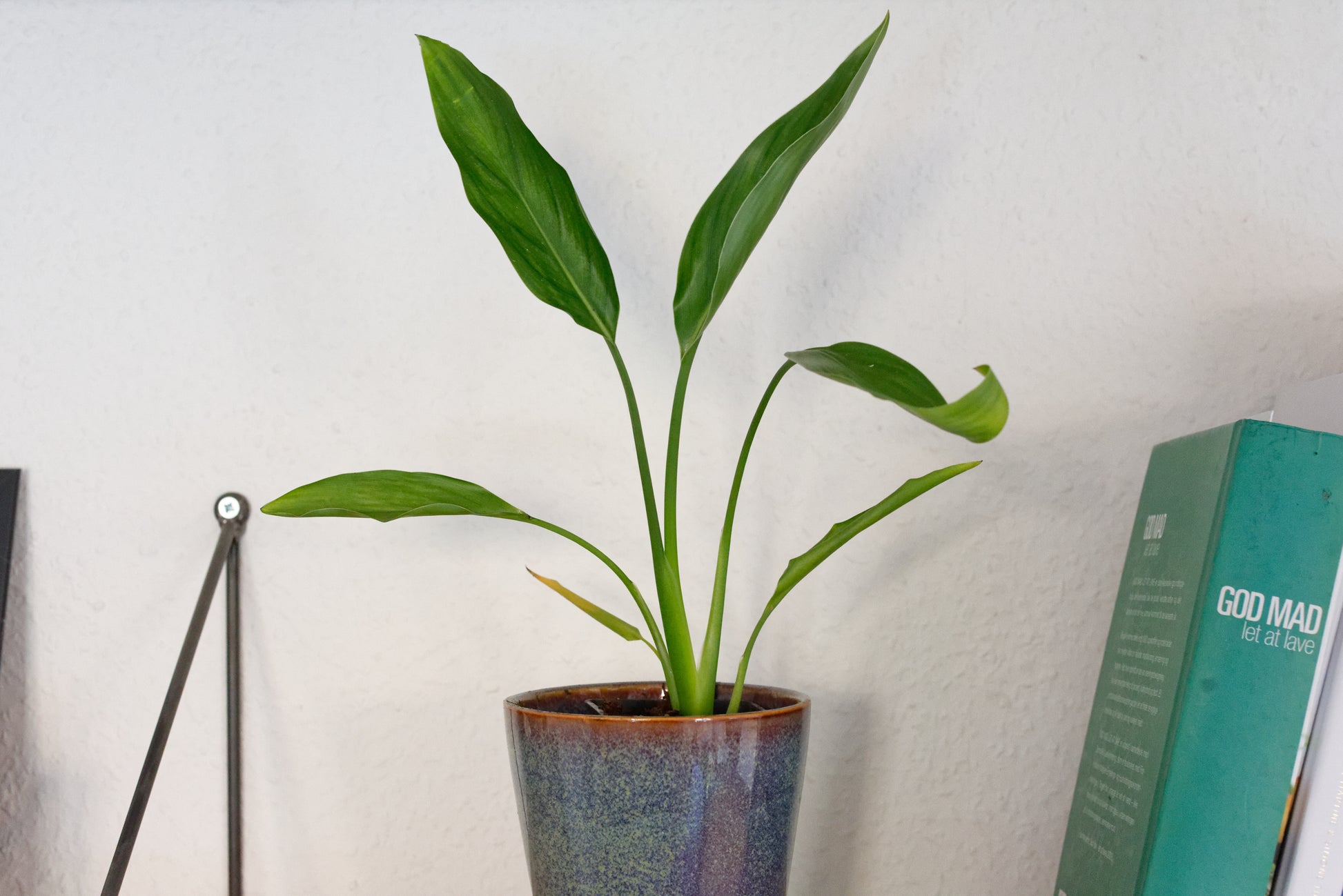
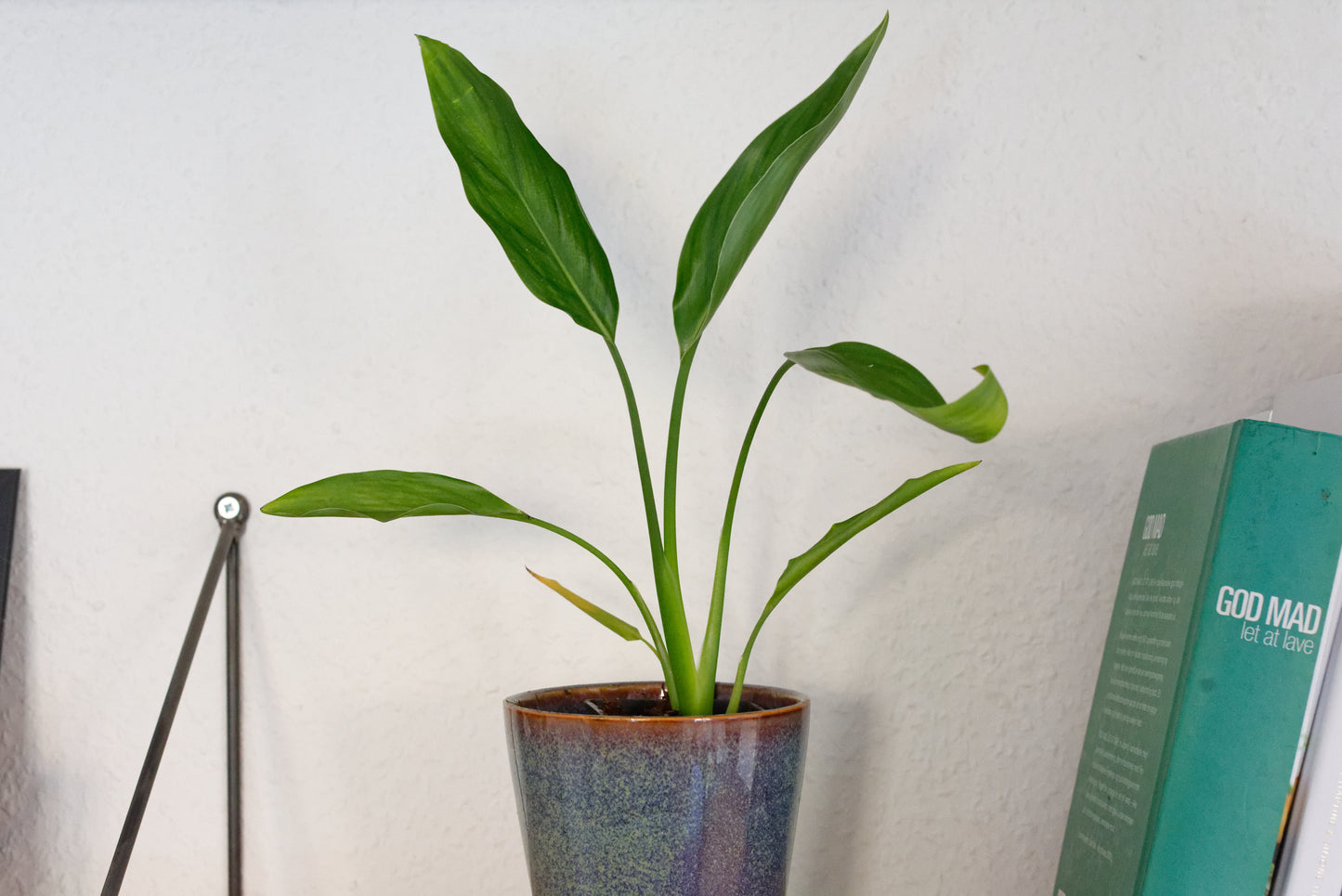
Strelitzia reginae 'Dwarf' forms a dense clump of strong leaf stalks with elongated, leathery, and dark green leaves. The leaves have the characteristic Strelitzia look, but the plant generally develops more compactly than the common form of Strelitzia reginae.
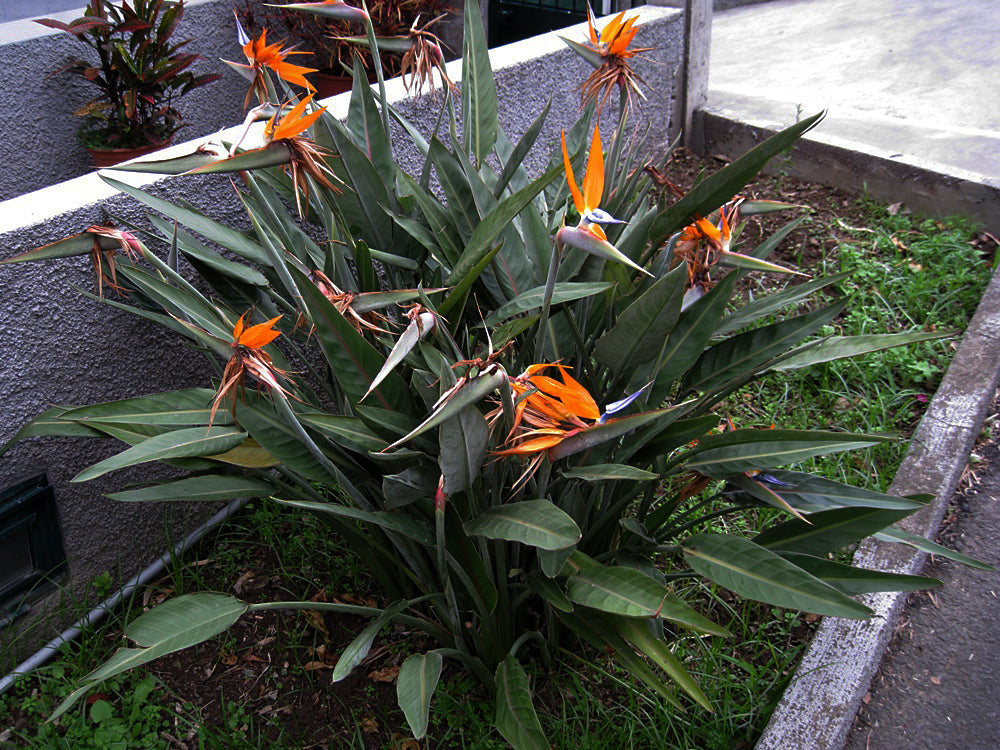
The plant grows from underground rhizomes and can eventually form several shoots around the mother plant. This gives older plants a dense and lush growth, while maintaining a more compact appearance.
As with other Strelitzia, the leaves can eventually develop natural cracks or splits. This is not a sign of distress, but a natural trait of the plant, which is also seen in Strelitzia in their natural habitats.
The classic orange Bird of Paradise in a compact format
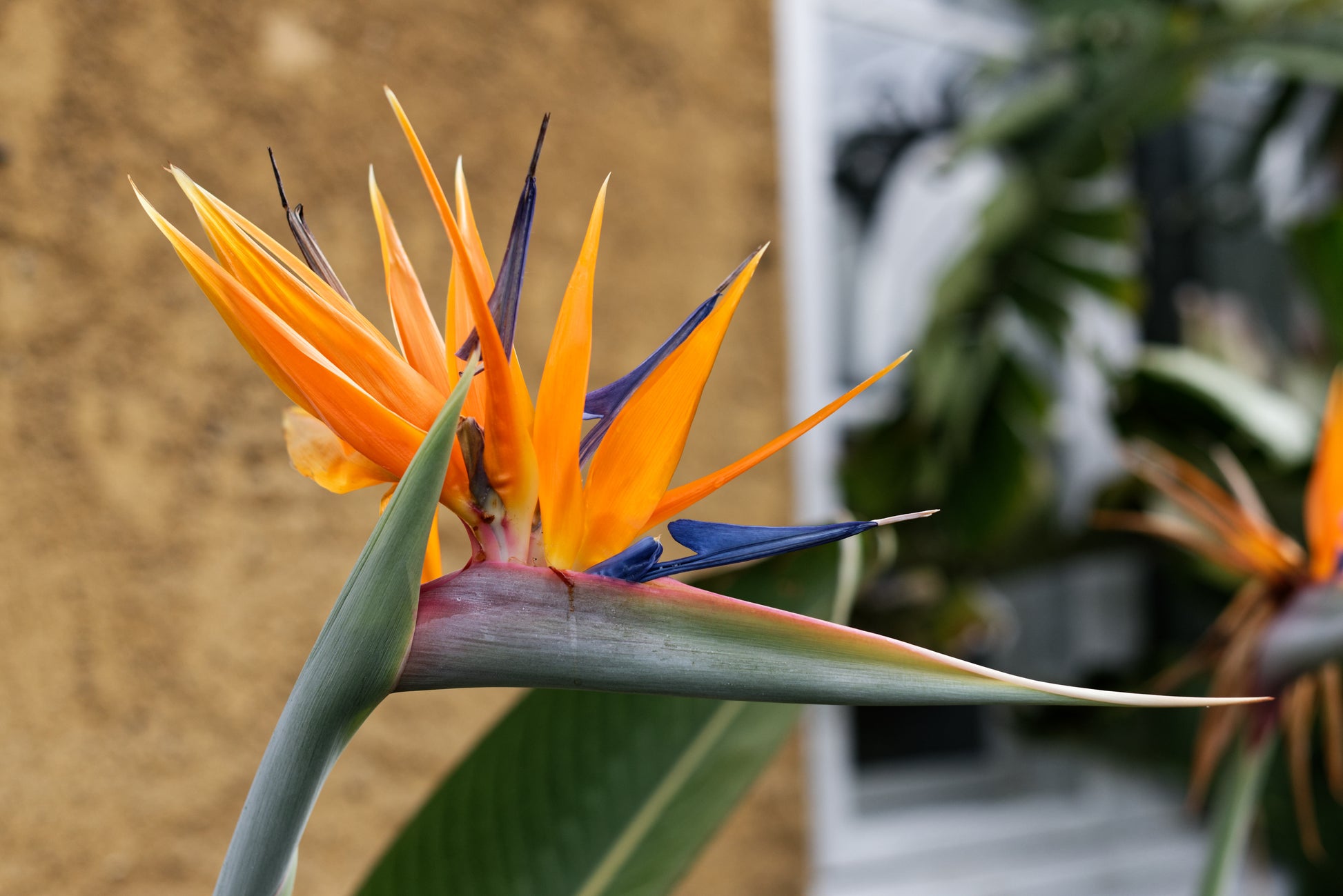
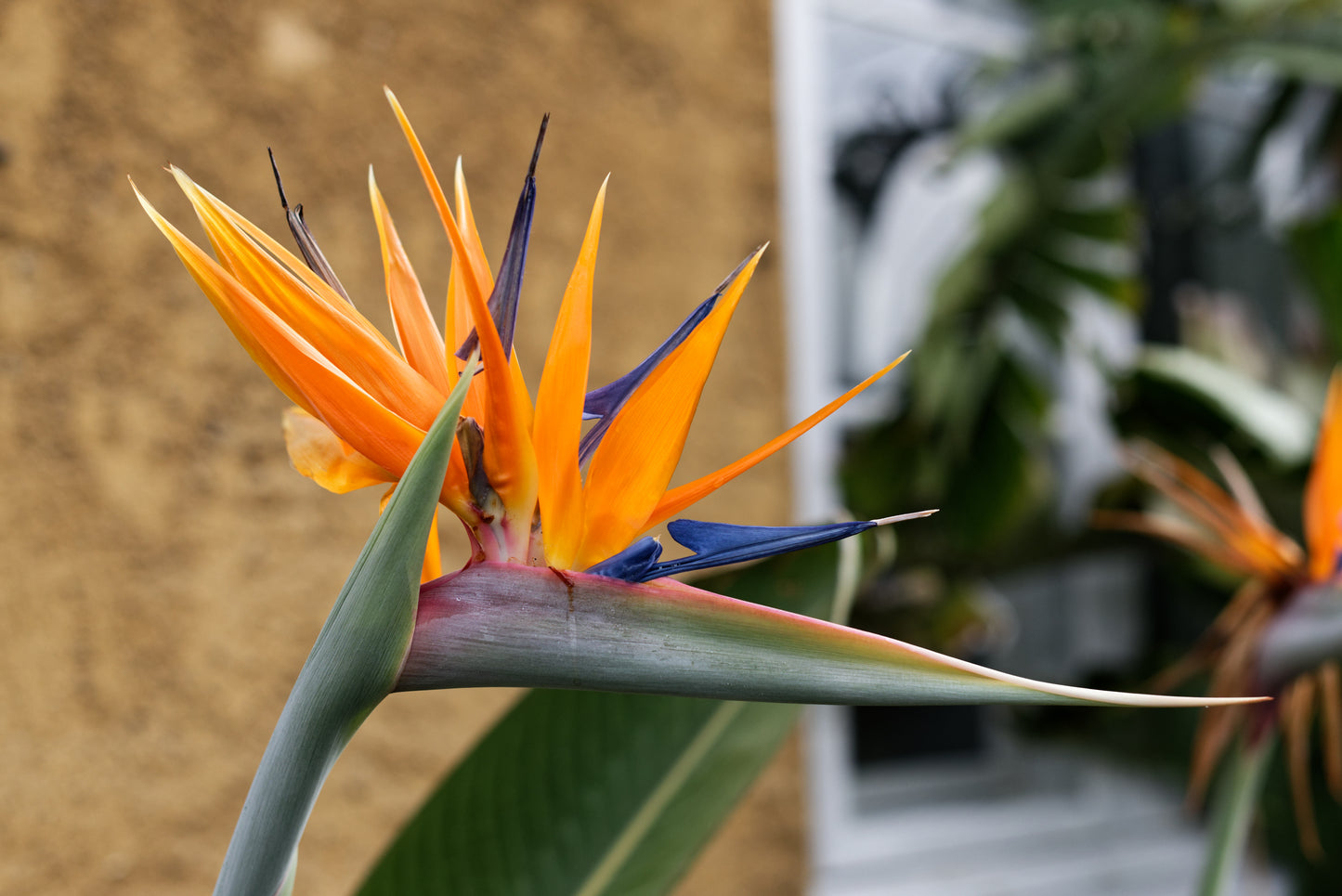
The flowers are the main attraction of Strelitzia reginae, and this holds true for this dwarf variant as well. From the characteristic boat-shaped spathe, the vibrant orange sepals and intense blue petals emerge, forming the bird-like inflorescence that has given the plant its name, Bird of Paradise.
As with the common Strelitzia reginae, the plant must reach a certain age and size before it can be expected to bloom. It does, however, reach flowering size faster than the common Strelitzia reginae. Ample light, warmth, and nutrients throughout the growing season provide the plant with the best conditions for developing vigorously and, in the long term, producing flowers.
Difference between Strelitzia reginae 'Dwarf' and common Strelitzia reginae
The main difference lies in the growth habit. The common Strelitzia reginae can eventually become a quite large plant with long leaf stalks, while 'Dwarf' is selected for its more compact growth. It is therefore particularly well-suited for cultivation in pots, conservatories, or in places where one wants the exotic look of the Bird of Paradise without such a large plant.
The dwarf form should not be confused with Strelitzia nicolai. The latter is a far larger species that eventually develops strong, trunk-like shoots and enormous banana-like leaves. 'Dwarf' is at the complete opposite end of the Strelitzia genus' size spectrum.
Cultivation and care
-
Light: Thrives best in a very bright location and preferably with several hours of direct sun. Abundant light promotes dense and vigorous growth.
-
Temperature: Prefers warm conditions during the growing season and thrives well at normal room temperature. The plant should be protected from frost.
-
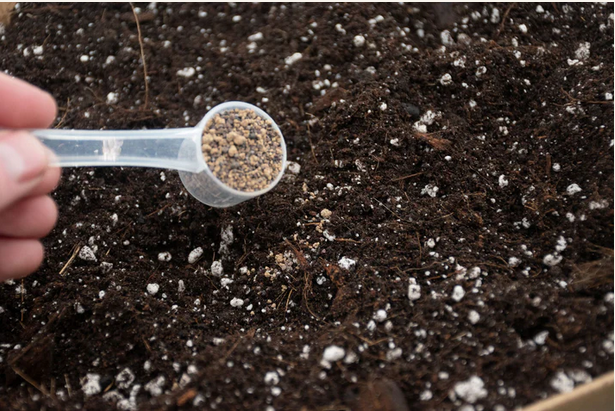
Soil: Use a nutrient-rich, airy, and well-drained soil. The strong roots do not like to stand constantly wet. You can mix your own by using a good potting soil mixed with perlite and clay. You can also use our Ficus soil mix, which is very well-suited for Strelitzia plants.
-
Watering: Water thoroughly throughout the growing season, but let the top layer of soil dry slightly between waterings. Reduce watering in the winter.
-
Fertilizer: Fertilize regularly throughout spring and summer with a good organic fertilizer. Strelitzia are vigorous plants that respond positively to good access to nutrients.
-
Repotting: Repot as needed when the roots have filled the pot. Strelitzia develop a strong root system and should be grown in a stable pot with good drainage.
- Overwintering: Overwinters best in a bright and frost-free location. In a cooler location, watering should be reduced significantly. Does not tolerate frost.
A very rare Strelitzia for the collector
It is especially the combination of compact growth and the classic Bird of Paradise that makes Strelitzia reginae 'Dwarf' interesting. While the common Strelitzia reginae is already a sought-after exotic plant, the dwarf form is far more difficult to find and an exciting choice for a collection of rare Strelitzia. Also, see our other Strelitzia plants.
Plants grown from seeds will naturally be able to vary slightly in both growth habit and size. This is also part of the fascination with seed propagation, where each plant develops as a genetically individual specimen.
Strelitzia reginae 'Dwarf' is therefore an obvious choice for the collector looking for a more unusual Bird of Paradise – and for those who want the characteristic tropical Strelitzia look in a more compact form.
Note: The pictures are intended as examples of the plant and do not necessarily represent the exact plant being purchased.
Childcare
Childcare
Size
Size
Reaches up to 1 meter
Difficulty level
Difficulty level
Beginner

ALSO REMEMBER
Long-acting Organic Fertilizer (Tropical)