a Piece of Nature
White bird of paradise (Strelitzia nicolai) | plant
White bird of paradise (Strelitzia nicolai) | plant
Couldn't load pickup availability
- Latin name: Strelitzia nicolai
-
Danish names: Hvid paradisblomst, hvid paradisfugleblomst, hvid paradisfugl, hvid papegøjeblomst, hvid traneblomst
-
English names: White Bird of Paradise, wild banana, giant white bird of paradise
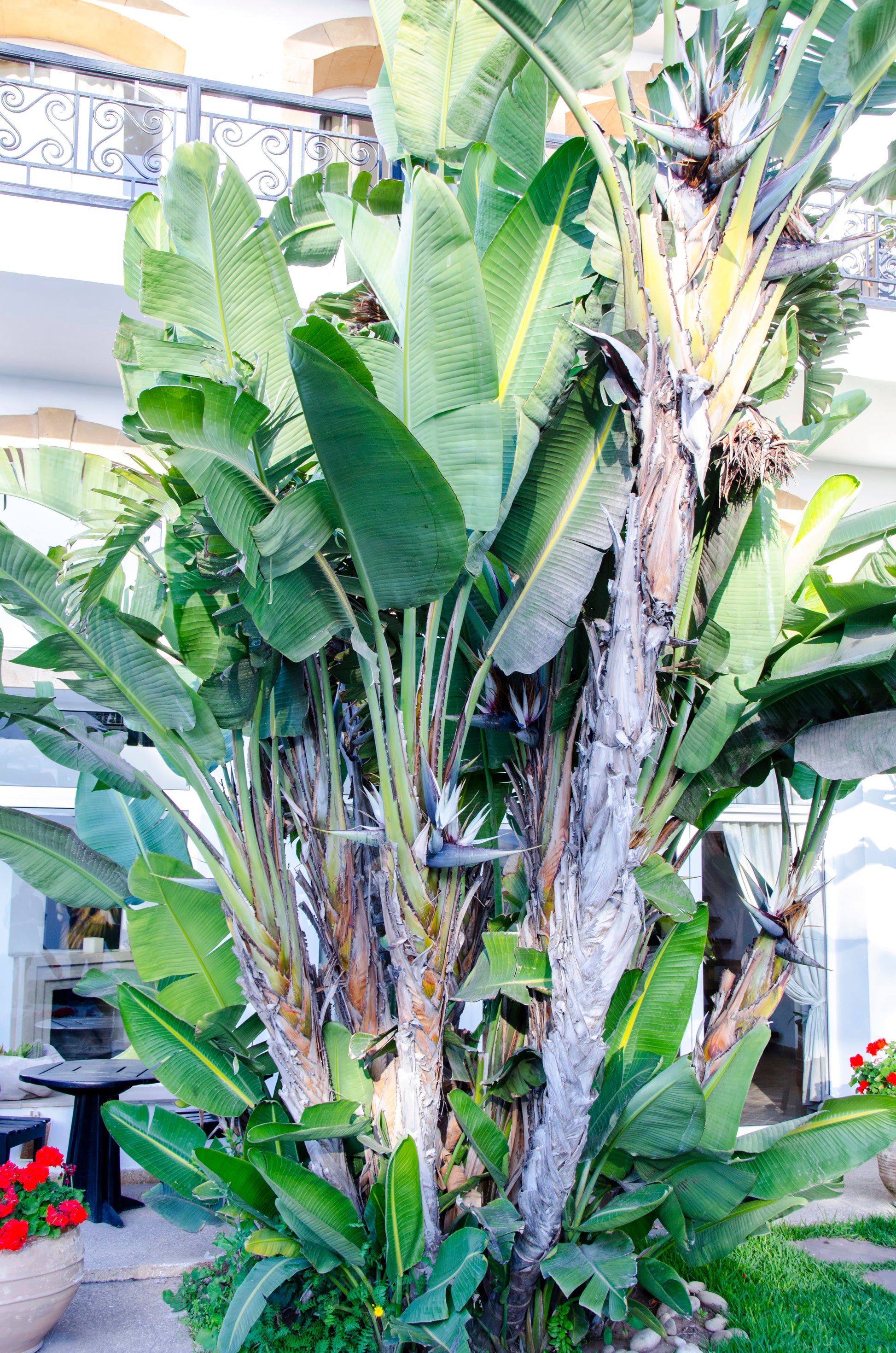
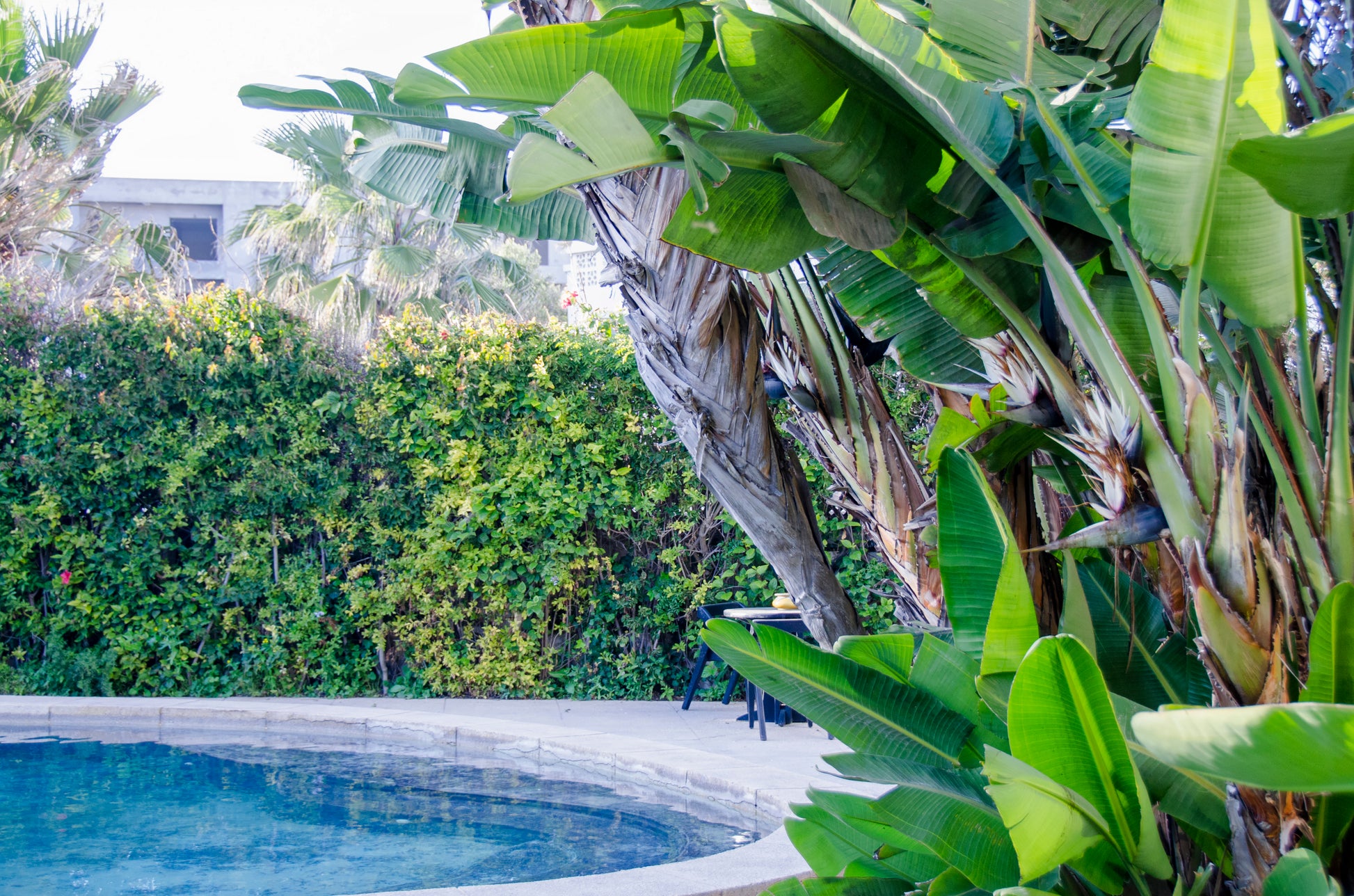
Strelitzia nicolai is the impressive giant among the Strelitzia species. With its enormous, banana-like leaves and vigorous, upright growth, it creates an almost immediate tropical look. While the well-known Strelitzia reginae remains relatively compact, Strelitzia nicolai can eventually develop into a large, almost tree-like plant.
The species originates from Southern Africa, where it grows in warm coastal areas and humid forests. There, mature plants can form impressive clusters with several thick stems. In Denmark, Strelitzia nicolai is primarily grown as a houseplant, potted plant, or in a greenhouse and conservatory, where it can eventually become a fantastic focal point.
Appearance and growth
Strelitzia nicolai develops long, sturdy leaf stalks with very large, elongated leaves. The leaves resemble banana leaves and can become impressively large on older plants. New leaves emerge rolled up from the center of the plant and gradually unfold.
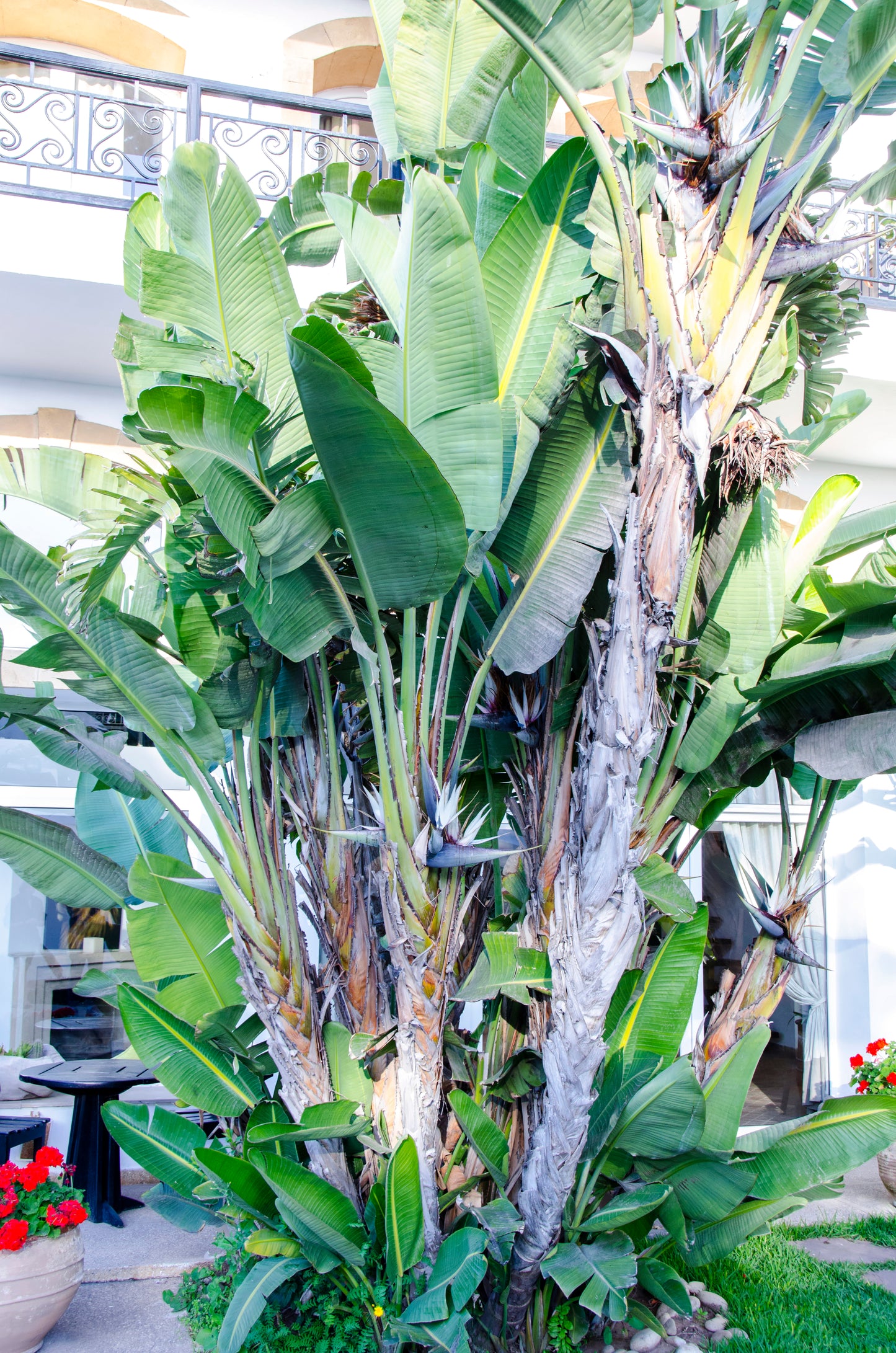
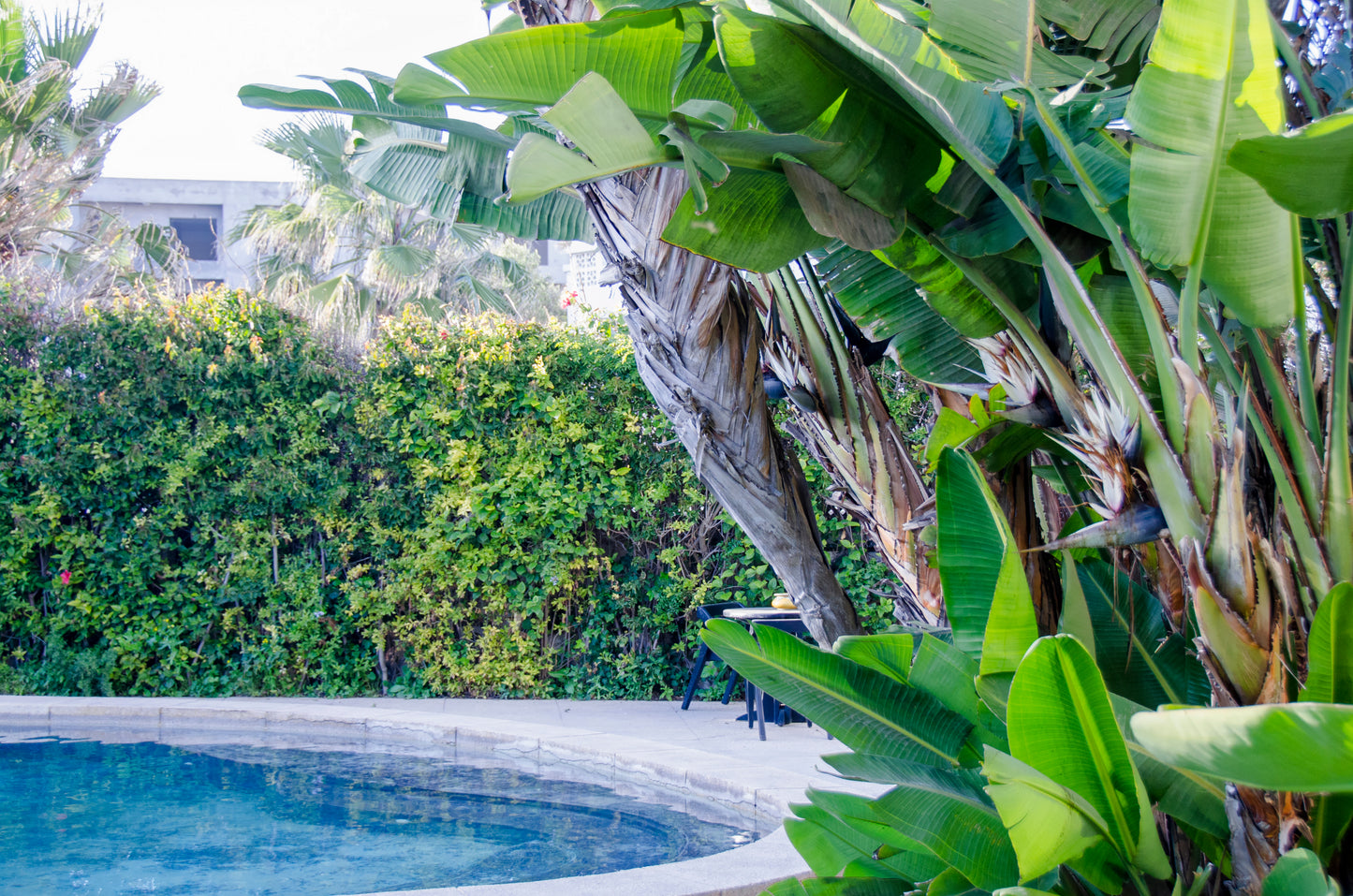
With age, the plant develops thick, trunk-like shoots, and new shoots are continuously formed from the rhizomes. In its natural habitat, Strelitzia nicolai can grow to be about 6–10 meters tall. As a potted plant, it usually stays significantly smaller, but it still requires plenty of space and can eventually grow into a very large plant.
It is completely natural for the large leaves to develop cracks and splits over time. This is also seen in Strelitzia in the wild and makes the leaves less vulnerable to the wind.
White and blue bird of paradise flowers
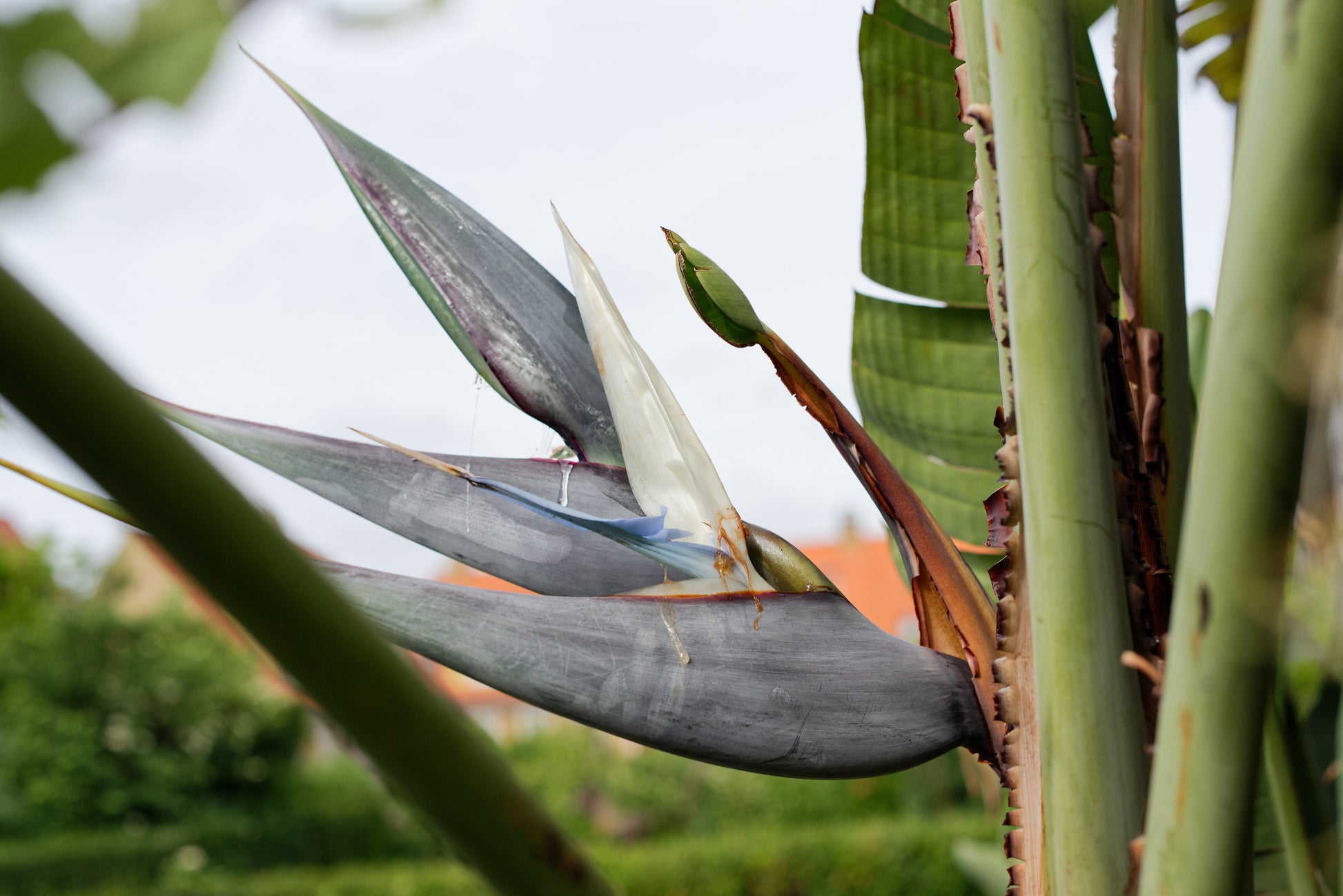
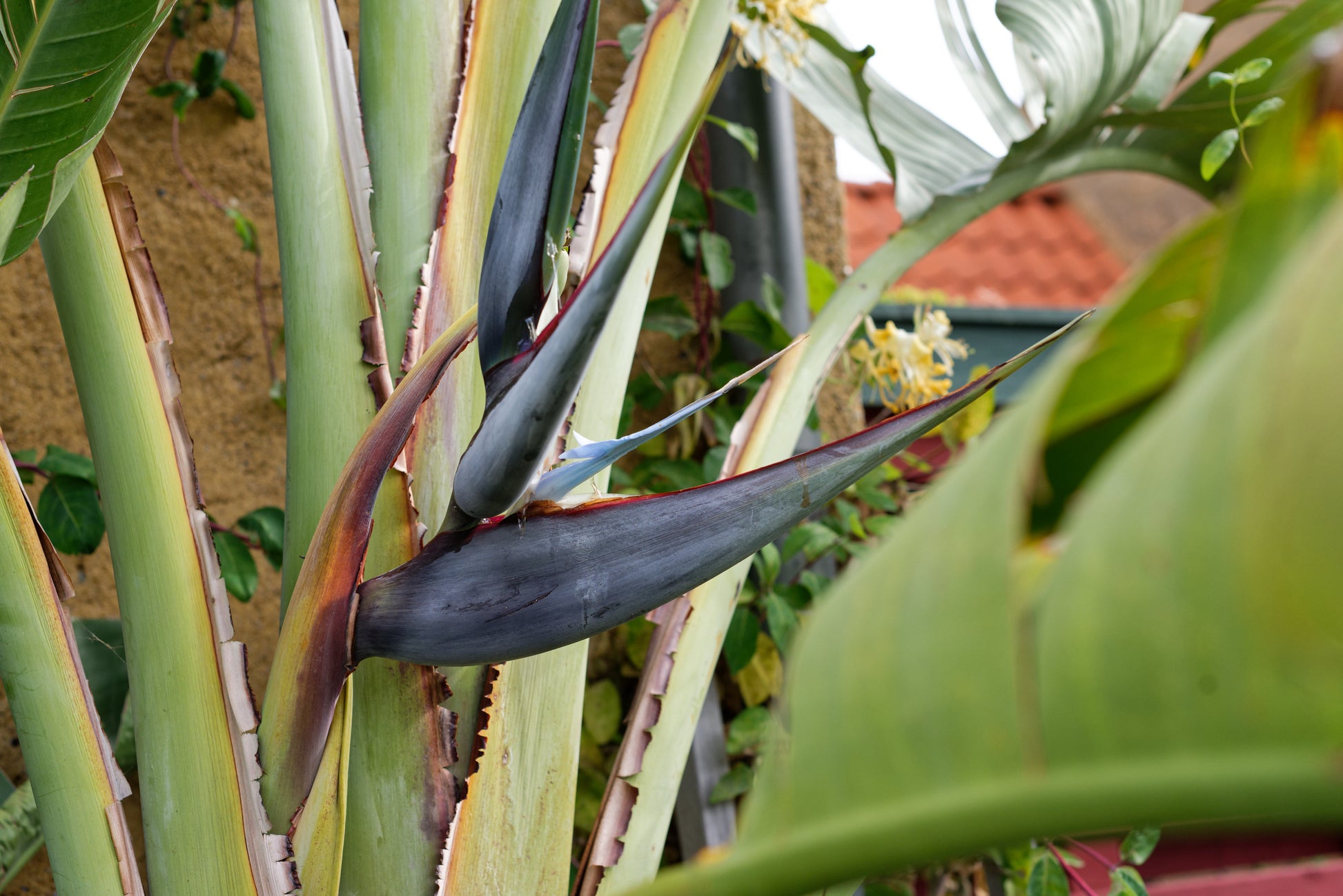
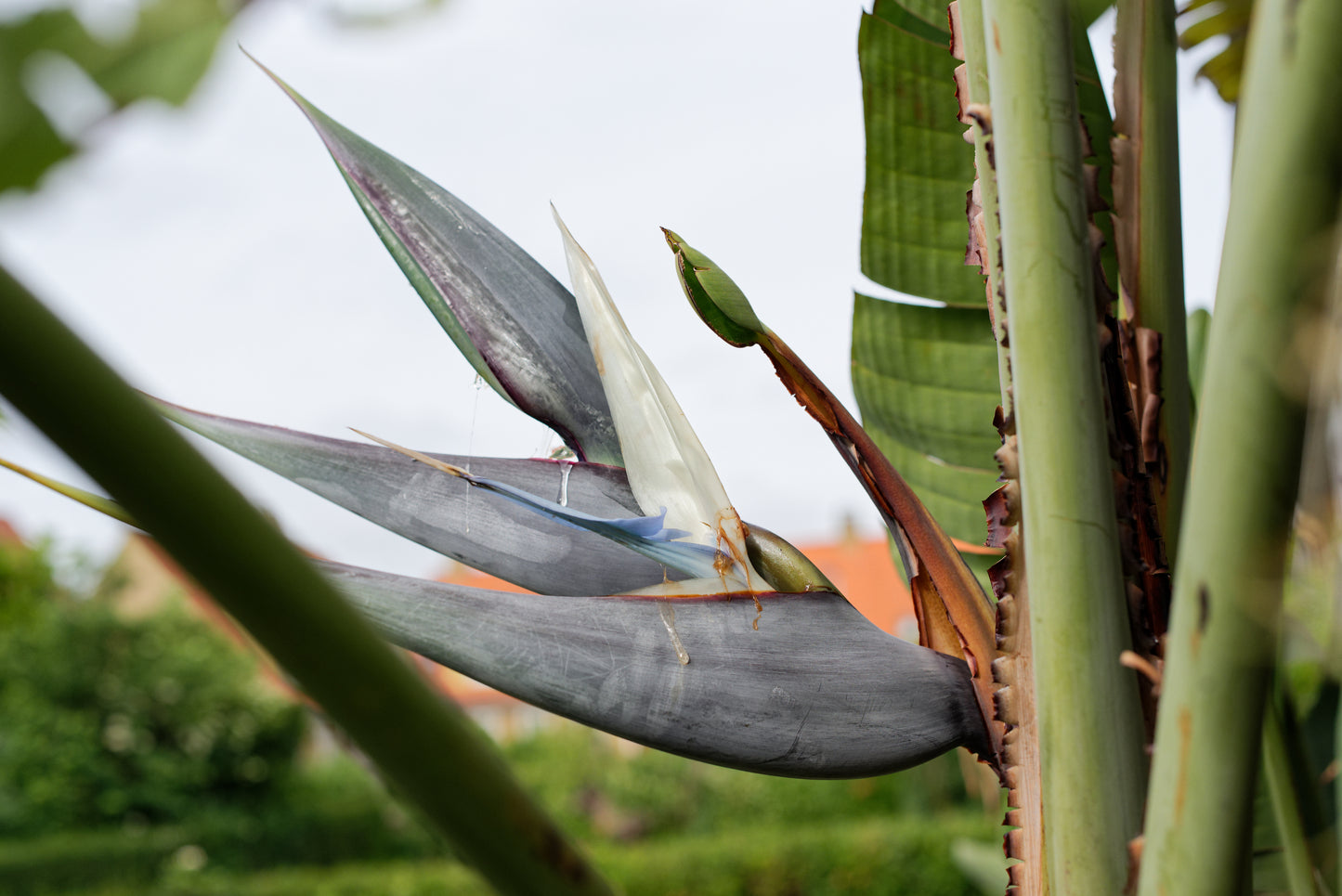
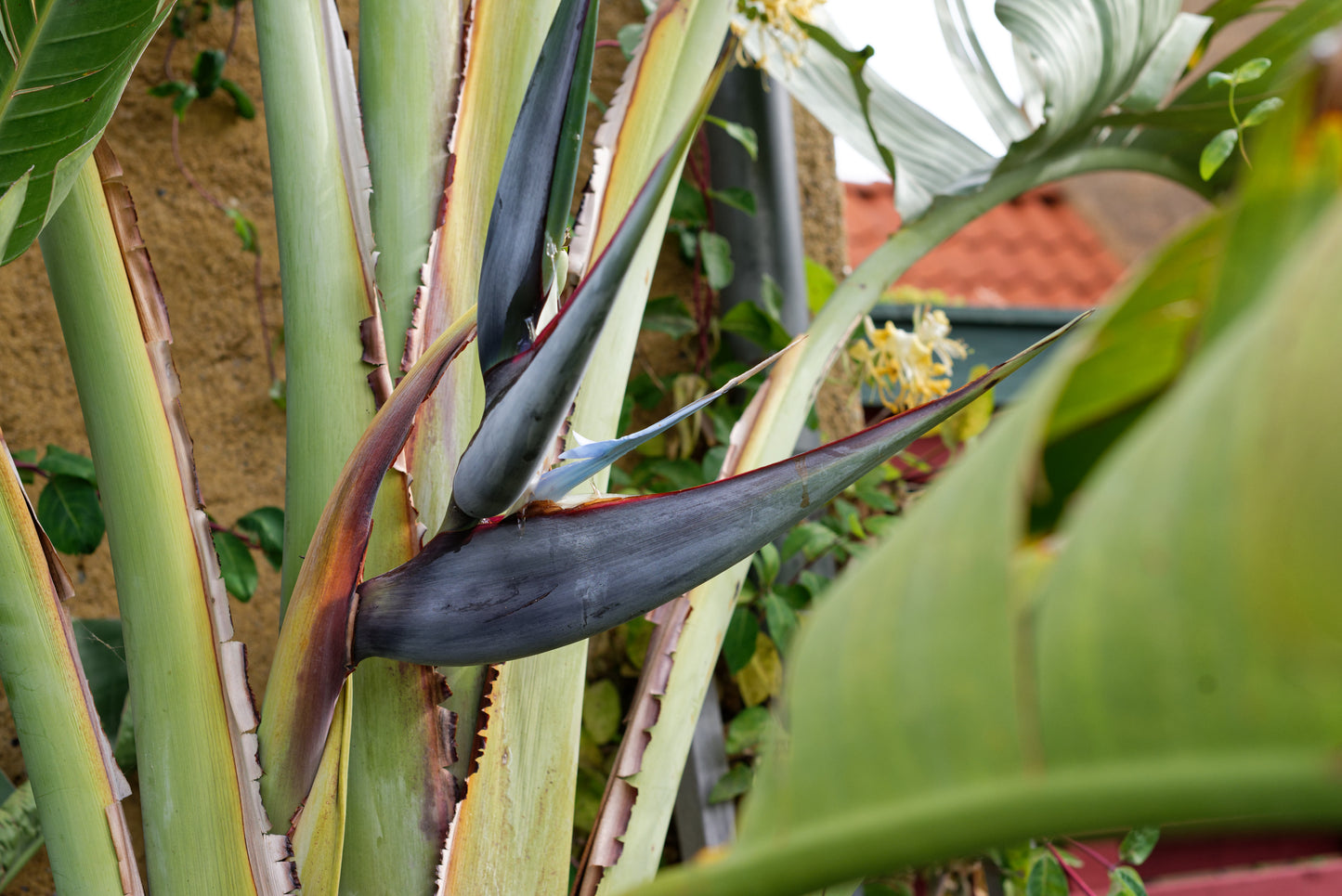
The flowering of Strelitzia nicolai is clearly distinct from the orange-flowered Strelitzia reginae. In S. nicolai, the inflorescence consists of a dark, boat-shaped spathe from which large white sepals and blue petals emerge.
The flowers have the same characteristic bird-like structure that gave the genus the name bird of paradise flower, but they are larger and more muted in color than those of S. reginae.
It requires a large and well-established plant as well as very good growing conditions to achieve flowering. In ordinary indoor cultivation, it is therefore primarily the spectacular foliage and vigorous growth that make Strelitzia nicolai attractive. Our own seed-grown Strelitzia nicolai blooms every year, but it is also quite old and about 6 meters tall. So, it is possible :)
Difference between Strelitzia nicolai and Strelitzia reginae
Although the two species may look similar as young plants, they develop very differently. Strelitzia reginae remains more compact and bushy and is known for its orange and blue flowers. Strelitzia nicolai, on the other hand, becomes much larger, develops trunk-like shoots, and gets enormous leaves as well as white and blue flowers.
If you primarily want a large, lush plant with an almost banana-like appearance, Strelitzia nicolai is an obvious choice.
Cultivation and care
-
Light: Thrives best in very bright conditions and preferably with direct sunlight. Plants that have been kept indoors should be gradually accustomed to strong sun.
-
Temperature: Prefers warm conditions during the growing season and thrives well at normal room temperature. The plant should be protected from frost.
-
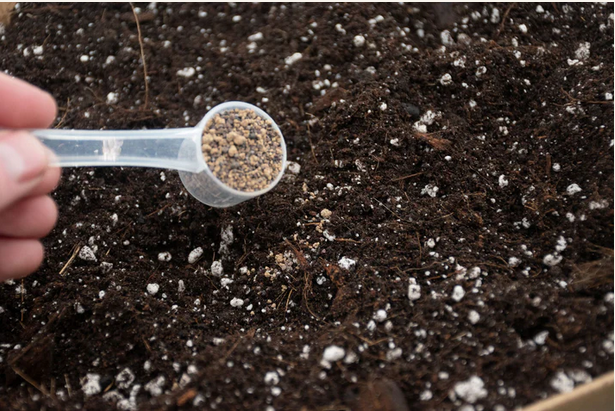
Soil: Use a nutrient-rich, airy, and well-drained soil that can both retain some moisture and allow excess water to drain away. You can mix your own by adding perlite and clay to a good potting soil. Otherwise, we recommend our Ficus soil, which is suited precisely for Strelitzia plants.
-
Watering: Water regularly and thoroughly during the growing season. Let the top layer of soil dry out slightly between waterings, and avoid letting the plant stand in constant wetness.
-
Fertilizer: The vigorous growth requires good access to nutrients. Fertilize regularly throughout the spring and summer. We recommend a good organic fertilizer for tropical plants.
-
Repotting: Young plants grow quickly and may need regular repotting. Choose a stable pot, as larger plants become both tall and heavy.
- Overwintering: Best overwintered in a bright, frost-free location. In a cooler winter location, reduce watering and stop or limit fertilization.
Strelitzia nicolai as a houseplant
Strelitzia nicolai has become a popular large houseplant, and it is not hard to understand why. The enormous green leaves provide an exotic and lush look, and the plant can develop into a striking green feature in a bright room in a relatively short time.
In the summer, the plant can benefit from being moved out to a warm and sunny terrace or placed in a greenhouse. Here, the combination of warmth, light, water, and nutrients can promote vigorous growth. Remember to accustom the plant gradually to direct sun after the winter.
An impressive giant among Strelitzia
Strelitzia nicolai is an obvious choice for those who dream of large exotic plants. From a relatively modest young plant, it can grow over the years into an impressive bird of paradise flower with enormous leaves and an almost tree-like growth habit.
Along with species and forms such as Strelitzia reginae, Strelitzia nicolai also shows how much variation exists within the Strelitzia genus. See also our other Strelitzia plants and exotic plants if you want to explore more of the various bird of paradise flowers.
Note: The images are intended as examples of the plant and do not necessarily represent the exact plant being purchased.
Childcare
Childcare
Size
Size
Grows up to 10 meters
Difficulty level
Difficulty level
Beginner

ALSO REMEMBER
Long-acting Organic Fertilizer (Tropical)