Introduction to bird of paradise flowers (Strelitzia)
Strelitzia is a small genus of plants native to South Africa. It is believed to contain only 6 species, although there is some uncertainty regarding a few of them, and new ones could always be added. Unfortunately, some of the "old" names are still used in the trade, leading consumers to believe they are purchasing the very rare Strelitzia parvifolia when, in reality, it is just the common Strelitzia reginae.
The six accepted species are:
- Strelitzia alba (synonym augusta) – White bird of paradise
- Strelitzia caudata – Mountain bird of paradise
- Strelitzia nicolai – Giant white bird of paradise
- Strelitzia parvifolia - Narrow-leaved bird of paradise
- Strelitzia reginae (synonym parvifolia) – Bird of paradise
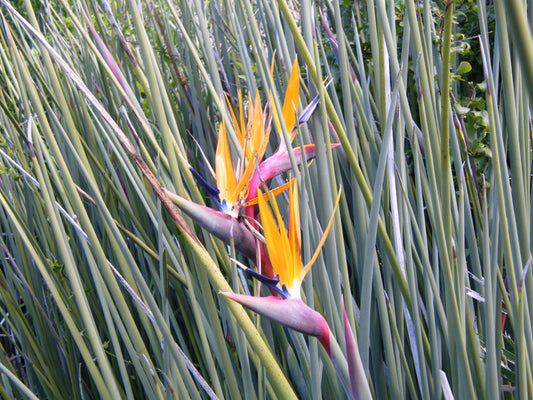
- Strelitzia juncea – African desert bird of paradise
It is primarily Strelitzia reginae and Strelitzia nicolai that are known as garden and houseplants. S. nicolai has become incredibly popular in recent years and is available in many places. This is likely due to its beautiful, tropical appearance and relatively easy care. However, few realize that the plant grows quite large (up to 10 meters) and will eventually outgrow most living rooms. Unfortunately, it is also only when the plant is large (2.5 meters or more) that it begins to flower. We keep our Strelitzia nicolai outdoors during the summer and store it in large greenhouses throughout the winter. It now flowers almost every year. Strelitzia reginae, on the other hand, is an obvious choice for a houseplant, as it does not grow as tall and does not need to reach an impossible size to bloom. Unfortunately, this plant is rarely seen for sale, and when it is, it is usually at a high price.
Appearance
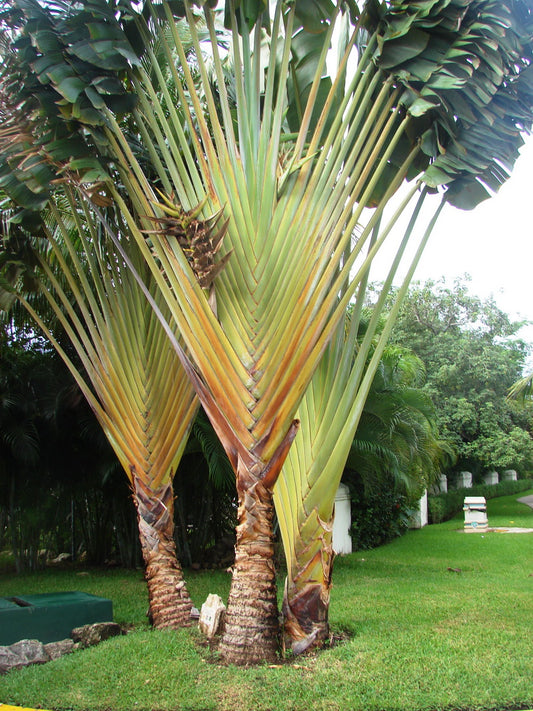
Their appearance can resemble banana plants, which is why Strelitzia nicolai is sometimes called the wild banana. Passersby here at our place often comment that our plants are beautiful banana palms😊 They have nothing to do with banana plants, however. Furthermore, banana plants are not palms, as many mistakenly believe, but rather an herb. The leaves of the Strelitzia are large, evergreen, and look just like banana leaves, although the stalk (petiole) is longer in Strelitzia. Strelitzia juncea, however, stands out by having incredibly thin leaves, almost just stalks, making it look more like long, round, green tubes. The leaves are positioned opposite each other, which gives them an almost fan-like appearance. Strelitzia nicolai is the largest of the species and can reach a size of up to 10 meters. Strelitzia caudata grows a little smaller than nicolai, and the remaining species reach a maximum height of 2–3.5 meters. There is a dwarf version, Strelitzia reginae "dwarf," which only grows to about 1 meter high. It is, however, very rare to find, but we have been lucky a few times.
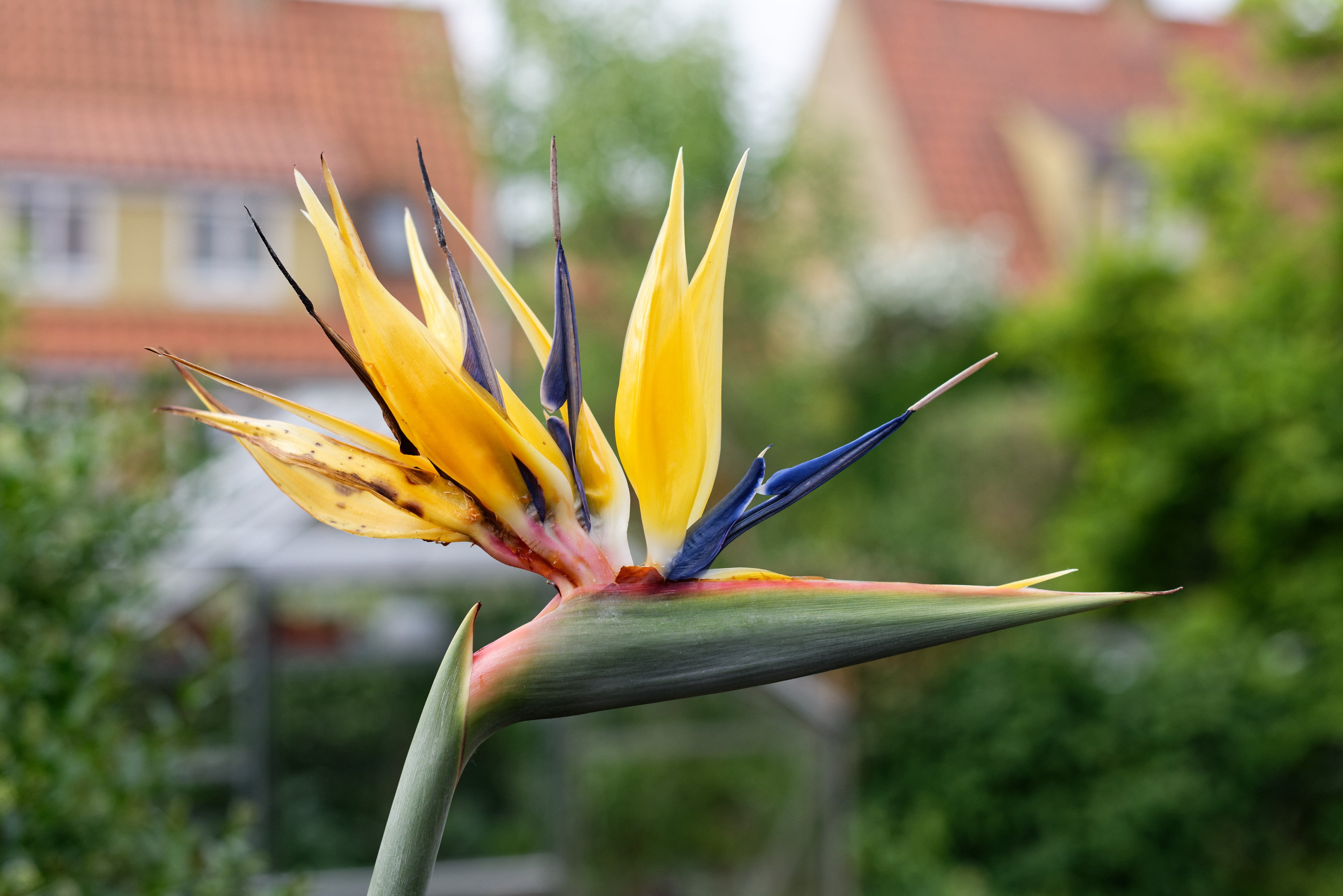
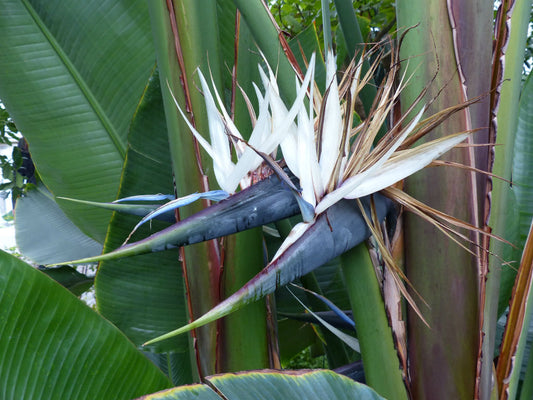
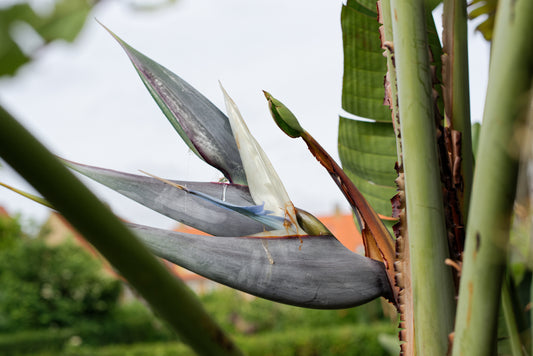
The flowers are where Strelitzia plants truly stand out. They develop from the leaf sheaths of older leaves, and initially, one might think it is "just" a new leaf. However, they always develop from the side, whereas new leaf growth occurs from the center of the plant. The flowers are very large and have the characteristic "bird" appearance. The colors range from white and blue to yellow and orange, depending on the species. Pollination of the flowers is highly specialized and occurs only with the help of birds that visit the flowers for their nectar. Therefore, outside their natural habitat, it is rare for the flowers to be pollinated and develop fruits. If you wish to pollinate the flowers, it must be done with human assistance. It is important to note that a plant cannot pollinate itself. You must therefore have two separate, flowering plants to succeed with artificial pollination. You can, however, try to freeze pollen if your plants do not bloom at the same time. We have actually succeeded in artificially pollinating our flowers in the past.
Care of Strelitzia plants
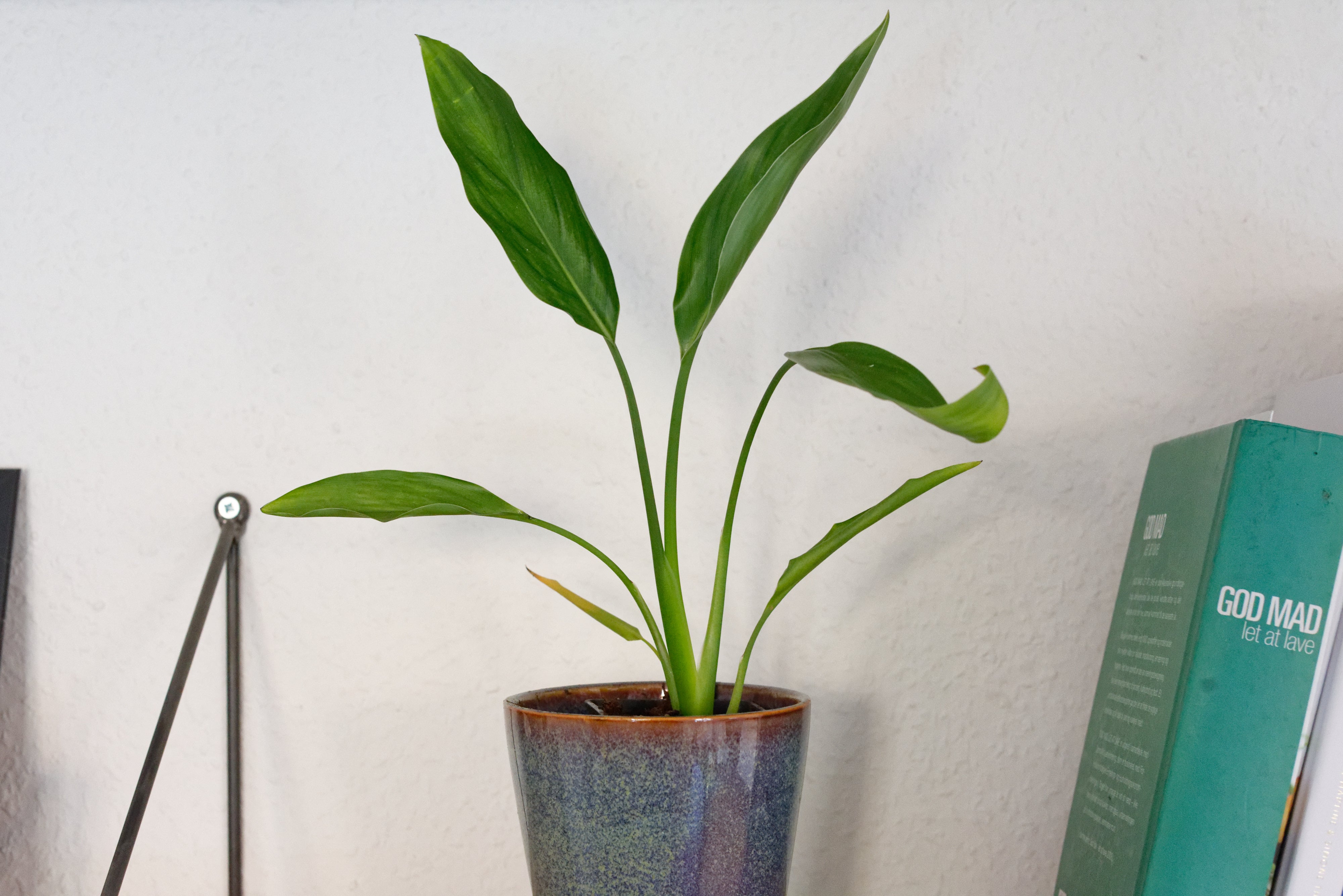
Except for Strelitzia juncea, the care is quite similar for the different species. They require large pots, as they unfortunately cannot tolerate the Danish winter, making it necessary to move them indoors when the frost arrives. They must therefore be brought inside during the winter, which they handle better than many other plants. General care guidelines:
-
Soil
Good, well-drained, and nutrient-rich soil (we recommend our Calathea & Maranta soil).
You can also use good potting soil mixed with a little clay and perlite.
-
Watering
Water well during the growing season. Less in winter. Can tolerate drying out.
-
Light
Partial to full sun. However, be careful with the spring sun, which can be sharp and burn the leaves. A period of acclimatization is therefore necessary, where many people, for example, place their Strelitzia in the shade of a tree and gradually move it further and further into the sun to its final spot.
-
Wind
Especially the large species such as Strelitzia nicolai and caudata require some shelter, as the wind can tear the leaves.
-
Fertilizer
Fertilize well during the growing season with normal organic plant fertilizer. No fertilizer in winter.
-
Overwintering
Strelitzia cannot tolerate frost. They must therefore be brought indoors during the winter. Place them in a bright spot, preferably a bit cool (around 10 degrees). They can, however, also handle normal room temperature. During the winter, it may be a good idea to spray them with water from time to time to increase the humidity slightly. It can be difficult to find space for the large species over time, and we recommend taking them to a plant storage facility for the best results the following summer.
Propagation of Strelitzia plants
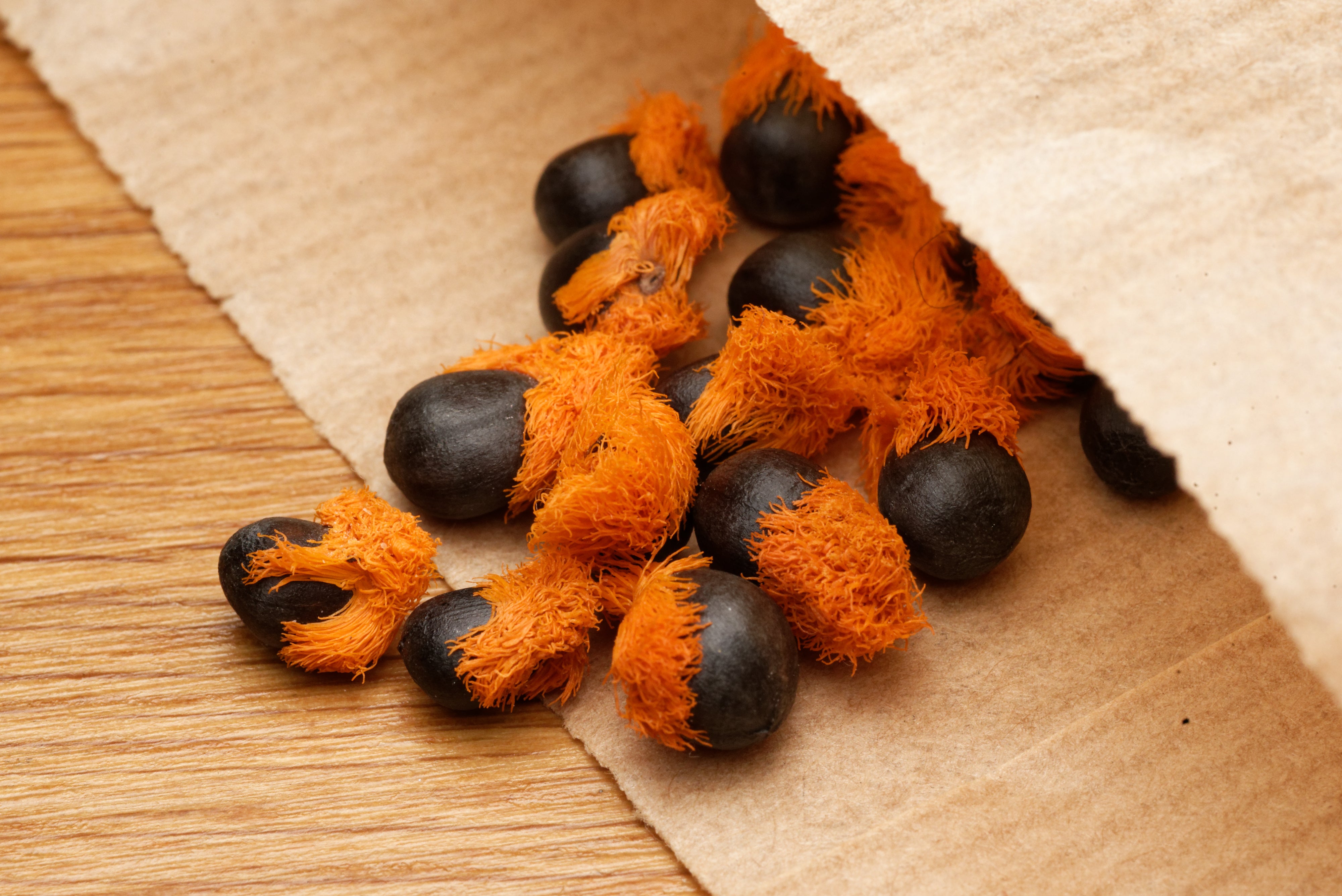
The plants are propagated either from side shoots or seeds. They do not form many side shoots, so if you want new plants, it is usually easiest (and cheapest) from seeds. Fortunately, seeds are also quite easy to germinate, especially if you can get hold of fresh ones. Here is our guide to germinating bird of paradise (Strelitzia) from seeds.
- Start by removing the orange hairs from the seed. This also scratches the seed coat (stratification) slightly, which speeds up germination.
- Place the seeds in a 3% hydrogen peroxide solution for 30 minutes (this step can easily be skipped).
- Place the seeds in lukewarm water for 24 hours.
- Sow the seeds in cactus soil or seed starting soil. They should be sown at a depth roughly equal to the length of the seed. Alternatively, you can place the seeds between layers of damp paper towels and put them in a bag. Place the pots or bag in a bright and warm spot. If using the bag germination method, check the seeds regularly. When the seeds begin to germinate, plant them in small pots.
- Repot the plants when they start showing signs of needing more space. Strelitzia have very large and thick roots and can almost push themselves out of their pots. That is when it is time for a new pot.
Enjoy!